
When to Launch Ticket Early Bird Offers for Better Sales
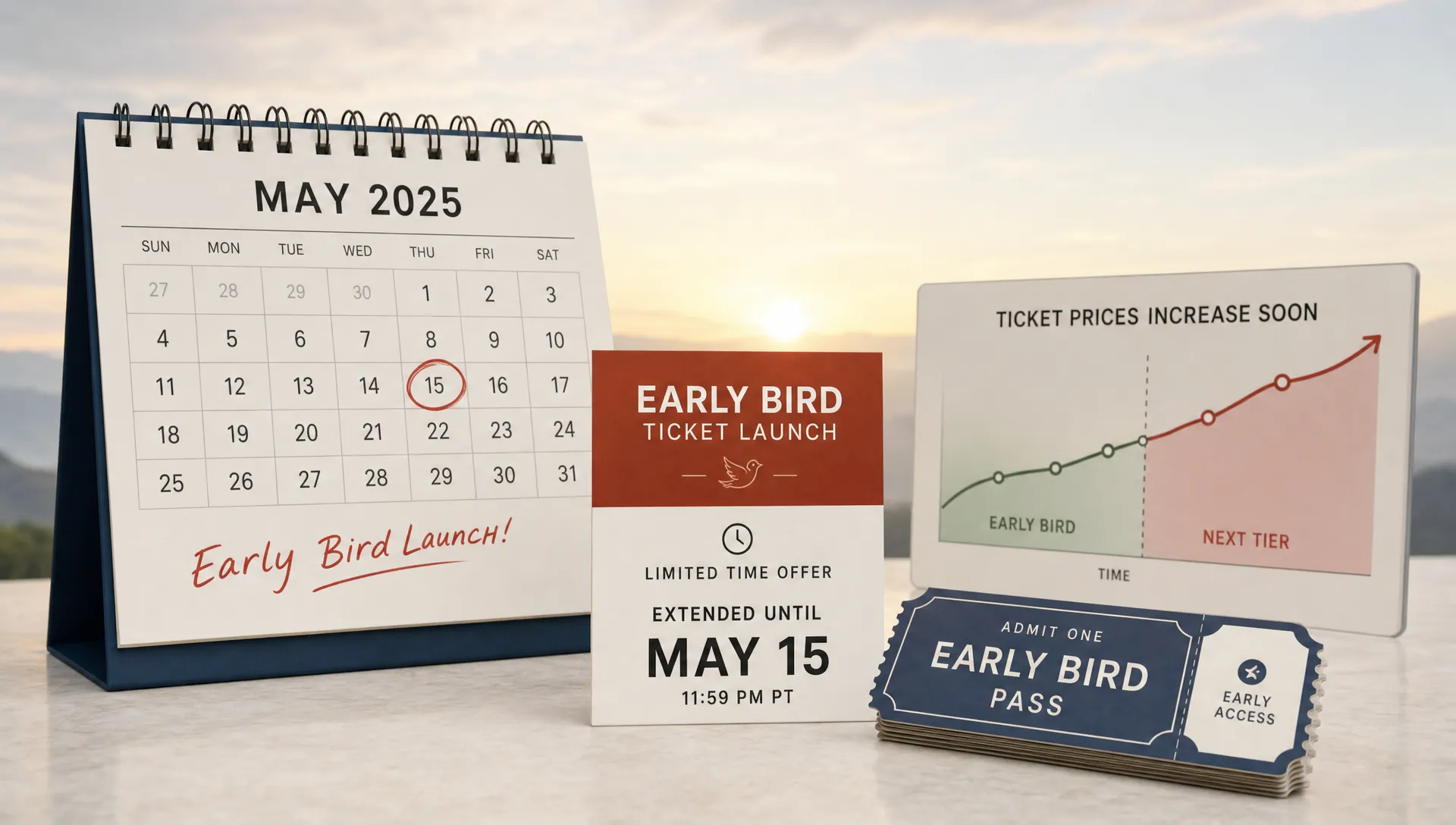
A ticket early bird offer works best when it feels like a reward for decisive buyers, not a desperate discount. Launch it too early and people may ignore it because the event still feels abstract. Launch it too late and you lose the momentum, cash flow, and demand signal that early sales are supposed to create.
The right launch timing depends on your event type, audience behavior, pricing ladder, and how ready your marketing is. For music producers, nightlife promoters, workshop hosts, and independent event organizers, early bird timing is also a cash flow decision. The goal is not simply to sell cheap tickets first. The goal is to turn attention into paid orders early enough to fund production, prove demand, and make the next price tier feel natural.
What a ticket early bird offer should actually do
An early bird ticket is a limited incentive for buyers who commit before the event is fully in peak demand. It can be limited by date, quantity, audience segment, or sales phase. The discount is only one part of the strategy.
A strong early bird offer should help you:
- Validate demand before you spend heavily on promotion
- Generate early cash to cover deposits, artists, vendors, or venue costs
- Reward your most loyal fans or fastest-moving buyers
- Create a visible first wave of momentum
- Make standard and final-release prices feel expected, not arbitrary
The mistake many organizers make is treating early bird as the first public price by default. If everyone can access it for too long, it stops feeling special. If the price gap is too large, buyers may see your later price as inflated. If the deadline is vague, people delay.
A better approach is to make early bird part of a deliberate pricing sequence. If you need a deeper breakdown of how different ticket categories shape buyer behavior, TixFlow’s guide to event ticket types for organizers is a useful companion to this timing strategy.
The best time to launch early bird tickets
For most public events, the best time to launch a ticket early bird offer is when three conditions are true: the event promise is clear, your first audience segment is warm, and there is enough time before the event for the next pricing phases to matter.
In practice, that means the early bird launch should usually happen shortly after the event announcement, not weeks before people understand what they are buying. The offer should run long enough for serious buyers to act, but short enough to create real urgency.
A good rule is this: launch early bird when you can confidently answer the buyer’s biggest question, “Why should I commit now?”
That answer might be a limited allocation, a launch-week price, access to the first release, loyalty to an artist or brand, or simply the best available price before demand increases. If your only answer is “because tickets are cheaper,” the offer needs more structure.
Recommended early bird timing by event type
Different events have different buying windows. A small club night does not need the same early bird runway as a conference, festival, or high-production experience. Use the table below as a starting point, then adjust based on your own audience data.
| Event type | Typical early bird launch window | Suggested early bird duration | Best limitation |
|---|---|---|---|
| Club nights and local music events | 4 to 8 weeks before event | 3 to 7 days | Limited quantity or launch-week deadline |
| Concerts with known artists | 6 to 12 weeks before event | 5 to 10 days | Fan presale, then public early bird |
| Workshops and classes | 8 to 12 weeks before event | 1 to 2 weeks | Date-based deadline |
| Conferences and professional events | 3 to 6 months before event | 2 to 4 weeks | Date-based deadline with tiered pricing |
| Festivals and multi-day events | 4 to 9 months before event | 2 to 6 weeks | Quantity cap plus deadline |
| Seasonal or holiday events | 2 to 5 months before event | 1 to 3 weeks | Calendar-based urgency |
These windows are not fixed rules. They are planning ranges. A high-demand DJ event with an established audience may sell early bird tickets in hours. A first-time community event may need more education and trust-building before early buyers convert.
If you are still deciding when the full ticket sale should begin, start with your overall sale calendar first. A clear launch sequence is easier to build when you know your announcement date, early bird window, standard phase, final release, and last-call push. TixFlow’s article on setting ticket sale dates for maximum momentum can help you map that bigger timeline.
Launch early bird when your event promise is strong enough
Early bird buyers do not need every detail, but they do need enough certainty to feel safe. If your event page says “lineup coming soon,” “venue TBA,” and “more details later,” many buyers will wait, especially if they are new to your brand.
Before you launch, make sure the offer is supported by a credible event promise. For a music event, that may mean the headliner, venue, date, time, age policy, and core vibe are clear. For a workshop, it may mean the instructor, outcome, location, schedule, and included materials are clear. For a conference, it may mean the theme, audience, main speakers, format, and business value are clear.
You can still hold back some announcements for later. In fact, saving secondary lineup drops, sponsor reveals, or special guest announcements can help future sales phases. But the early bird offer should not feel like a leap of faith unless your audience already has deep trust in your brand.
Do not launch before your checkout is ready
Early bird campaigns often generate the highest-intent traffic of the entire sales cycle. These are the people most likely to buy quickly, share with friends, and set the tone for the rest of the campaign. A slow or confusing purchase process wastes that demand.
Before launch, check the basics: your event page should explain the offer, the ticket tiers should be easy to understand, and the checkout should not require unnecessary steps. TixFlow is built around reducing buyer friction with no buyer registration, customizable event pages, unlimited ticket tiers, automated sales phases, smart promo codes, and real-time sales control. Those details matter because early bird buyers are often acting in the moment.
This is also where your operational stack matters. If you are managing clients, contracts, teams, invoices, and event workflows across multiple tools, an event business platform like Foundation Vibes can help keep the back office organized while your ticketing campaign focuses on conversion.
Choose the right trigger: date, quantity, or both
The best early bird offers end for a clear reason. Buyers need to understand what changes and when. The two most common triggers are time and quantity.
A date-based early bird is easy to communicate: “Early bird ends Friday at midnight.” It works well for conferences, workshops, and events where buyers need time to coordinate schedules. The downside is that if demand is stronger than expected, you may sell too many discounted tickets.
A quantity-based early bird is tied to inventory: “First 50 tickets at early bird price.” It works well for nightlife, concerts, and events with loyal audiences because it rewards speed. The downside is that buyers may not know how quickly the tier will move unless you communicate progress.
A hybrid trigger uses both: “Early bird ends Sunday or when the first 100 tickets are gone.” This is often the strongest option because it protects your margin while still giving buyers a visible deadline.
How long should an early bird offer last?
An early bird window should be long enough for your warm audience to see it, but short enough to make waiting feel risky. For fast-moving entertainment events, 3 to 7 days is often enough. For professional events, 2 to 4 weeks may be more appropriate because buyers may need employer approval, budget confirmation, or travel planning.
The key is to match duration to decision complexity. A $15 local show needs less deliberation than a $600 industry conference. A fan buying to see a favorite artist may act immediately. A business buyer may need reminders, invoice details, or approval from a manager.
Avoid leaving early bird open simply because sales are slow. Extending the deadline teaches buyers that your deadlines are flexible. If you truly need more time, give a specific reason and make it a one-time extension, such as “We are releasing 25 additional early bird tickets after the venue capacity update.”
Price early bird tickets without damaging your margins
Early bird pricing should reward speed, not undercut the value of the event. The price gap between early bird and standard should be meaningful enough to motivate action, but not so large that later buyers feel punished.
A healthy early bird price starts with your break-even math. Know your fixed costs, variable costs, fees, taxes, artist or speaker payments, venue expenses, production costs, and realistic capacity. Then decide how many discounted tickets you can afford to sell before the next tier must take over.
For example, if you sell too much capacity at a low early bird price, you may create strong attendance but weak profit. If you sell too little, you may not generate enough momentum or cash. That balance is why early bird quantity matters just as much as early bird price.
For smaller events, pricing strategy is especially sensitive because each discounted ticket has a bigger impact on net revenue. If you want a broader framework for protecting margin while keeping prices attractive, see TixFlow’s guide to ticket pricing strategies that help small events sell out.
Use early bird as a cash flow tool
Early bird tickets are not only about marketing. They can improve cash flow when timed correctly. For organizers who pay deposits before revenue arrives, early orders can help fund production without relying as heavily on personal cash, loans, or last-minute sales.
This is especially important for music producers and independent promoters. Venue holds, sound, lighting, security, artist deposits, photographers, designers, and advertising costs often come due before the event. A well-timed early bird campaign can turn audience confidence into working capital.
This is where instant payouts can make a real operational difference. With TixFlow, organizers can use instant payouts and Stripe Connect integration to help reduce the gap between ticket sales and usable funds. Combined with flat per-ticket fees, this makes it easier to understand net revenue as each phase sells.
The caution is simple: do not use early bird revenue as a reason to over-discount. Cash flow is valuable, but profitability still matters. Early ticket revenue should strengthen your event plan, not create a larger gap you need to recover later.
Build a launch sequence, not a one-day announcement
The strongest early bird launches usually start before tickets go on sale. You do not need a massive campaign, but you do need a short runway that builds recognition and intent.
A simple launch sequence can look like this:
- Tease the event 5 to 7 days before tickets open
- Announce the key promise 2 to 3 days before launch
- Give loyal fans, email subscribers, or community members first access
- Open public early bird sales with a clear deadline or quantity cap
- Send reminders at the halfway point and before the deadline
- Move immediately into the next pricing tier when early bird ends
This sequence gives people multiple chances to notice the offer without dragging it out. It also lets you reward your warmest audience before asking colder audiences to buy.
For music events, the warm audience might include past attendees, artist fan lists, street team contacts, venue subscribers, or local community groups. For professional events, it might include past registrants, newsletter subscribers, partner audiences, or members of a relevant association.
Watch the first 48 hours closely
The first 48 hours of early bird sales can tell you a lot. If tickets move quickly, your offer, audience, and timing are probably aligned. If sales are slow, the issue may be price, event positioning, weak creative, unclear value, poor timing, or checkout friction.
Look at practical signals such as sales velocity, conversion rate, promo code use, traffic sources, abandoned checkout patterns, and which ticket tiers are moving. If your early bird quantity sells faster than expected, you may want to shorten the phase or prepare the next price jump sooner. If it underperforms, do not immediately cut price. First improve clarity, reminders, audience targeting, and the event page.
TixFlow’s real-time sales control can help organizers respond while the campaign is live. For a deeper look at what to measure, the guide on using ticket statistics to improve event sales explains which numbers are most useful during active ticket campaigns.
Common early bird timing mistakes
The biggest early bird mistakes are usually caused by uncertainty. Organizers either launch before the event is ready, leave the offer open too long, or discount too heavily because they are nervous about demand.
A few patterns to avoid:
- Launching early bird before the venue, date, or main value is clear
- Keeping early bird open after the deadline because sales feel slow
- Offering a discount so large that standard pricing feels expensive
- Selling too much capacity at the lowest price
- Forgetting to promote the transition into the next tier
- Using vague urgency such as “limited time” without a real end point
The fix is to decide your rules before launch. Set the early bird price, ticket allocation, deadline, next tier, and communication plan in advance. When the campaign starts, your job is to execute and observe, not rewrite the strategy every few hours.
A practical timing formula for early bird offers
If you are unsure when to launch, use this simple formula:
Early bird should begin when your warm audience is ready to buy and should end before your broader audience needs the next reason to act.
For a local music event 8 weeks away, that might mean early bird runs during the first announcement week. For a conference 5 months away, it might mean early bird begins after the speaker theme is announced and ends before the agenda rollout. For a festival, it might begin with loyalty access, continue through the first lineup announcement, and close before the second lineup drop.
The important point is that early bird should create the first sales wave, not carry the entire campaign. Once it ends, your next phase needs its own reason to buy: a lineup addition, content announcement, partner push, price increase, group offer, or capacity update.
Frequently Asked Questions
When is the best day to launch ticket early bird offers? The best day is usually when your audience is most reachable and ready to act. For consumer events, midweek announcements followed by a weekend reminder can work well. For nightlife and music events, launch timing often depends on artist announcements, venue calendars, and payday behavior.
Should early bird tickets be limited by date or quantity? Date-based limits are easier to understand, while quantity-based limits protect your margins better. Many organizers use both, such as “early bird ends Sunday or when 100 tickets sell.”
How much cheaper should early bird tickets be? The discount should be large enough to reward fast action but small enough to protect the value of your event. Start with your break-even point and decide how many discounted tickets you can afford before standard pricing begins.
Can I launch early bird tickets before announcing the full lineup? Yes, if your audience already trusts the event brand or if the announced details are strong enough to justify buying. If the event depends heavily on the lineup, announce at least one major draw before opening early bird sales.
What should happen after early bird ends? Move immediately into the next ticket tier and communicate the change clearly. Do not let the campaign go quiet. Use the next phase to introduce a new reason to buy, such as a lineup update, added benefit, or approaching capacity.
Turn early interest into stronger ticket sales
A well-timed ticket early bird offer gives your event a stronger start, better cash flow, and a clearer path into later pricing phases. The best launch window is not simply “as early as possible.” It is the moment when your event promise is clear, your warm audience is ready, and your pricing structure can support the next step.
With TixFlow, organizers can set up flexible ticket tiers, automate sales phases, use smart promo codes, customize event pages, monitor sales in real time, and offer a faster checkout without buyer registration. If you want early bird sales to create momentum instead of confusion, build the offer into a complete ticketing strategy from day one.
Start planning your next event with TixFlow and give your early buyers a reason to act when it matters most.