
Ticket Your Event With Capacity Rules That Prevent Overselling
When you ticket your event, the inventory logic behind each ticket type matters as much as the poster, lineup or launch announcement. Overselling usually happens because the public cap, guest list, team holds, sponsor allocations and door plans were treated as separate decisions instead of one shared capacity system.
A clean sellout is not simply the moment every public ticket is gone. It is the moment you have sold the right number of admissions, protected required holds and given your team a check-in plan that matches the room. For small venues, music showcases, workshops and producer-led events, capacity rules are what turn excitement into control.
How to ticket your event with capacity rules that match reality
Start with the venue limit, not the ticket types. Your venue capacity is the outer boundary, but the practical selling capacity may be lower once you account for performers, staff, press, sponsors, accessibility needs and production space.
If the venue holds 300 people but 28 spots are already committed before public sales begin, your available public inventory is not 300. It may be 272 or less, depending on whether you also want a small door-sale reserve. This distinction protects the guest experience and keeps the organizer from making last-minute cuts that damage relationships.
Capacity rules should answer three questions before checkout opens:
- How many total people can be admitted?
- Which ticket types share the same total capacity?
- Which tickets, comps or holds must be deducted before sales go public?
TixFlow gives organizers real-time sales control, unlimited ticket tiers and digital guest lists, which makes it easier to keep these decisions in one operating system instead of scattered across spreadsheets, DMs and payment links.
The real causes of overselling
Overselling is rarely caused by one dramatic mistake. It usually comes from small inventory gaps that compound as sales accelerate.
The most common issue is treating ticket tiers as independent caps when they should draw from the same room capacity. For example, an early bird cap of 75, general admission cap of 200 and at-the-door plan for 50 looks reasonable until you remember the room holds only 250 and the guest list has not been deducted.
Another issue appears when multiple sales phases overlap. If early bird sales do not close correctly before general admission opens, buyers may be able to purchase more than intended. Automated sales phases can reduce that risk because the transition is governed by rules rather than manual timing.
Organizers also run into trouble when complimentary tickets are handled after paid sales. Artist comps, media passes, brand partners and internal team passes still occupy space. If they are not part of the capacity model, they become invisible until check-in.
For a broader operational view, TixFlow has a practical guide to ticket management tips that keep events running smoothly, including how checkout flow, guest lists and team visibility affect event-day execution.
Capacity rules every organizer should define
The safest way to ticket your event is to define capacity at several levels: event-wide, ticket-tier, sales-phase and access-based. Each rule controls a different kind of risk.
| Capacity rule | What it controls | Example use case |
|---|---|---|
| Event-wide cap | Maximum total admissions | A 200-cap listening room cannot exceed 200 total admitted guests |
| Tier cap | Maximum tickets in a category | Limit early bird to 50 tickets before standard pricing opens |
| Shared inventory | Multiple tiers drawing from one pool | Student, general admission and promo tickets all count toward the same room limit |
| Sales phase cap | Inventory released by date or milestone | Release 100 tickets during launch week, then 80 after lineup announcement |
| Holdback | Tickets reserved from public sale | Keep 20 spots for artists, sponsors, press or production needs |
| Order limit | Quantity per buyer | Prevent one person from buying 30 tickets during a high-demand drop |
These rules are not only for large festivals. They matter even more for intimate rooms because a five-person overage can create a fire-code issue, an uncomfortable audience experience or a conflict with the venue.
Build your capacity map before tickets go live
A capacity map is a simple internal document that shows how every possible admission fits into the total room count. It should be created before pricing, promo codes or public announcements are finalized.
For a 180-cap venue, your first draft might look like this:
| Admission category | Planned quantity | Counts toward capacity? | Notes |
|---|---|---|---|
| Early bird | 40 | Yes | Public sale, lowest price |
| General admission | 90 | Yes | Main public inventory |
| Final release | 25 | Yes | Open only if holds are reduced |
| Artist comps | 10 | Yes | Added to digital guest list |
| Staff and production | 8 | Yes | Confirm before launch |
| Sponsor and press | 7 | Yes | Deadline required for unused spots |
This example totals 180 admissions. If the sponsor list only uses four spots, you can move the remaining three into final release. If production needs two more staff members, you know exactly where those admissions must come from.
A capacity map also makes pricing decisions clearer. If you are weighing different release sizes or margin targets, the TixFlow article on event ticket pricing strategies that protect your margins can help you connect inventory decisions to net revenue.
Use ticket tiers without creating hidden risk
Ticket tiers are useful because they let you reward early buyers, segment access and create urgency. The risk appears when each tier is planned in isolation.
When you ticket your event with several tiers, decide whether each tier has its own cap or draws from a shared inventory pool. A VIP tier may need a separate cap because it includes a meet-and-greet area, reserved seating or a drink package. General admission, student tickets and promo-code tickets may need to share one broader cap because they all enter the same room.
Unlimited ticket tiers are most effective when each tier has a job. Do not create five tiers just because the platform allows it. Create them when the buyer sees a real difference or when the organizer needs operational separation.
Common tier structures include early bird, general admission, final release, VIP, group tickets and partner-access tickets. The cleaner your tier logic, the easier it is for buyers to choose and for your team to explain what is still available.
Automate sales phases so inventory changes on time
Manual phase changes are risky because event teams are busy. A price change planned for noon can slip to 12:37. A tier that should have closed at 50 tickets can stay open during a sudden rush. A promo window can remain active after the email campaign ends.
Automated sales phases solve this by applying the rule when the condition is met. That condition might be a date, a time or an inventory threshold, depending on the ticketing setup. For organizers, this reduces the need to watch the sales page every minute during launch.
Automated phases are especially helpful for music producers and promoters who build momentum through announcements. You might release a limited batch before the lineup reveal, open the main tier after the announcement then keep a final release for the week of the show. Each phase should have a defined quantity and a clear reason to exist.
This also helps buyers. Scarcity feels more trustworthy when inventory changes are consistent. If a page says only 20 early bird tickets are available, that limit should be real.
Keep guest lists and comps inside the same system
A guest list is not separate from capacity. It is capacity. Treating it as an afterthought is one of the fastest ways to oversell a room.
Digital guest lists help because every comp, press pass, artist allocation or staff admission can be counted before doors open. This also reduces disputes at check-in because the front-of-house team can see who is expected, rather than relying on screenshots or forwarded messages.
Set a deadline for each hold category. If sponsors have ten allocated spots, require final names by a specific date. If they use six, the remaining four can go back into public inventory. If they miss the deadline, decide in advance whether those holds expire or remain blocked.
The same rule applies to artist comps. Make the allocation clear in writing, count the comps against capacity and avoid expanding the list casually on show day.
Control promo codes without losing capacity visibility
Smart promo codes can help you reward loyal fans, track partner sales and drive urgency. They can also create overselling risk if discounted admissions are not connected to the same inventory rules as full-price tickets.
If you ticket your event with several promo channels, every code should answer a specific question. Is it meant to track an influencer partner? Is it a private presale code for subscribers? Is it a sponsor benefit? Each answer affects the cap you place on that code.
Promo-code capacity can be controlled in several ways. You can limit total redemptions, set an expiration time, restrict codes to specific tiers or reserve a fixed allocation for a partner. The goal is not to make promotions complicated. The goal is to make sure discounted demand does not accidentally consume inventory needed for full-price sales, VIP buyers or contractual holds.
Checkout friction matters here too. If you collect extra attendee details, ask only for what is needed. For more complex buyer flows, the idea behind conditional ticket fields is useful: show relevant fields only when they apply, so the buyer experience stays simple while the organizer still gets the right data.
Watch real-time sales before making capacity decisions
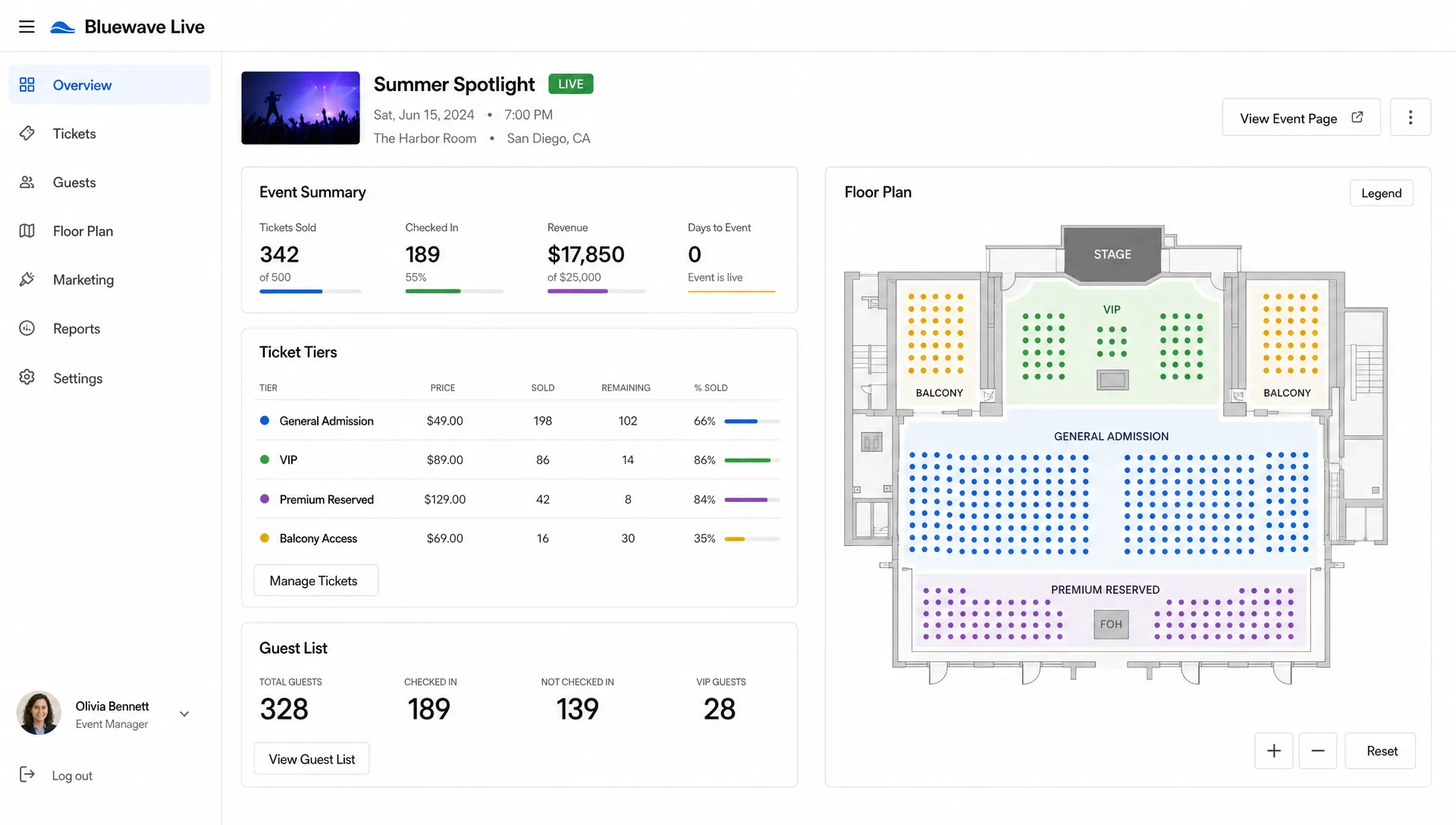
Real-time sales control is useful because capacity plans often need adjustment as demand becomes visible. The key is to adjust from a clear baseline, not from panic.
If sales are slower than expected, you may choose to extend early bird pricing or open a partner allocation. If sales are faster than expected, you may close a discount sooner, protect holds more tightly or move the final release to a later date. Each move should be tied to your capacity map.
Cash flow also matters. Instant payouts and flat per-ticket fees can help organizers make decisions with a clearer view of incoming funds and costs. For teams managing deposits, talent payments or marketing spend, predictable revenue timing is not a small detail. TixFlow covers this topic further in its guide to how ticketed events can build predictable cash flow.
Avoid changing caps casually just because demand is strong. If a room holds 250, a sales spike does not make it hold 275. If you want to increase admission, confirm the venue limit, layout, staffing, security and guest experience first.
Plan for door sales without guessing
Door sales can be valuable, especially for local music events where some buyers decide late. They also create risk if online inventory and door inventory are not planned together.
The safest approach is to define a door reserve before launch. For example, a 200-cap event might sell 175 online, hold 10 for guest list changes and reserve 15 for the door. If online demand is high, you can later decide whether to release some of the door reserve online, but that decision should be intentional.
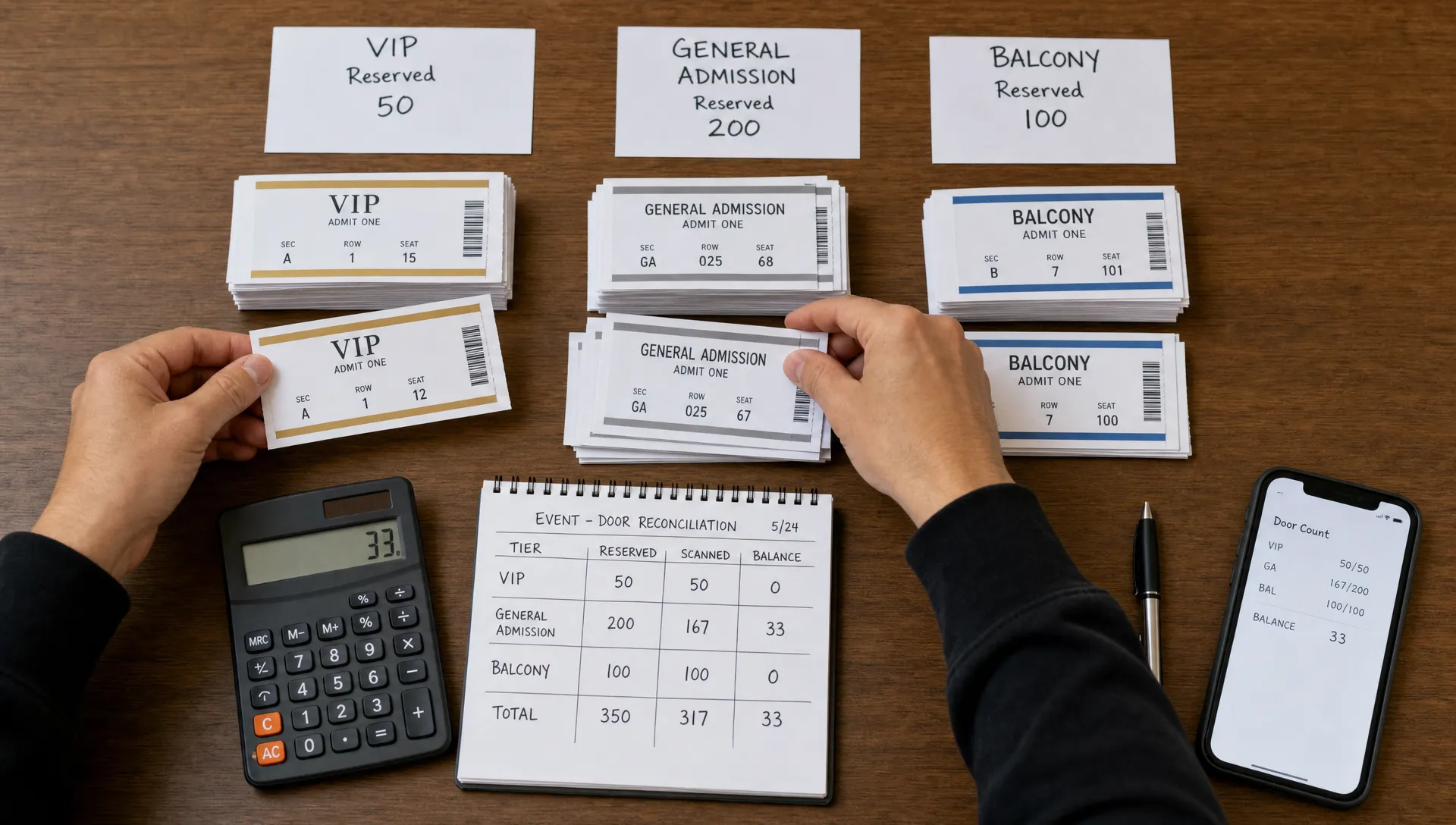
Do not let multiple people sell door tickets without one shared count. If one person handles cash, another handles card payments and a third checks in guest-list names, the count can drift quickly. A single source of truth protects both revenue and safety.
For high-demand shows, consider closing door sales until guest-list arrivals stabilize. This avoids admitting walk-ups while confirmed attendees are still outside.
Pre-launch capacity checklist
Before you publish the event page, run a short capacity review. This should take less than 30 minutes, but it can prevent hours of support, refunds and venue stress later.
| Check | Why it matters |
|---|---|
| Confirm legal venue capacity | Keeps sales aligned with safety and venue rules |
| Deduct staff, artists and production | Prevents internal admissions from crowding out buyers |
| Set caps for every public tier | Avoids accidental over-release across pricing phases |
| Define guest-list deadlines | Lets unused holds return to public inventory |
| Limit promo code redemptions | Stops partner campaigns from consuming unlimited tickets |
| Decide door-sale inventory | Keeps walk-up sales connected to the total cap |
| Test checkout before launch | Catches confusing tier names, expired codes or missing fields |
This checklist is especially important when several people touch the event setup. The promoter may think capacity is 300, the venue manager may be counting staff separately and the marketing lead may have promised a partner 25 guest spots. Put all of it in one plan before the first ticket is sold.
Frequently Asked Questions
What is the best way to prevent overselling an event? The best way is to use one total capacity model that includes paid tickets, guest list spots, staff, artists, sponsors, press and door-sale reserves. Every tier and promo code should draw from that model or have a clearly defined cap.
Should each ticket tier have its own capacity limit? Some tiers need separate limits, such as VIP or reserved-access tickets. Other tiers, such as early bird and general admission, often need to share the same event-wide inventory so total admissions never exceed the venue limit.
How many tickets should I reserve for the door? It depends on your audience behavior and venue size. Local shows may benefit from a small door reserve, but the quantity should be planned before launch and counted against total capacity.
Do comp tickets count toward capacity? Yes. If a person can enter the venue, that admission counts toward capacity. Artist comps, media passes, sponsor spots and staff entries should be part of your capacity map.
Can I ticket your event without buyer registration? Yes, TixFlow supports checkout without buyer registration, which can reduce friction for attendees while still giving organizers control through ticket tiers, sales phases, promo codes and digital guest lists.
Sell out without losing control
Capacity rules protect more than the venue limit. They protect your buyer experience, your team at check-in, your sponsor relationships and your cash flow.
TixFlow is built for organizers who want fast setup, low fees, instant payouts and real-time control over ticket sales. With customizable event pages, unlimited ticket tiers, automated sales phases, smart promo codes and digital guest lists, you can sell confidently without relying on scattered spreadsheets or last-minute guesswork.
If you are ready to ticket your event with clearer capacity rules, start with your true room count, build the inventory map then launch with a ticketing platform that keeps sales and operations aligned. Explore TixFlow at tixflow.org.