
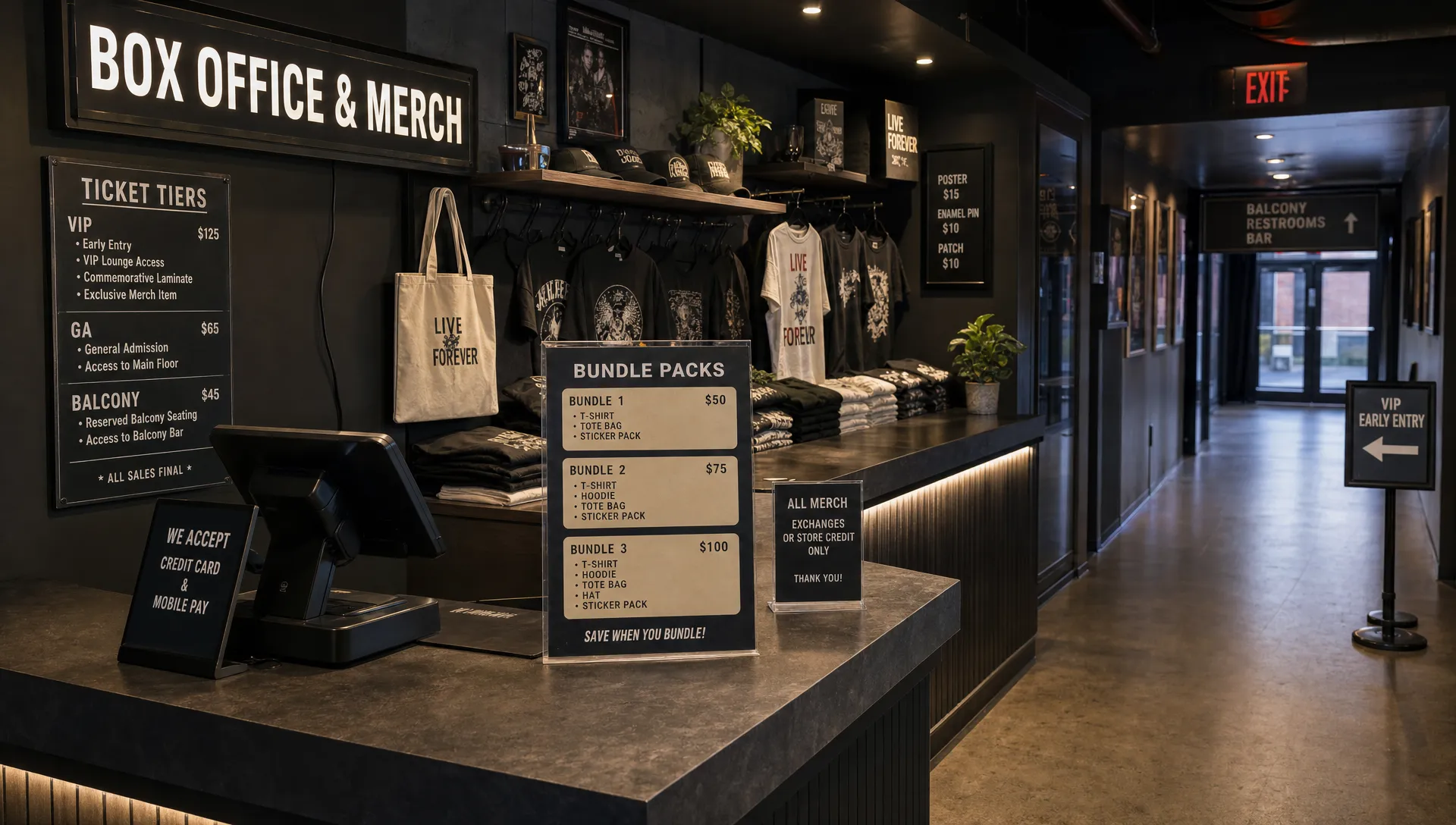
Sell Event Tickets in Bundles to Raise Average Order Value
Most organizers look at ticket sales through one narrow lens: how many admissions have been sold. That number matters, but it does not tell the full revenue story. If 200 buyers each purchase one general admission ticket, you have 200 orders. If 120 buyers purchase pairs, friend packs, VIP bundles or ticket plus merch packages, you may generate more revenue with fewer checkout sessions.
That is the power of bundling. When you sell event tickets in bundles, you give buyers a reason to spend more in a single order because the package feels more useful, more social or more complete than a single admission. For music events, club nights, festivals, workshops and community experiences, bundles can also help you forecast attendance, move inventory earlier and improve cash flow before the event date.
The key is to avoid treating bundles as random discounts. A good bundle is a pricing product, not a clearance tactic. It should match how your audience actually attends, protect your margins and be easy for your team to fulfill on the night.
Why ticket bundles raise average order value
Average order value, often shortened to AOV, is the average amount a buyer spends per completed order. The basic formula is simple:
| Metric | Formula | What it tells you |
|---|---|---|
| Average order value | Total order revenue divided by number of orders | How much buyers spend per checkout |
| Tickets per order | Total tickets sold divided by number of orders | How many admissions each buyer typically purchases |
| Bundle share | Bundle orders divided by total orders | How much your revenue depends on packages |
For event organizers, AOV matters because each checkout is a conversion opportunity. You already earned the buyer's attention, convinced them the event is worth attending and got them to the payment step. A bundle increases the value of that moment.
Bundles work because many event purchases are naturally social. People rarely attend a concert, party, comedy night or tasting event entirely in isolation. They coordinate with friends, partners, teams or fan groups. A well designed package reduces that coordination friction by giving one person an easy way to buy for the group.
This is different from simply lowering prices. A 4-pack that saves buyers a modest amount can raise AOV because the order total is still larger than one ticket. A VIP pair may lift AOV because it combines access with comfort, convenience or status. A ticket plus merch bundle may lift AOV because the buyer was already emotionally committed and the add-on makes the night feel more memorable.
Bundle types that work for different events
Not every event needs the same bundle. A music producer promoting a release party has different buyer behavior than a conference organizer, a fitness studio or a local venue. Start by choosing the bundle type that fits how your audience attends.
| Bundle type | Best for | Why buyers like it | Margin watchout |
|---|---|---|---|
| Pair tickets | Date nights, concerts, comedy shows, dinners | Simple purchase for two people | Do not discount so heavily that two singles would have been better |
| Friend pack | Club nights, festivals, student events, fan meetups | Makes group planning easier | Set clear quantity limits and scan rules |
| Family pack | Community events, workshops, daytime shows | Helps households buy in one step | Define ages, entry terms and capacity impact |
| Ticket plus merch | Artist events, release parties, creator meetups | Adds memory and identity to the experience | Know merchandise cost, sizes and pickup logistics |
| VIP pair or group package | Premium shows, launches, fundraisers | Combines access with status or convenience | Avoid vague perks that create disappointment |
| Multi-event pass | Event series, recurring parties, workshops | Rewards commitment and improves cash flow | Plan refund rules and date changes clearly |
A bundle should answer a real buyer question: "How do I bring my people?" or "How do I get the better version of this experience?" If it only answers "How do I pay less?" it may train your audience to wait for discounts.
For VIP offers in particular, the perceived value has to be clear. Better sightlines, priority entry, artist access, reserved seating, included drinks or exclusive merch can work, but only if they are operationally realistic. If you are building premium bundles, this guide to VIP ticket packages that buyers actually want is a useful companion because it focuses on value buyers can actually feel.
Start with buyer behavior, not the discount
The strongest bundles usually come from observing how people already buy. If your audience tends to arrive in pairs, a two-ticket package can feel obvious. If your past events show groups of four to six, a friend pack may match reality. If you attract collectors, superfans or supporters of a local scene, a ticket plus merch package may create more value than a price cut.
Before creating a bundle, ask three practical questions:
- Who usually makes the purchase decision?
- How many people do they commonly bring?
- What extra item or perk would make the order feel more complete?
For example, a DJ night might offer a "Crew 4-Pack" during early sales, then switch to standard single tickets closer to the event. A theater group might offer a pair package with reserved seats. A music producer might offer admission plus a limited poster or vinyl pickup. A conference organizer might sell a team pass for companies sending multiple staff members.
The goal is not simply to sell event tickets in bulk. The goal is to package the event in a way that reflects how people make plans, split costs and decide whether to commit now.
Price bundles so they lift revenue, not just volume
A bundle can raise AOV and still damage profit if the discount is too deep or the included perks cost more than expected. Pricing needs to start from margin, not from a random percentage off.
Use a simple structure:
| Pricing question | Why it matters |
|---|---|
| What is the regular price of the included tickets? | Establishes the reference value |
| What variable costs are included? | Protects margin on merch, drinks, food or staffing |
| What discount is needed to change behavior? | Keeps the incentive useful without overpaying buyers |
| What order value do you want to reach? | Ties the bundle to AOV goals |
| How many bundles can you safely sell? | Prevents capacity and fulfillment problems |
Imagine a general admission ticket is $30. A 4-pack at $108 gives buyers $12 in savings, but the order is still worth $108 instead of $30. If many buyers would have purchased four tickets anyway, the discount may be unnecessary. If the discount persuades one buyer to organize the group earlier, it may improve both revenue timing and attendance confidence.
When you sell event tickets with bundles, the question is not "Can I make this look cheap?" It is "Can I make this order feel like better value while still protecting the event's economics?"
That is why bundle planning should sit inside your wider pricing model. If you have not already mapped price floors, costs, fee handling and target margins, review these event ticket pricing strategies that protect your margins before adding complex packages.
Use tiers and sales phases to control bundle timing
Bundles work best when they are intentional and limited. If every bundle is available forever, buyers have less reason to act early. If the bundle disappears at a clear moment, it becomes a commitment tool.
Common approaches include:
- Early group bundle: Available only during the first sales phase to build momentum.
- Launch week package: Useful for artists, producers or venues with a loyal audience.
- Limited VIP bundle: Capped by the number of premium perks you can actually deliver.
- Last-call pair offer: Helpful when you want to fill remaining capacity without cutting the single-ticket price publicly.
TixFlow is built for this kind of control with unlimited ticket tiers, automated sales phases, smart promo codes and real-time sales control. That means you can shape availability around your launch plan instead of manually changing everything under pressure.
For example, you might open with 50 early crew packs, move into standard admission after those sell out, then release a small number of premium bundles once production details are confirmed. This keeps your event page clean while giving different buyer segments a reason to purchase at the right time.
Keep the checkout experience simple
A bundle that sounds good but creates checkout friction will underperform. Buyers should understand what they are getting, how many people it covers and whether anything needs to be redeemed at the venue.
Clarity matters most in three places: the ticket name, the short description and the checkout flow. "4 General Admission Tickets" is clearer than "Squad Deal." "Includes admission for four people" is clearer than "Bring the crew." Personality is fine, but the operational terms need to be plain.
This is especially important for mobile buyers. Many event purchases happen while someone is texting friends, viewing a social post or reacting to a limited availability message. If the buyer has to create an account, decode package terms or wonder whether one QR code covers everyone, momentum drops.
TixFlow helps reduce buyer friction with no buyer registration, customizable event pages and a checkout experience organizers can tailor to the event. A bundle can help you sell event tickets more effectively only if the purchase path is as straightforward as the offer.
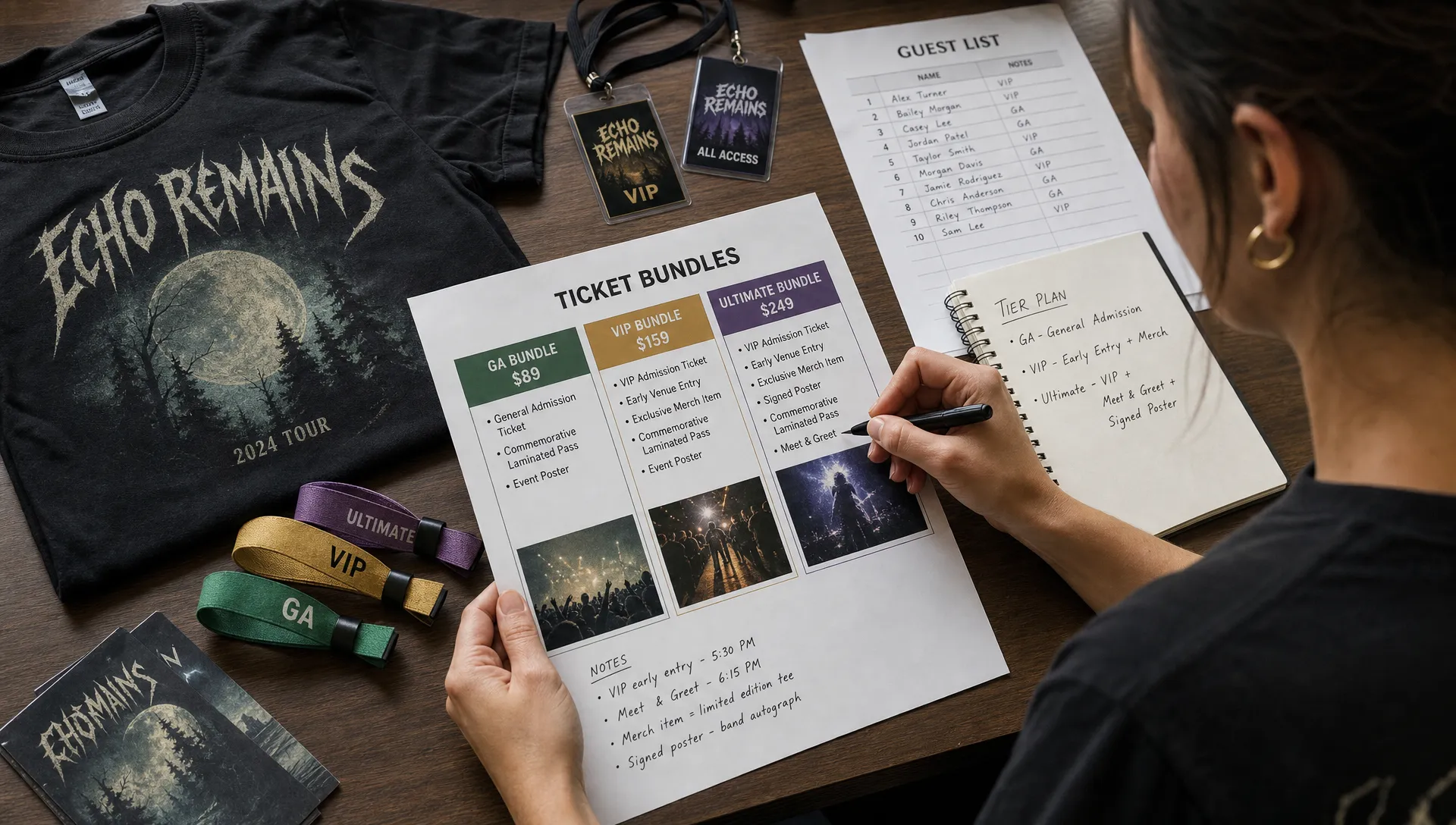
Make fulfillment easy for the door team
Bundles are not finished when the payment clears. Your door team, guest list manager or venue staff must be able to fulfill them without confusion.
For admission-only bundles, decide whether the buyer receives multiple tickets or one order containing multiple scannable entries. For bundles that include merch, drink tokens, reserved areas or VIP perks, decide how staff will verify redemption. The cleaner the process, the less time buyers spend waiting and the fewer disputes your team handles during peak entry.
Digital guest lists are useful here because they turn bundle purchases into operational information. If your system shows what was purchased and who is eligible for entry or perks, the team can move faster at check-in.
For larger event companies, ticketing data may also need to connect with finance, accounting or enterprise systems. If event revenue flows into NetSuite or similar back-office software, specialized partners offering AI automation and NetSuite integration support can help keep ticketing, reporting and operational workflows aligned as volume grows.
Measure bundle performance after launch
Do not judge a bundle only by whether it sells out. A bundle can sell quickly and still be underpriced. Another bundle can sell slowly but attract higher-value buyers you want more of. Track the numbers that show whether the package is improving the event's economics.
The most useful metrics include:
- AOV by sales phase
- Tickets per order
- Bundle conversion rate
- Revenue per available capacity slot
- Promo code usage by bundle
- Refund or support requests tied to bundle confusion
- Door issues or redemption delays
If your 4-pack increases tickets per order but lowers net revenue per attendee too much, revise the discount. If your VIP pair sells well but creates fulfillment issues, simplify the perk or reduce quantity next time. If ticket plus merch has strong demand, consider launching it earlier for superfans.
Good measurement turns bundles from a guessing game into a repeatable sales strategy. For a deeper look at what to track, read this guide on how to use ticket statistics to improve event sales.
Common bundle mistakes to avoid
The easiest mistake is discounting too aggressively. A bundle should reward a larger order, not erase the value of your single ticket. If buyers learn that waiting produces better deals, early sales can suffer.
Another mistake is bundling items that are hard to fulfill. A shirt included with every ticket sounds attractive until sizes run out, pickup lines get long or staff cannot confirm who redeemed what. If you add physical goods, keep inventory simple and communicate pickup instructions before the event.
Vague naming also causes problems. A label like "Premium Experience" needs a clear description of what premium means. If the buyer expects artist access and receives only a faster entry lane, the package may damage trust even if the price was fair.
Finally, avoid offering too many bundles at once. Choice can help buyers self-select, but too many packages make the event page harder to understand. Start with one or two strong offers, then add complexity only when your audience data supports it.
A simple bundle launch plan
You do not need a complicated revenue model to start testing bundles. A clear first version is often enough.
- Pick one behavior you want to encourage, such as group buying, early commitment or premium upgrades.
- Choose one bundle that matches that behavior, such as a pair, 4-pack, VIP pair or ticket plus merch.
- Set the price using your regular ticket value, variable costs and target margin.
- Limit the quantity or sales window so the offer has a purpose.
- Write plain descriptions that explain exactly what is included.
- Watch AOV, tickets per order and support questions during the sale.
- Adjust the next phase based on real buyer behavior, not assumptions.
This approach is especially useful for organizers managing cash flow. Bundles can pull revenue earlier into the sales cycle, which helps with deposits, marketing spend, production costs and artist payments. If your ticketing platform also supports instant payouts, the effect is even more practical because revenue becomes usable sooner.
Frequently Asked Questions
Can bundles help me sell event tickets for a small event? Yes. Small events can benefit from simple bundles such as pairs, friend packs or ticket plus merch offers. The key is to keep the package easy to understand and realistic for your team to fulfill.
How much should I discount a ticket bundle? Use the smallest discount that changes buyer behavior while protecting your margin. Some bundles do not need a discount at all if they include convenience, exclusivity or a valuable add-on.
Should every event offer group bundles? No. Group bundles work best when people naturally attend together. If your event is highly individual, a premium package, multi-event pass or add-on bundle may be a better fit.
How many bundle types should I launch at once? Start with one or two. Too many options can slow down decisions and make your checkout harder to scan, especially on mobile.
Build bundles that improve revenue and cash flow
If you want to sell event tickets in a way that raises average order value, bundles are one of the most practical tools available. They help buyers commit as groups, make premium experiences easier to package and give organizers more revenue per checkout.
TixFlow gives organizers the tools to run those offers with instant payouts, flat per-ticket fees, flexible ticket tiers, automated sales phases, smart promo codes, digital guest lists and Stripe Connect integration. Create your event, shape your bundles and keep control of sales from launch to check-in with TixFlow.