
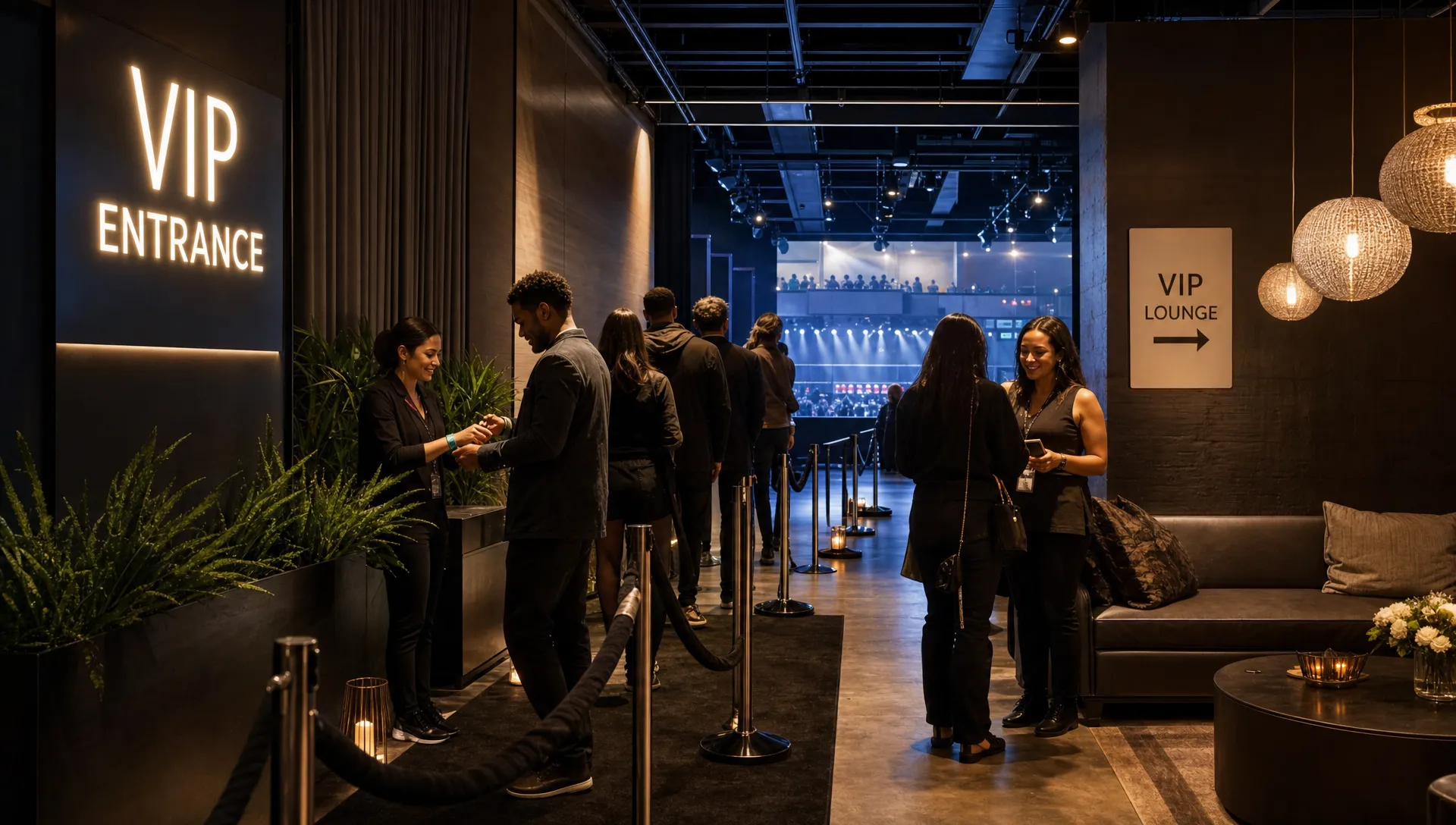
VIP Ticket Packages That Buyers Actually Want
A strong VIP offer is not just a higher price with a better-sounding label. Buyers pay more when the package clearly improves their night, makes them feel closer to the experience, or removes friction they would happily pay to avoid.
For organizers, well-designed VIP ticket packages can do more than lift average order value. They can create early cash flow, reward superfans, segment demand, and protect general admission pricing. The challenge is that buyers are more skeptical than ever. If VIP feels vague, crowded, or hard to redeem, it can damage trust instead of increasing revenue.
The goal is simple: build a VIP package that feels obvious to buy, easy to fulfill, and worth talking about after the event.
What buyers actually mean when they say VIP
VIP does not mean the same thing at every event. At a club night, VIP might mean fast entry, a private table, bottle service, and a better view. At a producer showcase, it might mean a soundcheck invite, a meet and greet, or access to unreleased music. At a conference, it might mean priority seating, private networking, and a quieter check-in experience.
Most buyers evaluate VIP through four questions:
- Does this give me better access?
- Does this save me time or reduce stress?
- Does this make the night feel more memorable?
- Is the difference from standard admission clear enough to justify the price?
That last point matters most. A VIP ticket should not force buyers to decode your event structure. If the package includes premium viewing, early entry, and exclusive merch, say that plainly. If it only includes a different wristband and a slightly shorter line, rethink the offer before launching it.
This is where strategy matters. VIP is one of several ticket categories you can use to guide behavior, and understanding how ticket categories shape buyer choice and revenue helps you avoid creating packages that compete with each other or confuse buyers.
Start with the buyer segment, not the perk list
Many weak VIP packages start with the wrong question: What can we add? A better question is: Who would pay more, and why?
For music events, VIP buyers often fall into different segments. Superfans want proximity to the artist or producer. Social buyers want status, comfort, and a better group experience. Busy professionals want less waiting and more certainty. Creators and industry guests may value access, networking, and photo-friendly moments.
The best VIP ticket packages focus on one or two of those motivations. Trying to serve everyone usually leads to a bloated offer that is expensive to fulfill and difficult to explain.
Before setting perks, write a one-sentence VIP promise. For example: This package gets superfans closer to the artist before doors open. Or: This package gives groups a smoother, more comfortable night with reserved space and faster entry. That promise becomes the filter for every perk you include.
If a perk does not support the promise, it is probably operational noise.
VIP package ideas buyers tend to value
The most attractive VIP perks usually combine emotional value with practical value. Emotional value creates desire. Practical value reduces hesitation. A meet and greet feels special, but priority entry also solves a real pain point. A premium table feels social, but dedicated check-in makes arrival easier.
Use the table below as a planning tool, not a checklist. A focused package with three strong benefits is usually better than a crowded package with eight weak ones.
| VIP perk | Why buyers want it | Best fit | Fulfillment risk |
|---|---|---|---|
| Early entry | Less waiting, better positioning, calmer arrival | Concerts, club nights, showcases | Low if staffing is clear |
| Premium viewing area | A visibly better experience during the main moment | Live music, comedy, talks | Medium if capacity is oversold |
| Meet and greet | Personal access and a memorable story | Artist-driven events, fan events | High if timing is unclear |
| Soundcheck or pre-show access | Behind-the-scenes intimacy | Music producers, bands, listening events | Medium if schedule shifts |
| Reserved table or seating | Comfort and group status | Nightlife, galas, lounges | Medium if layout changes |
| Dedicated check-in lane | Speed and reduced anxiety | Larger events, high-demand shows | Low with good signage |
| Limited merch bundle | Tangible value after the event | Music, festivals, creator events | Medium if inventory is late |
| Private bar or lounge | Convenience and exclusivity | Festivals, nightlife, premium venues | High if space is too crowded |
| Photo moment | Social proof and shareable memory | Brand events, concerts, nightlife | Low if flow is managed |
The safest VIP benefits are the ones you can control. Priority entry, reserved areas, and limited merch are easier to fulfill than promises that depend on artist availability or venue changes. That does not mean you should avoid high-value access perks. It means you should only sell them when you can deliver them with confidence.
Price VIP around value, capacity, and timing
VIP pricing should not be a random markup over general admission. It should reflect perceived value, limited capacity, operational cost, and demand timing.
Start with a price floor. Add up the hard costs tied to the package, such as merch, staffing, hospitality, dedicated space, or production time. Then factor in the opportunity cost of limited capacity. A premium viewing area that holds 40 people is not just a perk, it is scarce inventory.
Next, look at the relationship between general admission and VIP. If GA is $30 and VIP is $35, buyers may wonder whether VIP is real. If GA is $30 and VIP is $150, the value difference must be extremely clear. Many events benefit from a middle path where VIP is aspirational but still understandable.
Timing can also improve results. Early VIP buyers may deserve the best rate because they support your cash flow before the event is proven. Later VIP buyers can pay more as demand becomes clearer. If you use multiple release phases, the logic behind unlimited pricing tiers and revenue growth applies especially well to VIP inventory, since scarcity and timing are already part of the offer.
For organizers who care about cash flow, premium packages can be powerful because they bring in more revenue per order earlier in the sales cycle. Platforms like TixFlow support instant payouts, flat per-ticket fees, and real-time sales control, which can help teams manage revenue without waiting until after the event to access funds.
Build simple VIP tiers that do not compete with each other
VIP tiers should feel like clear steps up, not a maze. If you offer too many similar choices, buyers delay the decision or default to the cheapest option. The goal is to make each package serve a distinct job.
A simple structure might look like this:
| Tier | Buyer motivation | Example inclusions |
|---|---|---|
| GA | Attend the event at the standard price | Entry only |
| VIP Upgrade | Better access without a luxury commitment | Early entry, priority check-in, premium viewing |
| Premium VIP | Superfan or high-intent buyer | VIP Upgrade plus meet and greet or exclusive merch |
| Group VIP | Social buyers who want comfort together | Reserved table, group entry, dedicated area |
Notice that each tier has a role. The VIP Upgrade appeals to buyers who want a noticeably better night. Premium VIP captures superfans. Group VIP gives social buyers a reason to buy together rather than one ticket at a time.
This structure also helps your team forecast operations. You know how many people need wristbands, how many tables are reserved, how many merch units are required, and how many guests need access to a specific check-in path.
Make fulfillment part of the product
A VIP package is only as good as its delivery. Buyers do not remember that your checkout copy sounded great. They remember whether the staff knew what was included, whether the line was actually shorter, and whether the premium area felt premium.
Before launch, map the VIP experience from purchase to exit. The buyer journey should include confirmation, arrival instructions, check-in, perk redemption, and any post-event follow-up. If one step is unclear, that is where frustration will happen.
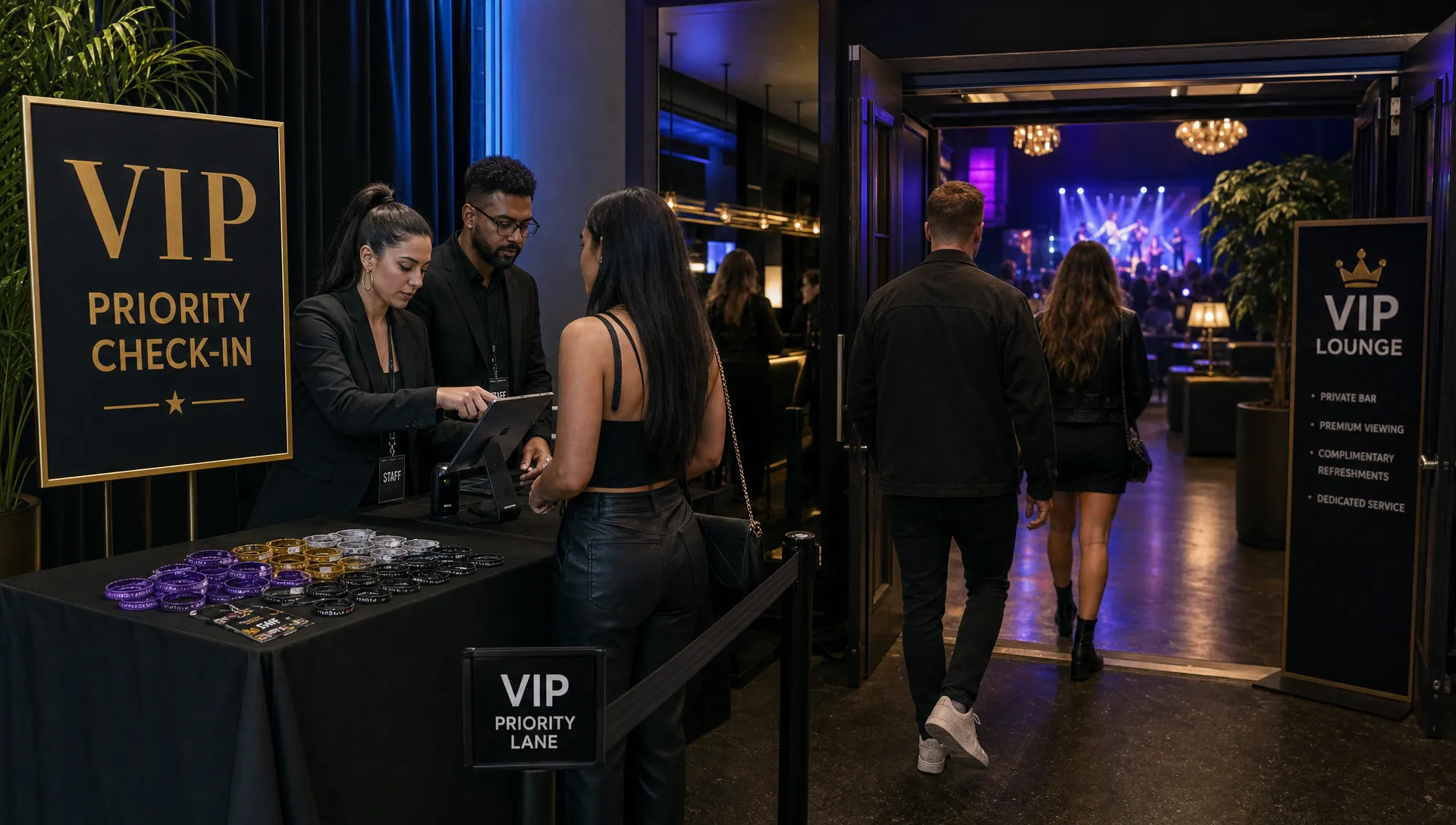
Operationally, the most important details are often simple. Your team needs accurate guest lists, clear ticket labels, visible signage, and a shared understanding of what each VIP package includes. TixFlow includes digital guest lists and real-time sales control, which can help organizers avoid overselling VIP capacity or losing track of package-specific access at the door.
Do not underestimate buyer communication. If VIP doors open at 7:00 and GA doors open at 8:00, put that in the ticket description, confirmation email, and event page. If meet and greet access closes 15 minutes before showtime, say it before checkout. Clarity protects the buyer experience and your support inbox.
Write VIP checkout copy that sells without overpromising
Your VIP copy should answer the buyer's practical questions and make the upgrade feel worth it. Avoid vague phrases like premium experience, exclusive access, or enhanced admission unless you immediately explain what they mean.
A strong VIP description usually includes:
- The exact access included
- The arrival time or entry window
- The physical location of the VIP benefit, when known
- Whether perks are limited, transferable, or time-sensitive
- Any restrictions, such as age limits or venue policies
For example, VIP with exclusive access is weak. VIP includes priority check-in, entry 30 minutes before GA, access to the front viewing section, and a limited event poster is stronger. It gives buyers a concrete reason to upgrade.
The checkout experience matters too. If buyers must create an account, search for package details, or click through confusing steps, impulse upgrades can disappear. TixFlow is built with no buyer registration and customizable event pages, which supports a cleaner path from interest to purchase.
Use scarcity honestly
Scarcity is one of the main reasons VIP works, but it has to be real. A VIP area that is sold without a meaningful capacity limit becomes crowded, which destroys the value of the upgrade. A meet and greet sold to too many people turns into a rushed photo line. A limited merch bundle that is not actually limited feels like a gimmick.
Set capacity based on the experience you want to deliver, not just the maximum number you can sell. If a premium viewing area feels comfortable at 75 people, do not sell 140 VIP tickets because the room technically allows it. The extra short-term revenue can cost you long-term trust.
Scarcity can also apply to sales phases. You might release a small early VIP allocation for superfans, then increase price as demand grows. You can also use smart promo codes for partners, artists, or street teams without discounting the public VIP price. The key is to keep the public offer consistent and the reason for any special access understandable.
Protect your margins before the event goes live
VIP can look profitable on paper and still disappoint if fees, staffing, merch, and hospitality are not accounted for. Before publishing, calculate net revenue per VIP ticket, not just gross price.
Ask what each package costs to deliver. Include per-ticket platform fees, payment processing, staff hours, printed materials, product costs, and any venue charges tied to premium areas. If you absorb fees without modeling them, you may be reducing the upside of your best inventory. For a deeper look at that decision, TixFlow's guide on how to stop absorbing ticket fees explains why fee strategy has a direct impact on event revenue.
This is especially important for smaller organizers and music producers. A sold-out VIP allocation should help fund production, marketing, venue deposits, or artist costs. If the package creates complexity without real margin, it is not VIP. It is extra work.
Common VIP package mistakes to avoid
The most common mistake is selling status without substance. Buyers can spot empty VIP language quickly. If the difference from GA is not meaningful, either improve the package or rename it as an add-on.
Another mistake is making VIP too dependent on uncertain variables. Artist access, backstage areas, venue layouts, and production schedules can change. If a perk might fall through, have a backup plan before selling it. A replacement perk should be equal in perceived value, not a last-minute apology.
Overcomplication is also dangerous. Too many VIP tiers, too many promo codes, and too many exceptions make it harder for staff to deliver the experience. If the door team cannot explain the difference between VIP A, VIP Gold, VIP Plus, and VIP Premium Plus in one sentence, buyers will feel the confusion too.
Finally, avoid hiding key details until after purchase. If buyers need to arrive early to receive a perk, tell them before they pay. If VIP does not include re-entry, make that clear. Transparency does not weaken sales. It creates confidence.
A practical VIP package checklist
Before you launch, review your package through the eyes of both the buyer and the operations team. A VIP offer is ready when it passes these tests:
- The buyer can understand the upgrade in under 10 seconds
- Every perk has an owner on the event team
- Capacity is limited based on experience quality
- Pricing protects margin after fees and costs
- Arrival and redemption instructions are clear
- The door team can verify VIP status quickly
- The package creates a better night, not just a higher price
If you cannot check each box, simplify the offer. The most profitable VIP package is often the one that is easiest to understand and easiest to deliver consistently.
Frequently Asked Questions
What should a VIP ticket package include? A good VIP ticket package should include clear, valuable benefits such as priority entry, premium viewing, reserved seating, exclusive merch, meet and greet access, or a private area. The best inclusions depend on your event type and buyer motivation.
How much more should VIP tickets cost than general admission? There is no universal markup. Price VIP based on added value, limited capacity, fulfillment costs, and demand. The price difference should be large enough to signal a real upgrade, but not so large that buyers cannot understand the value.
Are meet and greet packages worth selling? Meet and greet packages can be very attractive for fan-driven events, but only if timing, artist availability, and crowd flow are tightly managed. If you cannot guarantee a smooth experience, choose a more controllable VIP perk.
Should VIP be sold as a separate ticket or an add-on? Use a separate ticket when VIP changes entry, seating, or capacity. Use an add-on when the buyer can attach a perk to any admission type, such as merch or a parking upgrade. Keep the checkout structure as simple as possible.
How can VIP packages improve event cash flow? VIP packages increase average order value and can generate more revenue earlier in the sales cycle, especially when released to superfans or high-intent buyers first. Instant payouts can make that early revenue more useful for production and marketing costs.
Create VIP packages buyers trust
The VIP packages buyers actually want are specific, limited, and easy to redeem. They make the event feel smoother, more memorable, or more personal. They also give organizers a stronger revenue lever without relying only on selling more general admission tickets.
If you want to launch VIP packages with flexible pricing, unlimited ticket tiers, automated sales phases, smart promo codes, digital guest lists, and a checkout flow that does not require buyer registration, TixFlow is built to help modern event teams sell with less friction and more control.