
How Ticket Categories Shape Buyer Choice and Revenue
Ticket categories do more than organize admission types. They shape how buyers understand your event, how quickly they decide, and how much revenue you can capture before the doors open.
For event organizers and music producers, this matters because ticket sales are not just a payment moment. They are a positioning moment. The categories you show on your event page tell people who the event is for, what kind of experience they can expect, and whether buying now is worth it.
A weak category structure makes every option feel the same, which pushes buyers to choose the cheapest ticket or postpone the decision. A strong structure makes the value of each option obvious, helps different audiences self-select, and gives your team better control over cash flow.
What ticket categories really do
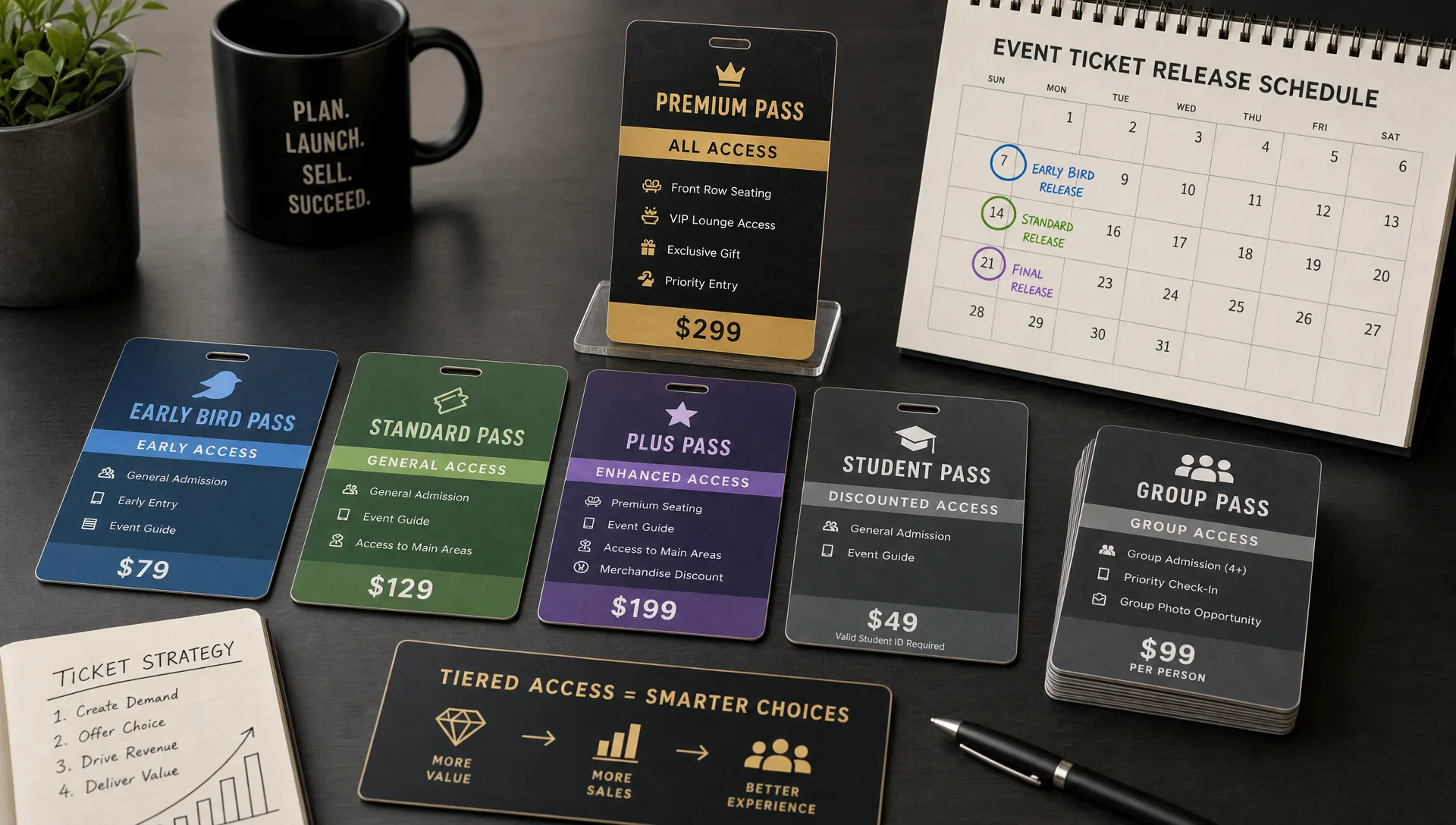
At the simplest level, ticket categories separate one type of admission from another. General Admission, VIP, backstage access, student tickets, group passes, table packages, and early bird tickets are all categories.
But strategically, ticket categories perform three bigger jobs.
First, they create a comparison frame. Buyers rarely evaluate a ticket in isolation. They compare options side by side and ask, “What do I get if I pay more?” or “What do I lose if I wait?” Your category structure gives them the answer.
Second, they segment demand. Not every attendee has the same budget, urgency, or motivation. Some want the lowest possible price. Some want convenience. Some want status, comfort, or access. Categories let you serve these groups without forcing everyone into one price.
Third, they control timing. Early categories can reward fast buyers and generate cash before production costs peak. Later categories can protect margins once demand is proven. If you want to go deeper on this pricing layer, TixFlow’s guide to unlimited ticket pricing tiers explains how tier flexibility can support revenue growth across different buying windows.
Why buyers respond to categories
Buyer choice is influenced by clarity, perceived value, and risk. Ticket categories touch all three.
When a buyer lands on your event page, they are often making a fast decision on a phone. They may be comparing calendars, checking a group chat, or deciding whether the event feels worth the money. Clear categories reduce the effort needed to choose.
A category like “VIP” can work, but only if the value is specific. “VIP: Fast Entry + Balcony Access + 2 Drink Tokens” is stronger because it turns an abstract label into a tangible upgrade. The same principle applies to “Early Bird,” “Group Pass,” or “Final Release.” The name should signal the reason to buy, and the description should remove uncertainty.
Categories also help buyers justify spending more. A premium option that sits next to a standard option can make the added value feel concrete. A group ticket can make a higher total purchase feel reasonable because the cost is mentally divided among friends. A limited early ticket can make buying today feel safer than waiting.
This is not about manipulating attendees. It is about helping them choose the experience that best fits their intent.
How ticket categories affect revenue
Revenue is not only shaped by attendance volume. It is shaped by average order value, purchase timing, inventory allocation, and fee exposure. Ticket categories influence all of these.
A single flat ticket can be easy to manage, but it leaves money on the table when your audience contains multiple willingness-to-pay segments. If a fan would happily pay more for early entry, a better view, or artist access, a single standard ticket prevents that revenue from being captured. If a student would attend at a lower community price, the same flat ticket may price them out.
Good categories help you earn more without simply raising the base price for everyone.
| Category pattern | Buyer it serves | Revenue role | What must be clear |
|---|---|---|---|
| Early access or early bird | Decisive buyers who trust the event | Generates cash earlier and builds momentum | Deadline, quantity, or phase end condition |
| Standard admission | Main audience | Creates the baseline offer | Entry rights, time, and any restrictions |
| Premium or VIP | Buyers seeking comfort, access, or status | Increases average order value | Exact benefits and whether inventory is limited |
| Group or table package | Friend groups, teams, or corporate buyers | Raises order size and reduces individual hesitation | Number of people included and seating or entry rules |
| Community, student, or member ticket | Price-sensitive but relevant audiences | Fills the room while protecting the public price | Eligibility requirements |
| Final release or door price | Late buyers | Captures demand after proof of popularity | Higher price logic and availability |
The best mix depends on your event. A warehouse show, seated concert, festival pre-party, corporate launch, and luxury wedding experience all need different category logic. For example, a high-touch experiential production, such as a record-setting champagne display by Luuk Broos Events, may justify categories based on viewing access, hosted hospitality, or premium guest treatment rather than simple entry time.
Build categories around buyer intent, not internal logistics
Many organizers create ticket categories based on how they manage the event internally. That can lead to labels that make sense to the team but not to the buyer.
“Phase 1,” “Phase 2,” and “Phase 3” are operationally clear, but they do not always explain why someone should buy now. “Early Supporter,” “General Release,” and “Final Release” are often easier for buyers to understand because they connect the category to urgency and value.
Before creating categories, ask what each buyer type is trying to solve.
- The fast fan wants the best price before everyone else.
- The social buyer wants a simple way to bring friends.
- The premium buyer wants access, comfort, or recognition.
- The cautious buyer wants enough trust to stop hesitating.
- The late buyer wants to know whether entry is still available.
Your categories should make those decisions easier. If two categories serve the same buyer need, merge them or differentiate the value more clearly. If an important buyer group has no obvious option, add one.
This is where event positioning and pricing strategy meet. If you are still defining how price should match your crowd, start with a broader event pricing strategy that fits your crowd before adding too many categories.
Avoid category overload
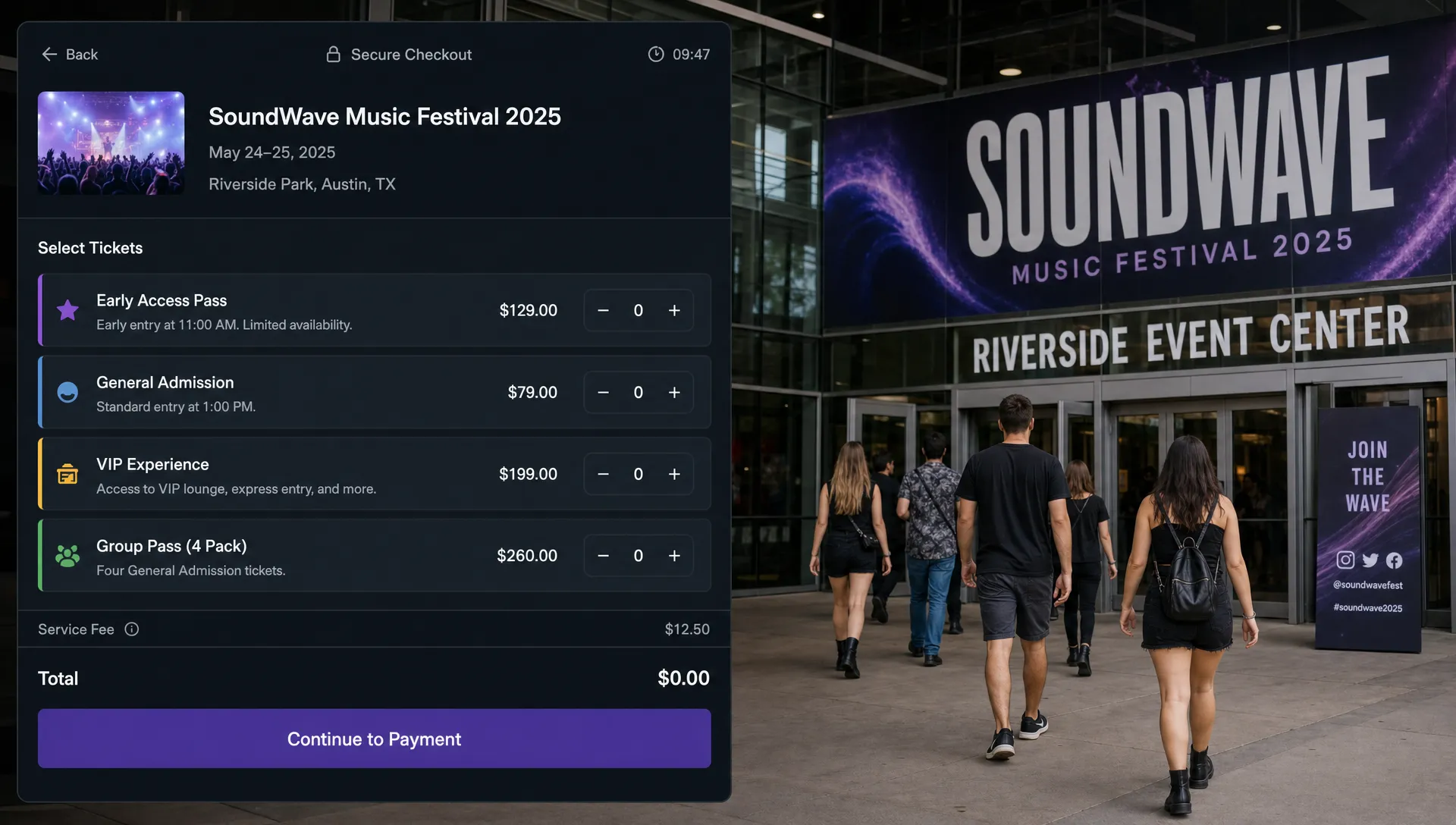
More options can mean more revenue opportunities, but too many options can slow decisions. A buyer who sees seven similar categories may not feel empowered. They may feel unsure.
Choice friction is especially risky on mobile, where attention is short and every extra comparison adds effort. The goal is not to show every possible variation. The goal is to show the few categories that create meaningful choices.
A practical structure for many events is three to five public categories at any one time. For example, an event could show Early Bird, General Admission, VIP, and Group Pass. When Early Bird sells out or expires, it can be replaced by General Release or Final Release. This keeps the page clean while still allowing the organizer to manage pricing over time.
Private or targeted categories can still exist behind promo codes, invite links, or sales phases. For instance, you might have a partner allocation, artist guest ticket, loyalty discount, or press access without displaying all of them publicly.
Make the value gap obvious
If buyers cannot quickly tell why one ticket costs more than another, they will often default to the cheapest option. This is one of the most common revenue leaks in event ticketing.
A premium category should not just be “better.” It should be visibly different. That difference can come from access, convenience, scarcity, seating, social proof, or included perks.
For music events, premium value might include:
- Priority entry
- Reserved area access
- Meet and greet access
- Merch bundle pickup
- Hosted table package
- Backstage or afterparty access, when appropriate
For business or brand events, premium value might include better seating, networking access, hospitality, speaker meetups, or sponsor-hosted experiences.
The same rule applies to lower-priced categories. If you offer a discounted category, explain the tradeoff. Is it time-limited? Quantity-limited? Eligibility-based? A discount without a reason can train buyers to wait for future discounts. A discount with a clear reason can drive action while protecting perceived value.
Use categories to support cash flow
For organizers who care about cash flow, ticket categories are one of the most practical planning tools available.
Early sales can help cover deposits, marketing, production, staffing, and venue costs. If your first category is priced attractively and capped intelligently, it can create early movement without permanently lowering the value of the event.
Later categories can then increase price as risk decreases. Once the lineup is announced, sponsors are confirmed, or social proof grows, buyers may be more comfortable paying more. This lets you reward early believers while protecting upside once demand is stronger.
The important point is to avoid leaving category changes to the last minute. Sales phases should be planned before launch. Decide what happens when an early tier sells out, when a date passes, or when a sales target is reached.
With TixFlow, organizers can use features such as automated sales phases, unlimited ticket tiers, smart promo codes, and real-time sales control to manage this kind of structure without rebuilding the event page manually every time demand changes.
Watch the data after launch
Your first category plan is a hypothesis. The market response is the truth.
Once sales begin, watch how each category performs. A slow premium category may mean the value is unclear, the price gap is too large, or the audience is not interested in that upgrade. A fast-selling group category may reveal that your event is socially driven and that additional group inventory could increase revenue. A standard ticket that sells steadily but never accelerates may need stronger urgency or clearer proof.
Track more than total tickets sold. Look at sales by category, conversion timing, promo code use, and the points where buyers hesitate. TixFlow’s guide on using ticket statistics to improve event sales covers the kind of signals organizers can monitor to spot these patterns earlier.
A category should not stay open just because it was part of the original plan. If buyers are clearly responding to one structure and ignoring another, adjust before the peak sales window passes.
Common mistakes that weaken ticket categories
The biggest mistake is creating categories that are different in name but not in value. “Standard,” “Regular,” and “General” are not three meaningful options if they all provide the same access.
Another mistake is hiding the most important details. If VIP includes fast entry, say so. If a group ticket admits four people, make that impossible to miss. If an early ticket ends on a specific date, show the deadline clearly.
Organizers also weaken categories when they discount too broadly. Promo codes can be powerful, but if every audience segment receives a discount, the listed categories lose credibility. Use codes to target specific groups, partners, or moments rather than replacing your pricing strategy with constant reductions.
Finally, do not create premium categories that your operations team cannot deliver. If you sell priority entry, the door team must know how to handle it. If you sell table access, the layout must support it. Revenue gains disappear quickly when the attendee experience does not match the promise.
A simple framework for your next event
Before publishing your ticket page, pressure-test your categories with five questions.
- Can a buyer understand each category in less than ten seconds? If not, simplify the name or description.
- Does each category serve a distinct buyer intent? If two options attract the same buyer for the same reason, combine them.
- Is the price difference justified by visible value? If not, improve the offer or reduce the gap.
- Does the structure support your cash flow timeline? Early categories should help you bring money in before major costs hit.
- Can your team deliver every promise? If the category creates operational complexity, make sure staff, entry systems, and guest lists are ready.
This framework keeps ticket categories connected to real buyer behavior instead of internal guesswork.
Frequently Asked Questions
What are ticket categories? Ticket categories are the different ticket options buyers can choose from, such as General Admission, VIP, Early Bird, Group Pass, or Student Ticket. They define access, price, timing, eligibility, or experience level.
How many ticket categories should an event have? Many events work best with three to five public categories at a time. The right number depends on event size, audience segments, and operational complexity, but every category should represent a meaningful choice.
Do more ticket categories always increase revenue? No. More categories can increase revenue when they match different buyer needs, but too many similar options can create confusion and reduce conversions.
What is the difference between ticket categories and pricing tiers? Ticket categories usually describe different types of access or buyer segments. Pricing tiers often describe time-based or quantity-based price changes for the same category, such as Early Bird, General Release, and Final Release.
Can ticket categories improve cash flow? Yes. Early categories can encourage faster purchases, which helps organizers collect revenue before major event costs are due. Later categories can increase price as demand becomes clearer.
Turn category strategy into smoother ticket sales
The right ticket categories make buying feel easier and revenue planning more predictable. They help attendees choose with confidence, give premium buyers a reason to spend more, and help organizers control timing, inventory, and cash flow.
TixFlow is built for modern event teams that want flexible ticket setup without unnecessary friction. With instant payouts, flat per-ticket fees, no buyer registration, customizable event pages, automated sales phases, and real-time sales control, you can shape your ticket categories around how your audience actually buys.