
How Ticket Unlimited Pricing Tiers Can Increase Revenue
A single ticket price is simple, but it rarely reflects the way people actually buy. Some fans are ready to commit as soon as the event drops. Others wait until payday, until friends confirm, or until the lineup feels complete. Some attendees only want entry, while others will pay more for comfort, access, or status.
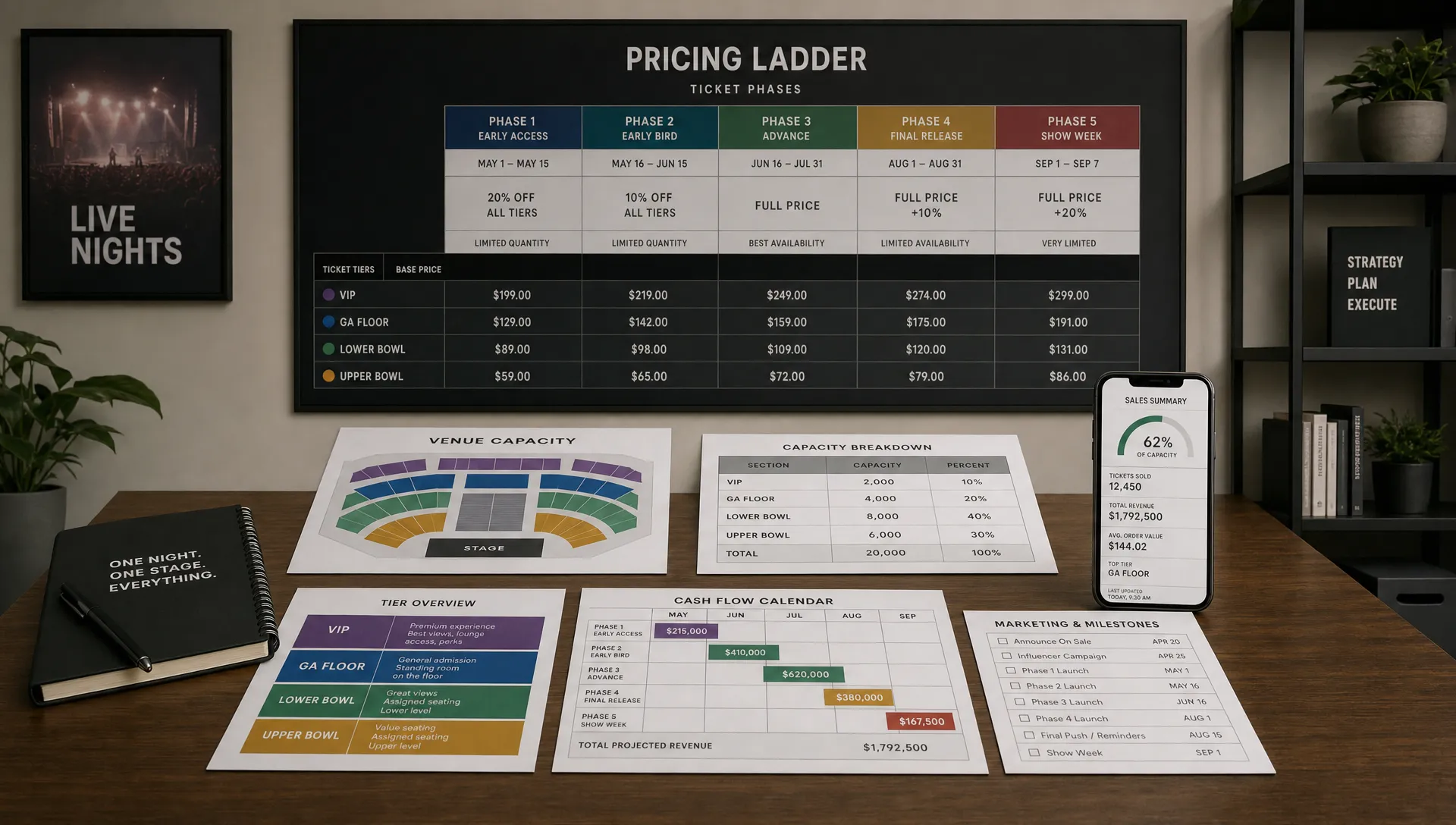
That gap between buyer behavior and a one-size-fits-all price is where unlimited ticket pricing tiers can increase revenue. Instead of forcing every attendee into the same price point, organizers can create a smarter pricing ladder that captures early demand, protects premium value, and gives buyers a clear reason to act before the next tier opens.
For event organizers, music producers, nightlife promoters, conference teams, and anyone watching cash flow closely, the goal is not to create endless complexity. The goal is to use flexible ticket tiers with intention, so each price point has a job.
What are unlimited ticket pricing tiers?
Unlimited ticket pricing tiers let you create as many ticket types, price levels, or sales phases as your event strategy requires. That might include early bird tickets, general admission, VIP, group passes, student tickets, backstage add-ons, table packages, sponsor allocations, or last-call tickets.
The word “unlimited” matters because many ticketing setups force organizers into a narrow structure. If you can only create a few tiers, you may have to choose between pricing accuracy and operational simplicity. With unlimited ticket tiers, you can align pricing with timing, audience segments, capacity, and perceived value.
A ticket unlimited pricing approach does not mean showing 20 choices to every buyer. In fact, the best tier strategy often feels simple on the front end. Buyers see the options that are relevant right now, while the organizer maintains more control behind the scenes.
Why one-price ticketing leaves money on the table
A flat ticket price seems fair, but it often underperforms because it treats every buyer as if they have the same urgency and willingness to pay. That rarely happens in real events.
For example, the first 100 fans of an artist may be willing to buy immediately, even before the full promotional campaign begins. Casual attendees may need a lower-friction reason to commit early. VIP buyers may want a premium experience and are not especially motivated by a small discount. Last-minute buyers may accept a higher price because the event is now socially validated.
When everyone pays the same price, you usually create one of two problems. If the price is low enough to drive early volume, you may undercharge high-intent buyers later. If the price is high enough to protect margin, you may slow down early sales and weaken momentum.
Unlimited tiers help solve this by separating price from value perception. You can reward early commitment without discounting the entire room. You can charge more for premium experiences without raising the base entry price. You can increase prices as certainty improves, instead of guessing the perfect price before demand has revealed itself.
The revenue levers behind unlimited ticket tiers
Unlimited ticket pricing tiers increase revenue because they give organizers more ways to match buyer intent. The best results usually come from combining several revenue levers at once.
Early tiers create urgency without panic
Early bird pricing works because it gives buyers a concrete reason to act now. The key is to make the tier limited by quantity, time, or both. If “early bird” never ends, it stops feeling like a benefit and becomes the real price.
A clean early tier can also improve cash flow. The earlier you sell tickets, the sooner you can cover deposits, production costs, marketing spend, artist guarantees, venue expenses, and staffing.
Mid-tier pricing protects your baseline
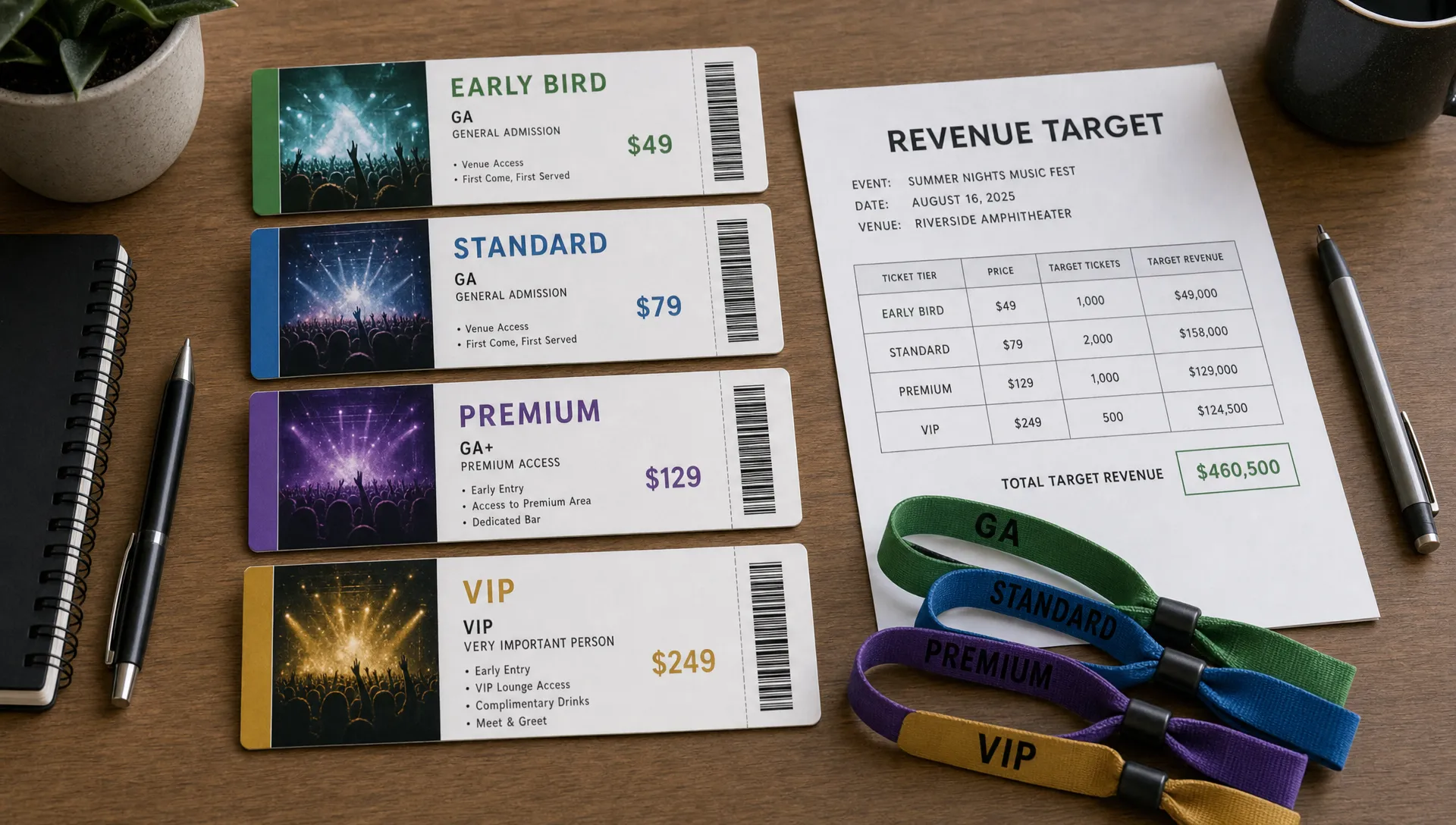
Your standard general admission tier is the anchor. This is the price most attendees will use to judge whether the event feels fair. It should be tied to your real revenue target, not just what competitors are charging.
If you want to go deeper on protecting net revenue while keeping buyer friction low, TixFlow’s guide on how to sell your tickets without cutting into revenue is a useful companion to this tiering strategy.
Premium tiers capture higher willingness to pay
Not every buyer is looking for the cheapest option. Premium tiers can increase average order value by offering more convenience, better access, or a more memorable experience. For concerts and nightlife events, that might mean VIP entry, reserved seating, table access, meet-and-greet access, or bundled merchandise. For conferences, it might mean workshops, networking sessions, preferred seating, or sponsor-hosted experiences.
The important rule is that premium pricing must be tied to visible value. Buyers should immediately understand what makes the premium tier different.
Automated phases let pricing follow demand
Price increases are easier to manage when they are planned in advance. Automated sales phases can move buyers from early bird to general admission to final release without requiring the organizer to manually update the event page at the exact moment a tier ends.
This matters for teams running multiple shows or campaigns at once. A music producer promoting a release party should not have to pause creative work just to change a ticket price at midnight.
For a broader look at demand-based price movement, scarcity, and sell-out psychology, see TixFlow’s article on dynamic ticket pricing strategy.
A simple framework for building high-revenue ticket tiers
Unlimited tiers work best when each tier has a clear purpose. Before adding another option, ask what business outcome it supports. Does it improve early cash flow? Increase average order value? Reduce empty seats? Reward loyal fans? Track a marketing partner? Manage capacity?
Here is a practical structure many organizers can adapt:
| Tier type | Example use | Revenue role | Watch-out |
|---|---|---|---|
| Early commitment | First 50 or first 100 tickets | Builds momentum and cash flow | Do not leave it open too long |
| Standard admission | Main public ticket | Anchors expected value | Price it from your revenue goal, not guesswork |
| Premium access | VIP, table, reserved, backstage, workshop | Raises average order value | Make the added value obvious |
| Group or bundle | 4-pack, crew pass, team pass | Increases order size | Avoid discounting so deeply that margin disappears |
| Partner or promo | Influencer, sponsor, campus, label, community | Tracks campaign performance | Use unique codes or limited allocations |
| Final release | Last chance, door price, late buyer | Captures urgency near event date | Communicate the increase clearly |
A good pricing ladder should feel like a story. The earliest buyers get the best entry price because they take the most uncertainty. The middle buyers pay the standard value. The latest buyers pay more because demand is proven and time is short. Premium buyers pay more because they receive more.
How unlimited tiers improve cash flow control
For many event organizers, revenue is not only about total sales. Timing matters just as much. Selling 500 tickets the day before the event may look good on paper, but it does not help much if deposits, ad spend, venue costs, and production expenses were due weeks earlier.
Unlimited pricing tiers can help smooth this out by creating reasons to buy earlier. Early bird tiers pull demand forward. Group tiers encourage larger transactions sooner. Premium tiers bring in higher-value purchases before general demand peaks.
This is especially important for independent organizers and music producers who may not have large reserves. Better cash flow means more room to invest in production, book better talent, extend marketing, or reduce personal financial risk.
TixFlow supports this strategy with features such as instant payouts, flat per-ticket fees, real-time sales control, unlimited ticket tiers, automated sales phases, and Stripe Connect integration. That combination is valuable because pricing strategy only works when the ticketing platform gives organizers enough control to act quickly.
Keep the buyer experience simple
Unlimited ticket tiers can create more control for the organizer, but they should not create confusion for the buyer. A crowded checkout page can slow decisions, increase abandoned carts, and make buyers question what they are actually getting.
The best approach is to keep the public-facing choice simple while maintaining detailed control in the back end. For example, you might have several promo allocations, partner codes, and timed phases behind the scenes, while the buyer only sees two or three relevant options.
Strong tier names also matter. “General Admission” is clearer than “Phase 2 Access.” “VIP Balcony Access” is clearer than “Premium Tier B.” Buyers should not need to decode your pricing logic.
Checkout friction is another revenue issue. If people have to create an account before buying, enter too much information, or wait too long for confirmation, some will drop off. TixFlow’s no buyer registration checkout is designed to reduce that kind of friction, which supports the revenue upside of a smart tier strategy.
For more on the checkout side of sales performance, the article on what makes a high-converting ticketing website explains why clarity, speed, and trust matter so much.
Use promo tiers without training buyers to wait for discounts
Promo codes and private tiers are powerful when they are controlled. They can help you reward loyal fans, track partner performance, activate local communities, or give sponsors measurable value.
The risk is overusing discounts so often that buyers learn to wait. If every event has a last-minute promo, your audience may stop buying early. That weakens urgency and hurts cash flow.
A better model is to make promo tiers specific and measurable. Use smart promo codes for a defined audience, time window, or quantity. Track which partner or campaign actually sells tickets. If a code does not perform, you can adjust future allocations instead of guessing.
For larger local events, tiered ticketing can also connect with offline and omnichannel marketing. A promoter could segment high-value neighborhoods, past buyers, or sponsor audiences and pair unique promo codes with postcards or mailers using an all-in-one direct mail platform like DirectMail.io. That makes it easier to connect physical outreach with trackable ticket revenue.
Metrics that show whether your tiers are working
Unlimited ticket tiers give you more data, but only if you know what to watch. The goal is not to admire a long list of ticket types. The goal is to see which tiers move buyers, protect margin, and improve cash flow.
Track these metrics before, during, and after each event:
| Metric | What it tells you | How to use it |
|---|---|---|
| Sell-through by tier | Which price points moved fastest | Adjust quantities and timing next time |
| Revenue per attendee | Whether premium and bundle tiers lifted value | Refine premium offers or bundles |
| Days to break even | How quickly tickets covered fixed costs | Improve early tiers and campaign timing |
| Promo code revenue | Which partners or channels drove sales | Reallocate budget and ticket allocations |
| Checkout conversion | Whether buyers completed purchases | Simplify ticket options and checkout flow |
| Final-week sales share | How much revenue came late | Decide whether to raise final-release pricing |
Real-time sales control is valuable here because it lets organizers respond while the event is still on sale. If early tiers sell too quickly, your next event may need a smaller early allocation or a higher starting price. If premium tiers stall, the offer may need clearer value or better placement on the event page.
Common mistakes with unlimited pricing tiers
Unlimited tiers are a tool, not a guarantee. Revenue can increase when the structure is clear, but it can suffer when tiers are random or poorly explained.
Avoid these common mistakes:
- Creating too many visible ticket options at once
- Discounting without a clear reason or limit
- Using vague names that do not explain the benefit
- Setting early bird prices so low that they damage the event’s perceived value
- Forgetting to plan fee impact when calculating net revenue
- Raising prices without communicating scarcity or timing
- Offering VIP tiers that do not feel meaningfully different
- Failing to review tier performance after the event
The best tier strategy is usually simple to understand but deliberate behind the scenes. Every tier should answer one question: why should this buyer purchase this ticket now?
When unlimited tiers are most valuable
Unlimited ticket pricing tiers are especially useful when your audience is diverse, your demand curve changes over time, or your event has multiple value levels.
They are a strong fit for concerts, club nights, festivals, workshops, conferences, launch parties, community events, networking events, seated experiences, and any event where early cash flow matters.
They are less useful when the event is extremely small, free, or intentionally simple. Even then, a few smart tiers can still help, such as free RSVP, paid reserved access, sponsor passes, or donation-based add-ons.
The key is to avoid adding tiers just because the platform allows it. Unlimited control should make your strategy sharper, not heavier.
Frequently Asked Questions
Do unlimited ticket pricing tiers confuse buyers? They can if every option is shown at once. The best approach is to keep the buyer-facing experience simple while using tiers, phases, promo codes, and allocations strategically behind the scenes.
How many ticket tiers should an event have? Many events can start with three to five visible tiers, such as early bird, general admission, VIP, group, and final release. Larger events may use more private or automated tiers for partners, sponsors, or timed phases.
Can unlimited tiers help small events increase revenue? Yes, especially when they create early urgency, protect the main ticket price, or offer a premium option. Small events should be careful not to overcomplicate the checkout experience.
Should early bird tickets always be cheaper? Usually, yes, but the discount should be controlled. Early bird pricing should reward early commitment without making later prices feel unfair or inflated.
What is the biggest revenue benefit of unlimited ticket tiers? The biggest benefit is price alignment. You can charge different amounts based on timing, value, urgency, and buyer segment instead of forcing every attendee into one price.
Build a pricing ladder that supports your event goals
Unlimited ticket pricing tiers can increase revenue, but only when they are tied to a clear plan. Start with your revenue target, map your audience segments, define what each tier is meant to accomplish, and keep the buying experience fast and clear.
With TixFlow, organizers can set up flexible ticket tiers, automate sales phases, use smart promo codes, customize event pages, manage digital guest lists, and control sales in real time. If you want better cash flow and a cleaner way to sell tickets, a smarter tier strategy is one of the most practical places to start.