
Need to Sell Tickets Fast? Start With Your Warmest Audience
When you need to sell tickets fast, the instinct is to post everywhere, boost a few ads and hope the algorithm finds buyers. That can help later, but it is rarely the fastest first move. Your quickest sales usually come from people who already know the event, the artists, the venue or the organizer behind it.
Cold audiences need context before they trust you. Warm audiences need a clear reason to act now. If you are running a club night, producer showcase, workshop, listening party or local festival, speed comes from narrowing the first push instead of widening it. Start with the people closest to the event, convert them cleanly and let that visible momentum make the public launch feel real.
If you need to sell tickets fast, start with people who already trust you
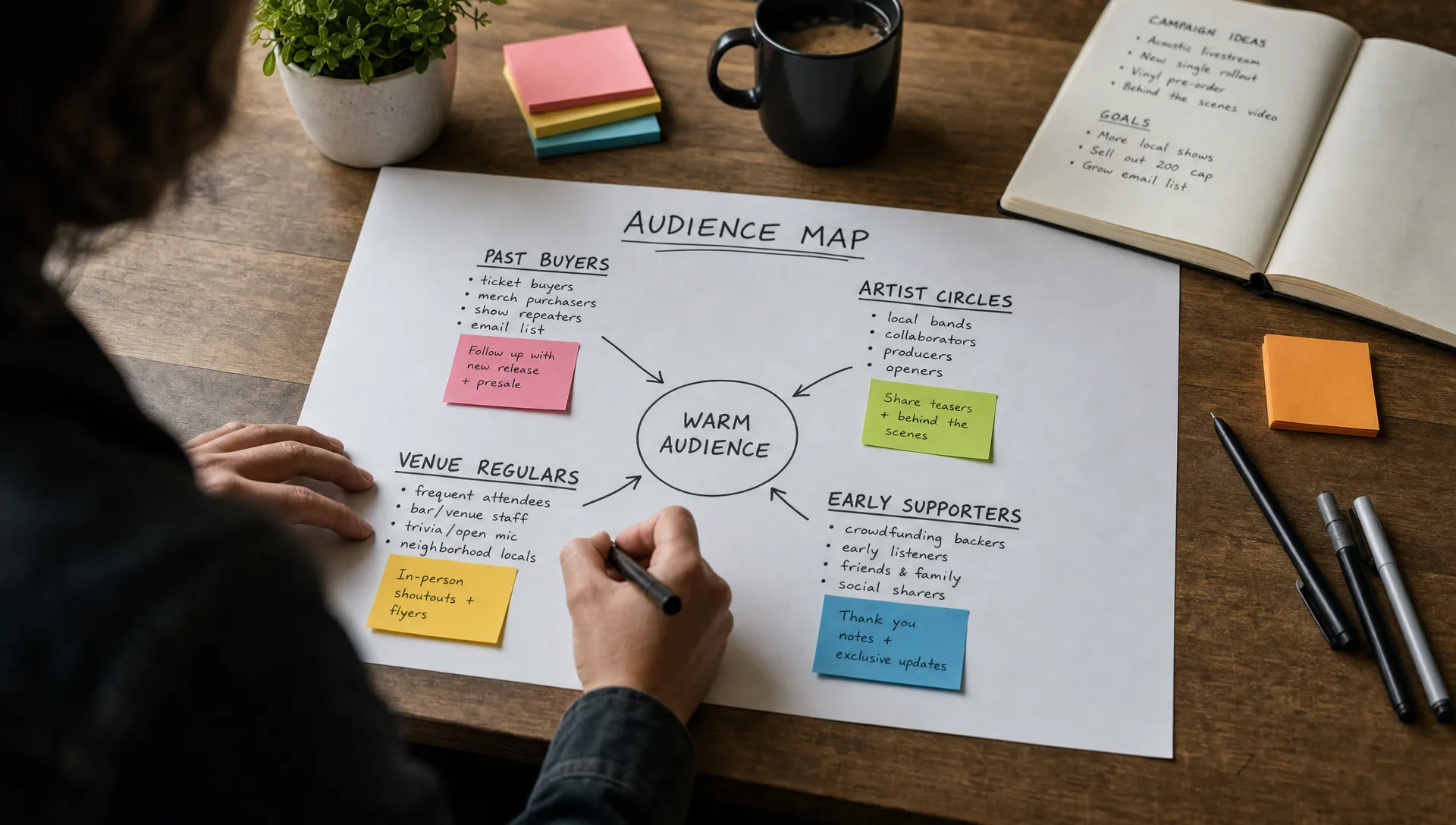
A warm audience is not just your email list. It includes anyone with an existing connection to the event: past ticket buyers, previous attendees, artist followers, members of a community you host, friends of performers, venue regulars, collaborators, sponsors and people who engaged with earlier announcements.
These people require less persuasion because they already have at least one reason to care. The message does not need to explain who you are from scratch. It can focus on the next decision: buy now, share with a friend or secure a better ticket before the public rush.
That matters when time is tight. Paid ads and broad social posts can create awareness, but they often reach people who are still deciding whether the event is relevant to them. Your warmest audience has already crossed that first bridge. Your job is to make the ticket purchase feel immediate, simple and worth doing today.
Build a warm audience map before you post everywhere
Before announcing another general “tickets out now” message, list your warmest groups in order of purchase likelihood. This does not need to be complicated. A simple map helps you decide who gets a direct message, who gets a private presale and who gets a public post.
When you need to sell tickets this week, treat every channel by intent rather than size. A small group of past buyers may outperform a large social following if those buyers already trust the format and understand the value.
| Warm audience group | Why they are warm | Best first move |
|---|---|---|
| Past ticket buyers | They have already paid for a related experience | Send a direct early access message |
| Interest list or waitlist | They already raised their hand | Give them a short purchase window |
| Artist or speaker circles | Their trust is tied to the talent | Provide trackable links or codes |
| Venue regulars | They know the room and location | Use venue email, posters and staff mentions |
| Community members | They already follow your taste or mission | Offer a reason to come as a group |
| Friends of confirmed buyers | Social proof is already active | Encourage sharing after checkout |
If you do not have a list yet, make one for the next event. A pre-launch interest list gives you a warmer starting point before the public sale begins.
Rank people by likelihood, not follower count
Follower count can mislead organizers. A DJ with 3,000 local followers may sell more tickets than a brand account with 30,000 passive followers. A venue newsletter with a smaller but loyal audience may outperform a broad Instagram reel because subscribers already associate that venue with nights out.
Prioritize groups that have three traits: they understand the event, they can act quickly and they can influence others. For music events, this often means the artist’s closest fans, the venue’s regulars and people who attended the last edition. For workshops or private cultural events, it may mean alumni, members and partner communities.
Give each warm group a reason to act today
A warm audience still needs a prompt. “Tickets are available” is factual, but it does not tell people why now matters. If you need to sell tickets before cash commitments hit, give your closest audience a specific and honest reason to buy during the first push.
Good urgency comes from a real constraint. That might be a limited early tier, a private presale window, a small room capacity, a reserved guest list deadline or a bundle that disappears before general sale. Avoid fake scarcity. Buyers can feel when urgency is manufactured, and that can weaken trust for your next event.
Use ticket structure to make the decision clear. Early supporter tickets can reward the first wave without lowering the perceived value of the whole event. Group tickets can help friends commit together. VIP or front-row tiers can capture demand from your strongest supporters without forcing every buyer into the same price point.
If your tickets are already live and you need stronger public urgency, pair this warm audience push with a clear campaign plan to promote tickets once they are on sale. The warm push creates the spark, then public promotion gives that spark more reach.
Use private outreach before public promotion
Private outreach works because it feels specific. A one-to-one message, small group text or segmented email can make someone feel invited rather than marketed to. This is especially useful for event organizers who have a loyal audience but not a huge one.
A good warm message is short, direct and easy to forward. It should name the event, explain why the person is receiving it first and include one clear link. Do not make people hunt for the ticket page across multiple posts.
A simple message can look like this:
I wanted to send this to you before we push it publicly. We are opening the first ticket tier for Friday’s showcase today, and I think you would love this lineup. If you want in, this is the early link.
That message works because it gives context, access and a single action. It also respects the relationship. You are not begging for support. You are offering the person a better chance to get in early.
If you need to sell tickets fast but your public posts are not converting, spend one focused hour on direct outreach before changing the entire campaign. Message the top 25 to 100 people or partners who are most likely to care. The first visible orders can shift the energy of the whole sale.
Make the checkout as fast as the pitch
Warm interest is fragile. If someone taps your link from a text, story or artist post, they should land on a clear event page and buy without unnecessary friction. Every extra account step, confusing ticket name or hidden fee gives them a reason to pause.
The checkout should answer the buyer’s immediate questions: what is the event, when is it, where is it, what ticket should I choose and what happens after I pay. A clean page matters even more when traffic comes from DMs because the buyer may be moving quickly between other tasks.
Organizers who need to sell tickets fast should also watch payment flow closely. Fast sales do not help much if revenue arrives too late to cover deposits, production costs or artist guarantees. Platforms with instant payouts, clear per-ticket fees and real-time sales control can make a major operational difference for cash flow.
TixFlow is built around that kind of low-friction sale: no buyer registration, customizable event pages, unlimited ticket tiers, smart promo codes, automated sales phases and Stripe Connect integration. If you are comparing tools, prioritize the factors that affect real purchases, not just surface-level design. This guide to choosing the best place to sell tickets for small and mid-size events explains those tradeoffs in more detail.
Turn early buyers into your next warm channel
The first buyers are not only revenue. They are proof that the event is moving. Once people buy, give them an easy reason to bring someone else. This can be as simple as a confirmation message that encourages forwarding the ticket link to one friend who would enjoy the event.
For music producers, artists and nightlife teams, this matters because events are social decisions. Many people do not buy alone. They buy when they know their friend, collaborator or group chat is going. Your warmest buyers can reduce hesitation for the next circle of buyers.
When you need to sell tickets beyond the first wave, create a post-purchase sharing moment. Keep it simple: “You are in. Want to bring someone with you? Send them this link before the current tier closes.” If you use promo codes, give partners and performers codes that feel clean and easy to repeat.
A digital guest list also helps you coordinate the door while momentum builds online. If an artist has a small allocation, or a partner needs a few comped names, keep those names organized separately from paid orders so your capacity numbers stay accurate.
Protect cash flow while you move fast
Speed should not mean discounting everything. Deep last-minute discounts can train your audience to wait, and they can punish the people who bought early. If cash flow is the issue, structure the sale so early action creates revenue without damaging the event’s perceived value.
When you need to sell tickets but also protect margins, use phased pricing instead of panic discounts. For example, open with a limited early supporter tier, move into general admission and reserve a higher door price if the event format allows it. The goal is to reward urgency while keeping the standard ticket valuable.
Real-time control helps here. If one tier is moving too quickly, you can close it. If a sales phase is slow, you can adjust the message before changing the price. Smart promo codes can also help you test partner channels without publicly lowering the ticket for everyone.
The best fast-sales plan gives you both momentum and visibility. You know who is buying, which audience is converting and how much money is available for production decisions. That lets you promote with confidence instead of guessing.
A 48-hour warm audience sprint
If you are short on time, run a focused sprint before launching another broad campaign. The goal is not to contact everyone. The goal is to move the people most likely to buy first.
Use this simple sequence:
- Hour 1: Segment your warmest groups, including past buyers, list members, artist circles and venue contacts.
- Hours 2 to 6: Send private messages and segmented emails with one clear ticket link.
- Hours 6 to 24: Ask artists, partners and confirmed buyers to share the link with a specific reason to act.
- Hours 24 to 36: Post public proof of momentum, such as a tier update or lineup reminder, without exaggerating.
- Hours 36 to 48: Review sales by channel, adjust the next message and close or extend any time-limited offer based on real demand.
If you need to sell tickets quickly, this sprint gives you a controlled way to create movement without scattering your energy across every platform at once. It also produces useful data for the rest of the campaign.
Frequently Asked Questions
What should I do first if I need to sell tickets quickly? Start with your warmest audience, not your broadest channel. Contact past buyers, interested subscribers, artist circles, venue regulars and community members with a direct message and a clear ticket link.
Should I discount tickets to sell them faster? Not always. A limited early tier, group ticket or short presale window can create urgency without lowering the value of the event for everyone. Use discounts carefully if you need to protect margins.
How many people should I contact directly? Start with the highest-intent group you can handle personally. For a small event, 25 to 100 direct messages can be enough to create visible momentum. For a larger event, segment by past purchase behavior, partner audience or interest level.
What makes a warm audience message convert? The message should feel personal, explain why the recipient is getting access now and include one simple purchase link. Avoid long explanations, multiple calls to action and vague urgency.
How can I tell if my warm audience push is working? Watch early orders, link activity, replies and partner code usage. If people are responding but not buying, improve the event page or ticket offer. If people are not responding, your first group may not be warm enough.
Sell faster with less friction
Fast ticket sales usually start with trust. Your warmest audience already has some of it, so give them a clear reason to act and a checkout that does not slow them down.
TixFlow helps organizers move quickly with instant payouts, no buyer registration, flat per-ticket fees, flexible ticket tiers, smart promo codes, real-time sales control and customizable event pages. If your next event needs momentum now, start with the people most likely to say yes and make the buying path effortless.