
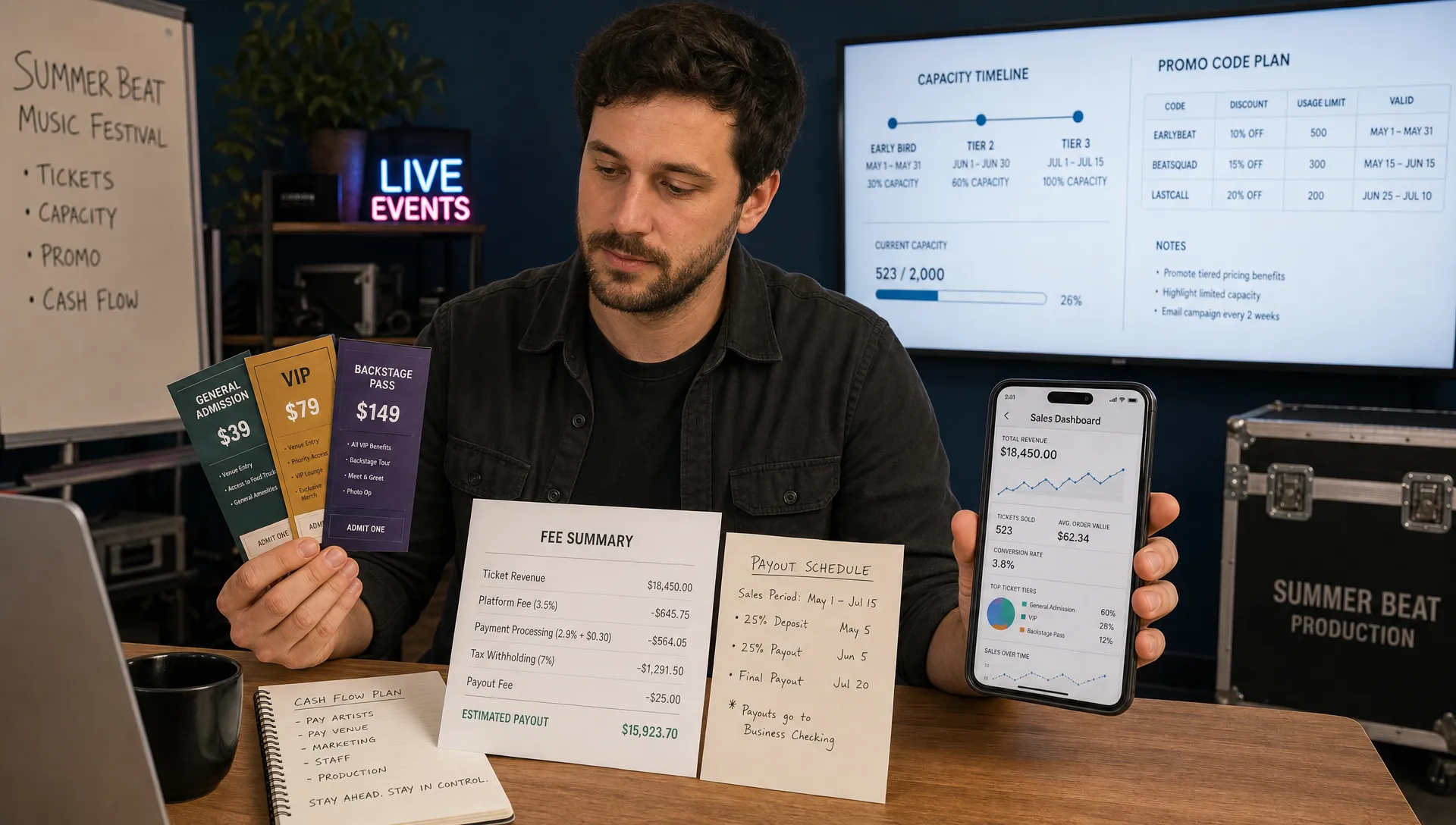
Best Place to Sell Your Tickets for Small and Mid-Size Events
For small and mid-size event organizers, the best place to sell your tickets is not simply the platform with the most recognizable name. It is the place where buyers can purchase quickly, your team can manage sales without friction, and your cash flow stays predictable before event day.
That matters because smaller events usually have less margin for error. A slow checkout can cost you impulse buyers. Delayed payouts can make it harder to pay vendors, artists, staff, or venues on time. Rigid pricing can limit your ability to run early bird offers, last-minute pushes, or VIP tiers. The right ticketing setup should help you sell more while making operations easier, not add another complicated system to manage.
Below, we will break down what to look for, which selling channels make sense, and why a modern ticketing platform is often the strongest choice for small and mid-size events.
What “best place” really means for event ticket sales
Many organizers start by asking, “Where can I list my event?” That is a fair question, but it is incomplete. Listing the event is only one part of selling tickets. The better question is: “Which ticket selling option protects my revenue, converts buyers, and gives me control from launch to check-in?”
For a small concert, workshop, party, food event, community gathering, comedy night, conference, or recurring local series, the best platform should do five things well:
- Make buying fast, especially on mobile.
- Keep fees transparent so you know what each sale is worth.
- Pay you quickly enough to support real cash flow.
- Let you adjust pricing, sales phases, and promo codes without rebuilding your page.
- Give your team a clean way to manage guests at the door.
A platform can have a polished event page and still fail if it slows down checkout or holds revenue too long. Likewise, a low-cost tool may look attractive until you realize it lacks the pricing control, guest list tools, or checkout experience your event needs.
Common places to sell tickets, and where they fit
There is no single channel that fits every event. Some organizers only need a basic link. Others need tiers, promo codes, guest lists, and sales tracking. Here is a practical comparison.
| Selling option | Best for | Main advantage | Watch out for |
|---|---|---|---|
| Social media DMs or manual payments | Very small invite-only events | Simple to start | Hard to track, easy to miss payments, poor at-door organization |
| Generic payment links | Simple paid reservations | Fast payment setup | Limited event-specific controls and guest management |
| Large ticket marketplaces | Events that rely on marketplace discovery | Built-in audience in some categories | More competition, less brand control, fees may be harder to manage |
| Your own website with checkout | Established brands with steady traffic | Strong brand ownership | Requires setup, maintenance, and event operations tools |
| Modern event ticketing platform | Small and mid-size events that need control | Checkout, pricing, payouts, and guest lists in one flow | Choose carefully, not every platform is built for your cash flow needs |
For most small and mid-size organizers, a dedicated event ticketing platform offers the best balance. It gives you a shareable purchase link, a branded event page, ticket management, and entry support without forcing you to build everything yourself.
The checkout experience can make or break sales
When someone decides to attend your event, the next minute is critical. If the checkout asks for too much information, requires account creation, loads slowly, or feels unfamiliar, buyers can abandon the purchase.
This is especially important for events promoted through Instagram, TikTok, email, SMS, artist pages, or community groups. Many buyers arrive on mobile, often with low patience and high distraction. A smooth checkout helps turn attention into revenue before the buyer moves on.
Look for a ticket selling platform that supports a short purchase path. Ideally, attendees should be able to choose a ticket, pay, and receive confirmation without creating an account first. No buyer registration is a meaningful advantage for organizers because it removes a common source of friction.
A strong checkout should also be clear about ticket types, total price, confirmation, and entry instructions. If buyers understand what they are getting, they are more likely to finish the transaction and show up confident on event day.
If you want a deeper look at how the buying flow affects conversions and entry operations, TixFlow’s guide on how online tickets improve checkout and entry covers the attendee experience in more detail.
Fees should be predictable, not a surprise after sales begin
Ticket fees are not just an accounting detail. They affect pricing, buyer perception, and the actual revenue you can use to run the event.
For small and mid-size events, unpredictable fees can create problems quickly. If you priced tickets around a thin margin, a percentage-based or layered fee structure may reduce the money available for venue deposits, production, security, hospitality, talent, marketing, and refunds.
The best place to sell your tickets should make the cost per ticket easy to understand before you publish your event. Flat per-ticket fees are especially useful because they help organizers forecast revenue with less guesswork. When you know how much you keep from each ticket tier, you can set prices more confidently.
This is also where strategy matters. Passing fees to buyers can preserve organizer revenue, but it may affect perceived affordability. Absorbing fees can make the price look cleaner, but it reduces your margin. There is no universal answer. The right approach depends on ticket price, audience expectations, and your event’s cost structure.
For a practical revenue-focused breakdown, see this guide on selling tickets without cutting into revenue.
Cash flow matters before the event happens
Many event costs are due before doors open. You may need to pay venue deposits, DJs, artists, sound engineers, photographers, insurance, rentals, contractors, or ad spend well before ticket sales are complete.
That is why payout timing is one of the most important criteria when choosing where to sell tickets. A platform may help you sell, but if it delays access to funds, it can still put pressure on your event budget.
Instant payouts can be especially valuable for organizers who are actively managing expenses during the sales cycle. Instead of waiting until after the event or dealing with long payout windows, you can reinvest revenue into marketing, production, staffing, or vendor commitments when it matters most.
TixFlow is built around this need with instant payouts, low fees, and Stripe Connect integration. For organizers who care about cash flow, those details are not nice extras. They are operational advantages.

Pricing flexibility helps small events sell out without panic discounting
Small and mid-size events rarely sell in a perfectly straight line. Sales may spike after an announcement, slow in the middle, then rise again close to the event date. A good ticketing platform should let you respond without starting over.
Flexible pricing is one reason dedicated ticketing platforms outperform generic checkout tools. You may need early bird tickets, general admission, VIP tiers, group pricing, last-call pricing, member codes, artist guest allocations, or sponsor tickets. If your platform limits ticket types or makes changes difficult, your sales strategy becomes harder to execute.
Useful pricing features include unlimited ticket tiers, automated sales phases, and smart promo codes. These tools let you plan urgency in advance rather than manually changing prices at midnight or scrambling to create discount links.
For example, a music producer running a 400-capacity show might open with a limited early bird tier, move to standard general admission, then release a final tier after the headliner announcement. A workshop organizer might create standard tickets, student tickets, and a small number of sponsor passes. A community event might use promo codes for partners while keeping public pricing consistent.
If you are still deciding how to structure tiers, this article on ticket pricing strategies that help small events sell out is a useful companion.
Real-time control is essential once tickets are live
Once an event is on sale, you need visibility. How many tickets sold today? Which tier is moving fastest? Did a promo code work? Should you extend early bird sales or close them? Are you approaching capacity faster than expected?
A good ticket selling platform should give you real-time sales control, not make you wait for exported reports or manual reconciliation. This is especially important when your event is promoted across multiple channels. If you post on social, send an email, run paid ads, and have partners sharing links, you need to know what is working.
Real-time control also protects the guest experience. If a tier sells out, the page should reflect that. If you need to stop sales, adjust capacity, change a phase, or manage comp tickets, your platform should make that simple.
This level of control is one of the key differences between a true event ticketing platform and a basic payment tool. Payment tools collect money. Event platforms help you manage the full sales cycle.
Your event page should build trust quickly
For smaller events, trust is a conversion factor. Buyers may not know your brand yet. They may see your event from a friend, artist, venue, or local creator. Your ticket page has to answer their questions quickly.
A strong event page should make the essentials obvious: what the event is, who it is for, when it happens, where it happens, what each ticket includes, and how entry works. Customizable event pages are valuable because they let you present the event in your own voice rather than forcing every organizer into the same generic layout.
This matters even more for events with multiple ticket types. If buyers cannot easily understand the difference between general admission, VIP, early entry, and group tickets, they may delay buying. Clarity increases confidence.
Brand consistency also helps. Your ticket page should feel connected to the promotion that brought the buyer there. If your Instagram flyer, email, and ticket page all feel aligned, the purchase experience feels more trustworthy.
Door management should not be an afterthought
Selling the ticket is only half the job. The guest still needs to enter smoothly.
For small events, a messy check-in process can create lines, frustration, and staff confusion. For mid-size events, poor guest management can quickly become a safety and capacity issue. Digital guest lists help your team confirm attendees, manage entry, and reduce the risk of duplicate or missing records.
A dedicated ticketing platform should support the handoff from online purchase to real-world entry. That means organizers should be able to see who bought tickets, verify guests, and manage the door without relying on scattered spreadsheets or message threads.
This is where manual selling methods often break down. DMs, bank transfers, and informal lists may work for a private dinner or a 20-person gathering. They become risky when you are managing 150, 300, or 800 attendees.
Should you build your own ticketing app?
Some event brands eventually consider building their own app. For the right organization, that can make sense. A festival, membership-based community, venue group, or funded event startup may want a custom mobile experience for loyalty, push notifications, content, memberships, or fan engagement. In that case, working with a specialist such as a premium mobile app development agency can support a larger product vision.
But for most small and mid-size events, building a custom app is not the best first move for ticket sales. It takes time, budget, maintenance, payment infrastructure, and ongoing product support. If your immediate goal is to sell tickets, manage cash flow, and run a clean event, a modern ticketing platform is usually faster and more practical.
A custom app can complement a mature event brand. It should not replace the core need for a reliable ticket purchase and check-in flow unless you have the resources to operate it properly.
Why TixFlow fits small and mid-size event organizers
TixFlow is designed for organizers who want a faster, cleaner, more controllable way to sell tickets online. It focuses on the areas that matter most for small and mid-size events: low friction for buyers, simple setup for teams, and better control over revenue.
The platform includes features that directly support this use case, including instant payouts, no buyer registration, flat per-ticket fees, customizable event pages, unlimited ticket tiers, automated sales phases, smart promo codes, real-time sales control, digital guest lists, and Stripe Connect integration.
That combination is especially useful for organizers who do not want to choose between simplicity and control. You can launch quickly, but still manage pricing, promotions, sales phases, and entry in a structured way.
TixFlow is a strong fit for:
- Independent concerts, DJ nights, and producer-led shows.
- Workshops, classes, and creator events.
- Community events, fundraisers, and local gatherings.
- Small conferences, networking events, and panels.
- Recurring event brands that need repeatable sales workflows.
The common thread is control. If you need to know what is selling, adjust strategy quickly, and access funds without unnecessary delay, your ticketing platform should support that from day one.
A quick checklist before choosing where to sell tickets
Before committing to a ticketing platform, review your needs against the actual sales and operations of your event. A platform that works for a massive festival may be overbuilt for a 150-person event. A basic payment link may be too limited for a 600-person event with multiple tiers.
Use this checklist to compare options:
| Question | Why it matters |
|---|---|
| Can buyers purchase without creating an account? | Reduces checkout friction and supports mobile impulse purchases. |
| Are fees clear before launch? | Helps you price tickets and forecast net revenue. |
| How fast are payouts? | Supports deposits, marketing spend, and vendor payments before event day. |
| Can you create multiple tiers and phases? | Lets you run early bird, standard, VIP, and last-call pricing. |
| Can you use promo codes? | Helps track partners, reward loyal buyers, and drive urgency. |
| Can you update sales in real time? | Gives you control when demand changes. |
| Is there a digital guest list? | Makes entry smoother and reduces manual errors. |
| Can the event page match your brand? | Builds trust and improves buyer confidence. |
If a platform checks these boxes, it is likely a strong contender. If it misses several of them, it may create problems once sales volume increases.
Frequently Asked Questions
What is the best place to sell your tickets for a small event? The best place is usually a dedicated event ticketing platform that offers fast checkout, transparent fees, flexible pricing, quick payouts, and guest list tools. For very small private events, manual payments may work, but they become harder to manage as attendance grows.
Do small events need a ticketing platform? Not always, but a ticketing platform becomes valuable when you need reliable payment tracking, multiple ticket types, promo codes, capacity control, and smoother check-in. Even small events benefit when the buying process feels professional.
Why does payout speed matter for event organizers? Payout speed matters because many expenses happen before the event. Faster access to ticket revenue can help organizers pay deposits, vendors, staff, production costs, and marketing without relying as heavily on upfront cash.
Should I use a large ticket marketplace or my own ticketing page? A large marketplace can help if you rely on its discovery audience. However, your own ticketing page through a dedicated platform usually gives you more brand control, clearer pricing, and a more direct relationship with buyers.
What features should I look for in a ticket selling platform? Look for no buyer registration, transparent fees, fast payouts, customizable event pages, multiple ticket tiers, automated sales phases, promo codes, real-time control, and digital guest lists.
Start selling tickets with more control
The best place to sell your tickets is the one that helps buyers purchase quickly and helps your team stay in control. For small and mid-size events, that usually means choosing a platform built around speed, transparent fees, flexible pricing, fast payouts, and smooth check-in.
If you want a ticketing setup designed for modern event organizers, explore TixFlow and see how instant payouts, flat per-ticket fees, no buyer registration, customizable event pages, and real-time sales control can make your next event easier to sell and manage.