
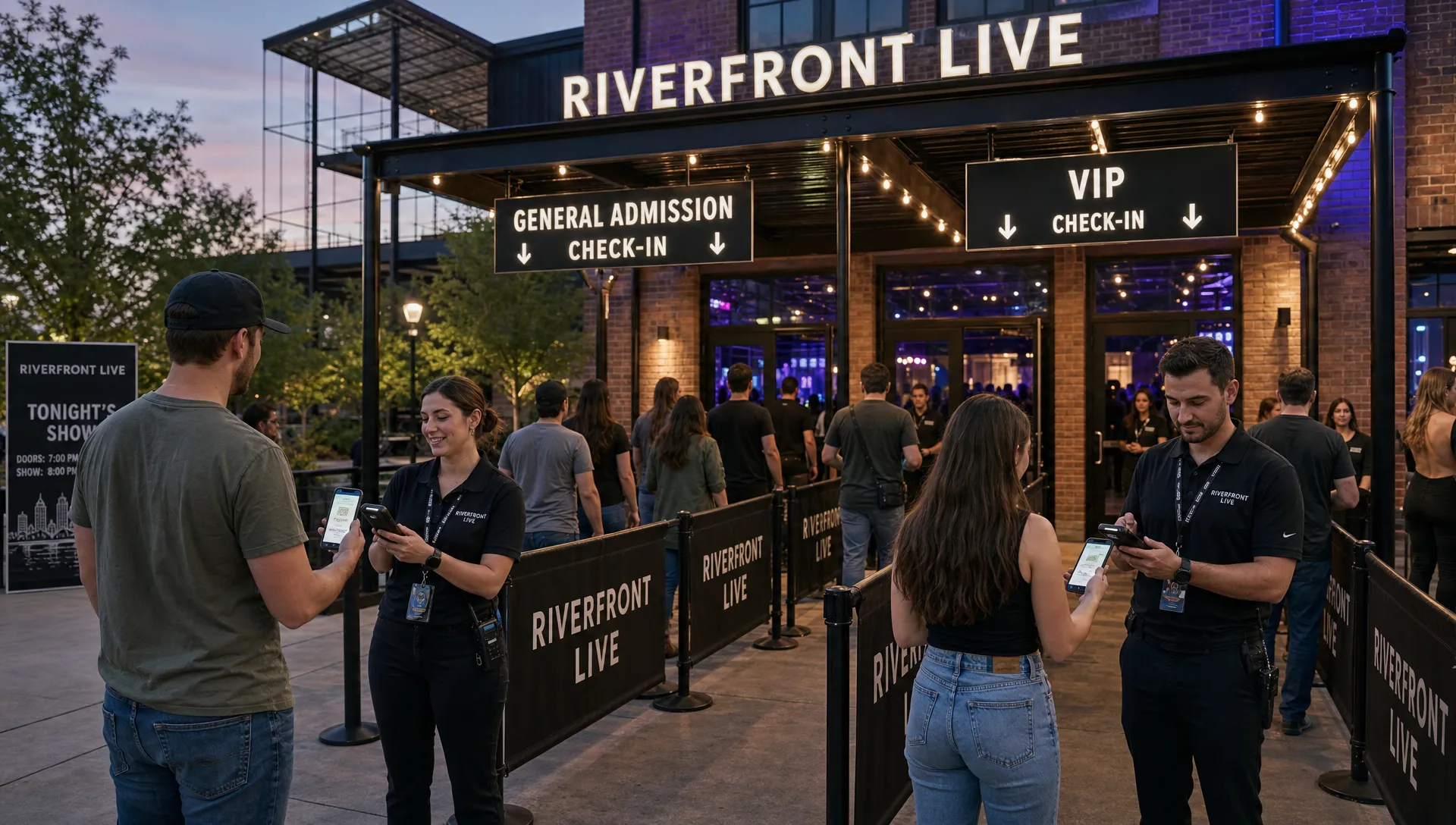
How Online Tickets Improve Checkout and Entry
For attendees, the ticket purchase is not a back-office detail. It is the first real interaction they have with your event. If buying a ticket feels slow, confusing, or risky, people hesitate. If the ticket is easy to buy and easy to present at the door, the entire event experience starts with momentum.
That is why online tickets are more than a digital replacement for paper. Done well, they connect checkout, payment, confirmation, capacity control, guest lists, and entry into one smooth flow. For organizers, that means fewer abandoned purchases before the event and fewer bottlenecks when doors open.
The real value is not simply selling tickets online. It is reducing every small point of friction between interest and attendance.
Why checkout friction matters for event organizers
Event demand is often time-sensitive. A buyer sees a poster, receives a link from a friend, or notices that a lineup has just been announced. At that moment, the purchase needs to be fast. Every extra step gives the buyer a reason to postpone, compare plans, or drop off completely.
Checkout research from Baymard Institute has consistently shown that online shoppers abandon purchases when checkout feels too long, account creation is forced, costs are unclear, or the process does not feel trustworthy. Event ticketing has the same problem, but with an added constraint: buyers are often making a social decision quickly, on mobile, and under time pressure.
For events, checkout friction usually appears in predictable ways. The buyer is asked to create an account before paying. The fee structure is not clear until the final step. The page is hard to use on a phone. Promo codes fail without explanation. The buyer does not immediately understand what they will receive after purchase.
Each of those moments can hurt conversion. Even worse, they can make your event feel less professional before the attendee ever arrives.
This is why organizers increasingly prioritize guest checkout, mobile-first payment flows, and clear confirmation. TixFlow has covered the registration problem in more depth in its guide to why guest checkout increases ticket sales, and the lesson is simple: the fewer unnecessary obligations you place between the buyer and the ticket, the better.
How online tickets improve checkout
The best online ticketing flows remove friction without removing control. Buyers should be able to select a ticket, understand the price, pay securely, and receive confirmation almost instantly. Organizers should still be able to manage tiers, capacity, pricing, sales windows, and attendee data behind the scenes.
They reduce the number of decisions buyers must make
A strong checkout experience does not ask for information just because the platform can collect it. It asks for what is needed to complete the order and support the event. This matters because most ticket purchases are not complex transactions. A buyer often wants to choose a tier, enter basic contact details, pay, and move on.
Online tickets make this simpler by packaging the purchase into a direct flow. Instead of sending buyers through messages, bank transfers, manual confirmation, or spreadsheet-based tracking, the ticketing page becomes the source of truth.
They make pricing and availability easier to understand
Confusion kills urgency. If attendees are unsure whether early bird tickets are still available, whether a discount applies, or whether a tier includes a specific benefit, they slow down.
Online ticketing helps by showing live availability, ticket tier names, prices, and sales phases in the checkout experience. This is especially useful for events that use early bird pricing, last-minute releases, VIP access, or group discounts. If scarcity is part of your sales plan, pairing online tickets with a clear dynamic ticket pricing strategy helps buyers understand why acting now matters.
They create immediate confirmation
Manual ticketing often leaves buyers wondering whether payment went through, whether their name is on the list, or whether they need to bring proof. That uncertainty increases support messages and creates stress for both sides.
With online tickets, confirmation can happen automatically after payment. The attendee receives the ticket or order confirmation, while the organizer gets the sale recorded in the system. This reduces duplicate questions and keeps the buyer confident that they are ready for the event.
They support cleaner promotion tracking
Promo codes, partner links, limited drops, and sales phases are difficult to manage manually. Online ticketing makes those campaigns easier to control because sales can be tied to specific codes, tiers, or time windows.
This does not just help marketing. It also protects operations. When a promotion ends, the checkout can reflect that. When a tier sells out, the inventory can update. When a code is limited to a certain audience, the organizer can avoid messy manual exceptions.
Where online tickets create the biggest lift
| Friction point | Manual or outdated flow | Online ticket flow | Organizer impact |
|---|---|---|---|
| Buyer registration | Attendee must create an account before paying | Guest checkout can keep the path shorter | Higher purchase completion potential |
| Ticket availability | Capacity is updated manually | Inventory can update as sales happen | Lower risk of overselling |
| Discounts | Codes are tracked in messages or spreadsheets | Promo codes can be applied at checkout | Cleaner campaign management |
| Confirmation | Organizer sends proof manually | Buyer receives confirmation after purchase | Fewer support messages |
| Door entry | Staff search names or review screenshots | Staff check digital tickets or guest lists | Faster admission and better control |
How online tickets improve entry
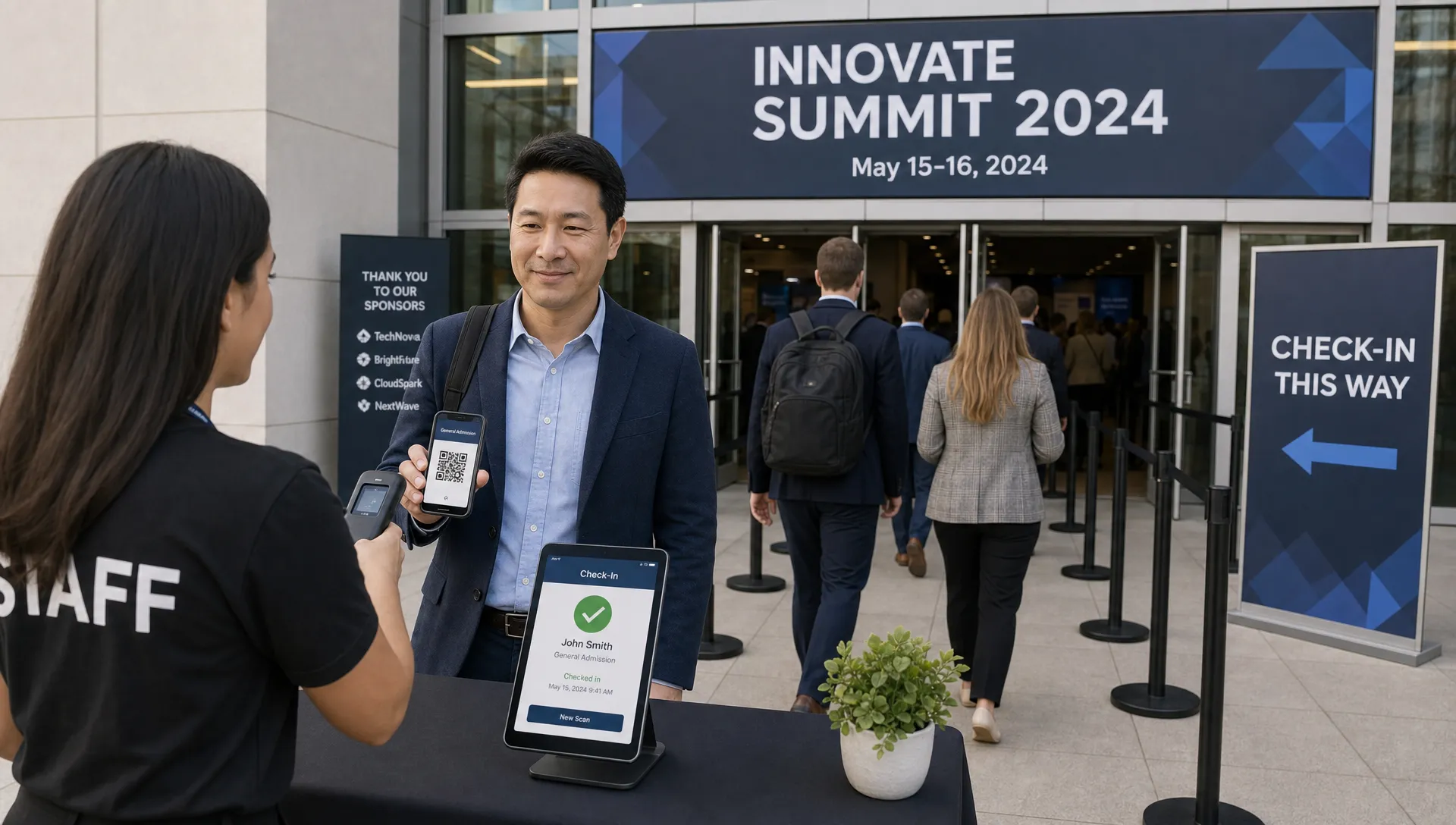
The checkout is only half of the attendee journey. The other half happens at the door, where a smooth system can protect the atmosphere of the event before it even begins.
When entry is slow, attendees feel it immediately. Lines get longer. Staff become reactive. Guests start searching through emails, payment screenshots, or chat messages. Door teams may need to make judgment calls under pressure. None of this helps the event feel organized.
Online tickets improve entry because the purchase record and the admission process are connected. Instead of treating the door as a separate manual checkpoint, digital ticketing turns it into a continuation of checkout.
They reduce payment and verification at the door
The fastest line is the one where most people have already paid. Online tickets shift the transaction earlier, so door staff can focus on admitting valid attendees instead of collecting payments, calculating change, checking transfers, or resolving unclear payment proofs.
This is especially important for high-volume arrivals. Many events have a rush window, such as the 30 minutes before a headline act, panel, match, or opening ceremony. If too many people still need to pay or be verified manually, the line can quickly become the most visible operational problem at the event.
They give staff a cleaner guest list
A digital guest list gives the door team a structured way to verify attendees. Rather than searching a spreadsheet, scrolling through messages, or relying on printed lists that may be outdated, staff can work from the latest ticket records.
For organizers, this helps reduce disputes. If someone bought the wrong tier, needs help finding their ticket, or claims to be on the list, the team has a clearer starting point. The goal is not to eliminate every exception, because events always have edge cases. The goal is to make exceptions manageable without slowing down everyone else.
They help prevent duplicate use and confusion
Paper tickets, screenshots, and informal payment confirmations can be hard to control. If proof of purchase can be copied or forwarded without proper validation, door staff are put in a difficult position.
Online tickets can support unique digital validation, which helps staff distinguish between a valid attendee and a reused or unclear proof. This is one of the biggest practical advantages of connecting ticket sales to entry. It gives the organizer more confidence that the person entering matches a legitimate order.
They improve the attendee experience before the event starts
Entry is emotional. A guest who waits too long in line may arrive annoyed, miss part of the program, or feel that the event was oversold. A guest who moves through the door quickly is more likely to start the night with trust.
This is why entry design should be part of the ticketing strategy. The ticket format, confirmation email, guest list, staff instructions, signage, and lane setup all work together. Online tickets make those pieces easier to coordinate because the attendee has a clear item to present and the team has a clear way to validate it.
What to optimize before your next event
A better online ticketing flow starts with a simple audit. Look at your current process from the buyer's perspective, then from the door team's perspective. Anywhere someone has to wait, ask for clarification, switch channels, or trust manual tracking, there is probably room for improvement.
Focus on the steps that directly affect conversion and entry speed:
- Remove forced account creation unless it is truly necessary.
- Keep ticket tiers clear, especially when benefits or access levels differ.
- Show fees and totals as clearly as possible before payment.
- Confirm purchases immediately so buyers know what to bring.
- Use promo codes and sales phases inside the checkout instead of tracking them manually.
- Prepare a digital guest list and train door staff before arrivals begin.
This checklist is simple, but it can change the economics of an event. A smoother checkout helps more interested buyers complete the purchase. A smoother entry process helps your team handle the crowd you worked hard to attract.
Metrics that show whether your ticketing flow is working
You do not need a complicated analytics stack to understand whether online tickets are improving the experience. Start with a few operational metrics that connect directly to revenue and attendee satisfaction.
| Metric | What it tells you | Why it matters |
|---|---|---|
| Checkout completion rate | How many started purchases become paid orders | Shows whether the buying flow is creating friction |
| Mobile conversion rate | How well phone users complete checkout | Important because many event purchases happen on mobile |
| Promo code usage | Which campaigns produce actual sales | Helps evaluate partners, affiliates, and limited offers |
| Arrival peak time | When most attendees reach the door | Helps schedule staff and entry lanes |
| Average entry time | How quickly attendees are admitted | Shows whether check-in is ready for demand |
| Support questions before the event | What buyers are confused about | Reveals missing information in the checkout or confirmation flow |
These metrics also help when choosing software. When you compare event ticketing platforms in 2026, look beyond the ability to publish an event page. Ask how the platform handles checkout friction, live sales control, fee visibility, ticket tiers, promo codes, and entry operations.
The organizer's advantage: one flow from sale to scan
The biggest benefit of online tickets is continuity. The same system that sells the ticket can support the operational work that follows. That continuity reduces the gap between marketing, payments, attendee communication, and door management.
For smaller teams, this can be the difference between running an event from scattered tools and running it from a clean workflow. For larger teams, it helps standardize how tickets are sold, how access is controlled, and how staff respond when the crowd arrives.
A platform like TixFlow is built around this modern event workflow, with features such as no buyer registration, instant payouts, flat per-ticket fees, real-time sales control, customizable event pages, unlimited ticket tiers, automated sales phases, smart promo codes, digital guest lists, and Stripe Connect integration. The practical goal is straightforward: help organizers reduce buyer friction while keeping more control over ticket sales and entry.
Frequently Asked Questions
Do online tickets reduce abandoned purchases? They can, especially when the checkout is short, mobile-friendly, transparent about pricing, and does not force unnecessary account creation. The ticketing platform still matters because a poorly designed online checkout can create its own friction.
Are online tickets better than selling at the door? For most paid events, online tickets make planning easier because organizers can collect payment earlier, monitor demand, and prepare entry staff. Door sales can still be useful for some events, but relying on them too heavily can slow admission and make attendance harder to forecast.
How do online tickets make check-in faster? They give attendees a clear digital proof of purchase and give staff a structured way to validate entry. This reduces manual name searches, payment checks, and disputes at the door.
What should an online ticket checkout include? A good checkout should include clear ticket tiers, transparent pricing, a simple payment path, instant confirmation, and only the buyer information needed to complete and support the order.
Can online tickets help with promo codes and phased releases? Yes. Online ticketing can make it easier to run early bird tiers, limited releases, partner codes, and time-based campaigns without tracking every sale manually.
Build a smoother path from checkout to entry
Online tickets improve more than convenience. They help organizers turn demand into confirmed sales, give attendees confidence after purchase, and make the door experience faster when it matters most.
If your current ticketing process depends on manual payments, account creation, spreadsheets, or unclear entry lists, it may be costing you both sales and time. TixFlow helps event organizers create a cleaner path from purchase to admission with fast setup, flexible pricing control, customizable checkout, instant payouts, and digital guest lists.
A better event experience starts before the first guest walks in. It starts with a ticketing flow that makes buying simple and entry seamless.