
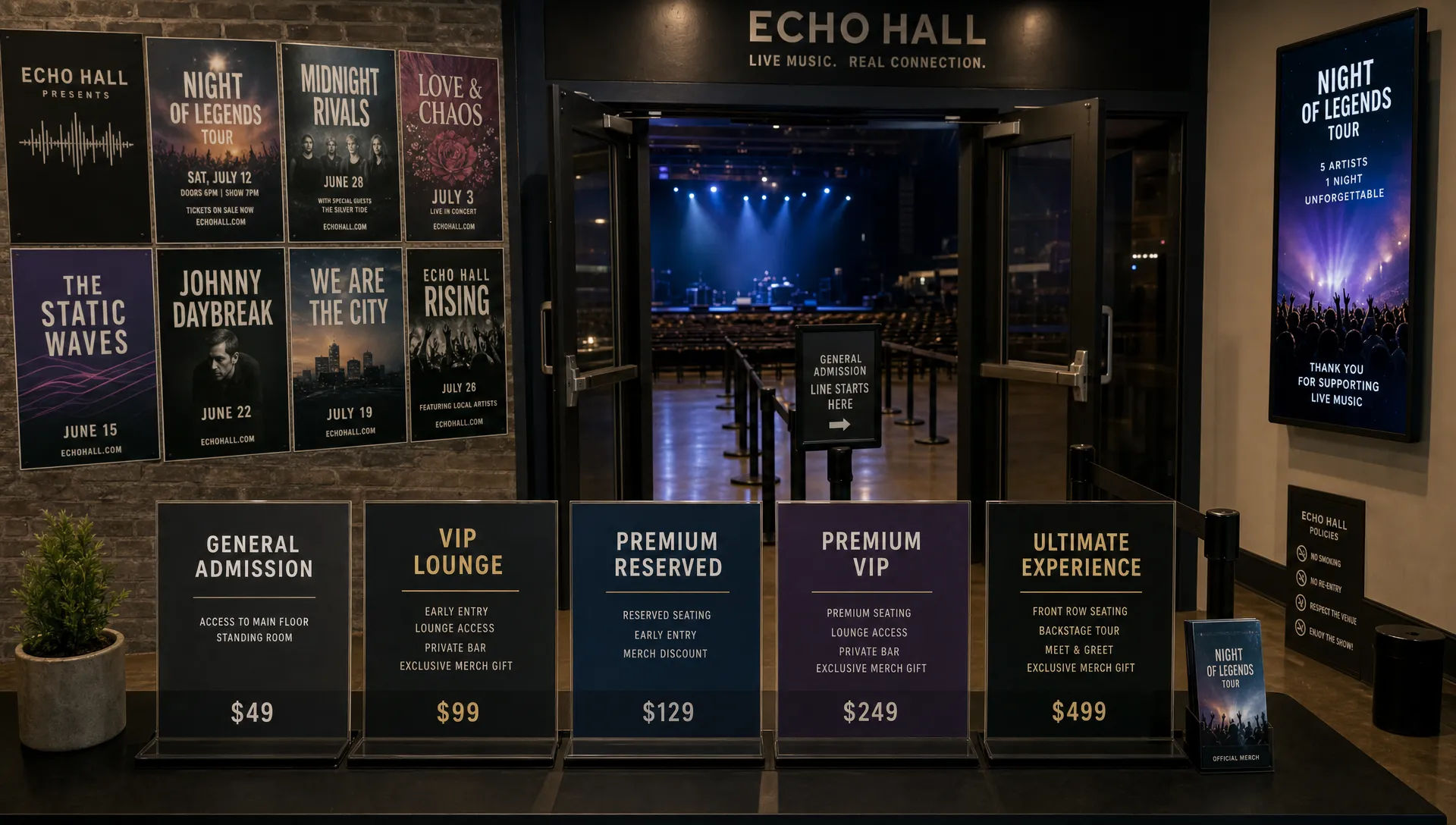
Music Event Tickets Built for Multi-Artist Lineups
Selling music event tickets for a multi-artist lineup is different from selling tickets to a single headliner. You are not only asking fans to buy into one name, you are packaging several audiences, several promo calendars, multiple guest lists and a production budget that may depend on revenue arriving before doors open.
That creates a different kind of ticketing problem. A general admission button and a static event page might work for a simple show, but a stacked bill needs more control over pricing, timing, visibility and cash flow. The goal is not to make the ticket setup complicated. The goal is to let the lineup stay complex while the buying experience feels simple.
For organizers, promoters and music producers, the right structure can reduce support questions, give each artist a clear promotion path and keep money moving through the event instead of getting trapped in slow settlement cycles.
Why multi-artist lineups need music event tickets with more control
A multi-artist event usually sells in waves. The first wave might come from a loyal fanbase tied to the headliner. The second might come after support acts announce their participation. Another wave may happen when a producer drops set times, releases a limited VIP option or activates a local partner list.
That is why music event tickets for these shows should not be treated as one fixed product. They are part of the campaign. Each tier, promo code and sales phase should match how the audience discovers the lineup.
The complexity grows when every artist wants a fair shot at promoting the event. One act may need a presale allocation, another may want a trackable discount code and the venue may need reserved holds for industry guests or press. If the ticketing system cannot handle that without manual spreadsheet work, the organizer becomes the bottleneck.
The best setup gives you flexibility before launch and control after launch. That means clear ticket tiers, automated phase changes, guest list management and payout visibility that supports real production decisions.
Start with the lineup map, not the ticket page
Before building the event page, map the lineup like a campaign plan. List every artist, partner and audience segment that will influence demand. This step helps you decide which ticket types you actually need and which ones would only create noise.
A useful lineup map should answer a few practical questions. Which artist has the strongest early demand? Which audience is most price-sensitive? Which supporters are likely to buy in groups? Which partners need trackable offers? Once you know that, music event tickets can be structured around real buying behavior instead of guesswork.
Define the buying moments
Most multi-artist shows have natural announcement moments. You might reveal the headliner first, then supporting acts, then special guests or set times. Each moment can justify a different sales phase if it gives fans a reason to act.
For example, an early bird tier can reward fans who trust the promoter before the full lineup is public. A second tier can open after the full bill is announced. A final tier can capture late buyers once social proof and urgency are stronger.
Separate public offers from internal needs
Do not turn every internal need into a visible public ticket. Artist comps, press access, partner holds and production passes can quickly clutter the checkout if they are not handled separately. Public buyers should see a short, clear menu. Your team can manage the rest through digital guest lists, hidden allocations or specific promo workflows.
Build tiers around fan intent and artist momentum
For music event tickets, tier design should do more than change the price. It should help fans choose based on timing, access and value. A clean set of tiers gives you room to promote without making the event look chaotic.
| Ticket tier | Best use in a multi-artist lineup | What to watch |
|---|---|---|
| Early Bird | Reward early trust before the full campaign peaks | Keep the quantity limited so the discount feels intentional |
| Artist Presale | Let specific artist communities buy first | Use codes or private links to avoid confusion |
| General Admission | Keep the main purchase path simple | Avoid too many similar GA versions |
| VIP or Priority Access | Offer extra value for high-intent fans | Be clear about what is included |
| Group Ticket | Encourage crews and friend groups to buy together | Make the quantity rules obvious |
| Final Release | Capture late demand close to the event | Use only when there is real scarcity |
If you are still deciding which formats belong in your setup, this guide to event ticket types can help you compare the most common options before you build the page.
The main rule is to avoid creating tiers that sound different but behave the same. “GA 1,” “GA 2” and “GA 3” may make sense internally as price releases, but fans need plain language. “Early Bird,” “General Admission” and “Final Release” communicate the reason for the change.
Keep checkout simple when the bill is complicated
A multi-artist show can sell more music event tickets when checkout removes unnecessary steps. Fans often arrive from social posts, artist bios, text threads and last-minute recommendations. If they have to create an account before buying, you risk losing them at the exact moment they were ready to commit.
TixFlow is designed around a no buyer registration checkout, which matters for music events where urgency and mobile traffic are common. The less friction in the purchase path, the easier it is for each artist to send fans directly from promotion to payment.
The checkout should also support the way fans attend music events in real life. Many buyers purchase for friends, crews or small teams. If group buying is part of your audience behavior, plan for it early rather than handling name changes and support messages later. TixFlow has a separate guide on how to make ticket ordering easier for groups, which is especially useful for shows where fans rarely arrive alone.
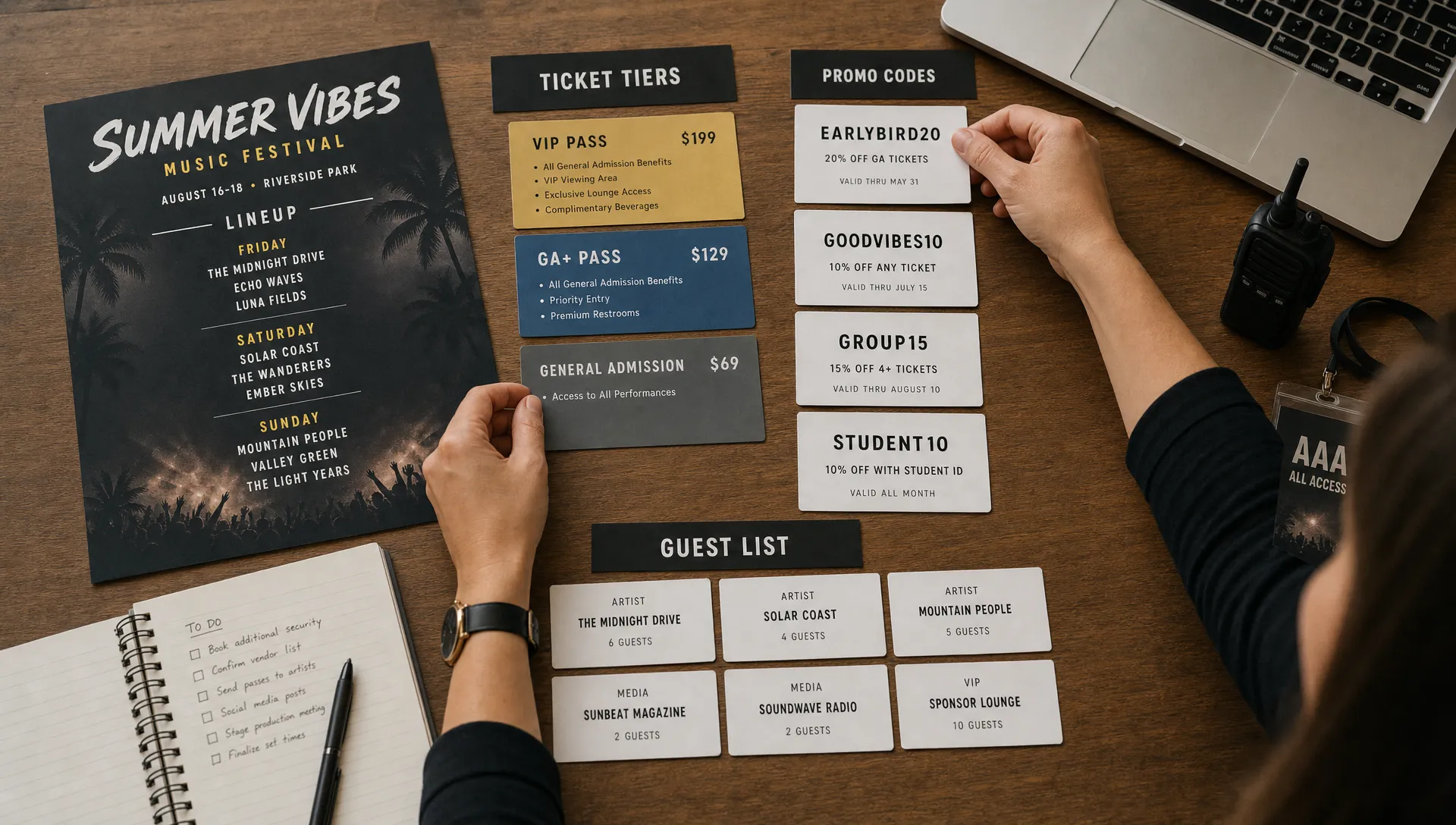
Protect cash flow across artists, venues and production
When music event tickets start converting, revenue timing becomes part of the event plan. Multi-artist lineups can involve deposits, production costs, marketing spend, venue payments and artist-related expenses before the show date. Waiting too long for ticket revenue can force organizers to finance the event with personal cash or delay decisions that would improve the audience experience.
Instant payouts can make a meaningful operational difference here. If your platform supports faster access to revenue, you can respond to demand while the campaign is still active. That might mean increasing ad spend after a strong presale, paying production vendors sooner or locking in additional support before prices rise.
Flat per-ticket fees also make planning easier. Percentage-based or unclear fee structures can distort the economics of a lineup, especially when you run several price tiers. With a predictable fee model, you can estimate net revenue more confidently before announcing the event.
TixFlow also uses Stripe Connect integration. Stripe Connect is commonly used by platforms that need to support payments for businesses, creators or marketplaces, and for organizers it helps connect ticketing revenue to a modern payment infrastructure without turning payment operations into a separate project.
Use real-time controls without changing the whole event
For music event tickets tied to several artist communities, real-time control matters because demand rarely moves evenly. One support act might suddenly drive a spike after posting the flyer. A local partner might sell out their allocation. A VIP tier might need to close before the general admission tier does.
The organizer should be able to react without rebuilding the entire event page. Real-time sales control lets you adjust quantities, monitor performance and manage availability as the campaign unfolds.
| Situation | Useful control | Why it helps |
|---|---|---|
| Early tier sells faster than expected | Close or advance the sales phase | Protects margin and preserves urgency |
| One artist needs a private allocation | Use a presale code or restricted offer | Keeps the public checkout clean |
| VIP demand is higher than planned | Adjust availability if capacity allows | Captures demand without affecting GA |
| Partner promotion underperforms | Pause or revise the code strategy | Avoids unnecessary discounts |
| Final week demand accelerates | Manage remaining inventory in real time | Helps prevent overselling and confusion |
This is where automated sales phases become valuable. Instead of manually switching every tier at the right moment, you can plan phase changes around time, quantity or campaign milestones, depending on how your ticketing setup is configured.
Make promo codes useful for every artist
Promo code structure can make music event tickets easier to promote across a lineup without turning the event into a discount race. Each code should have a job. One might reward an artist’s mailing list, another might track a street team campaign and another might support a limited partner offer.
The mistake is giving everyone the same generic discount. That may create short-term sales, but it does not help you understand which channels worked. Better promo codes can reveal which artists are moving tickets, which audiences respond to urgency and which partners deserve more attention on the next event.
Smart promo codes are also useful for protecting margin. You can limit code usage, set a defined discount and avoid leaving a public offer open longer than intended. For multi-artist bills, that matters because one poorly managed discount can affect the perceived value of every tier.
Promo codes should be easy for artists to share. Short, memorable codes usually perform better in captions, stories and flyers than long strings of characters. Keep the naming clear enough for reporting but simple enough for a fan to type on a phone.
Plan the door before the first ticket sells
The final test for music event tickets happens at the door. A strong campaign can still feel disorganized if check-in is slow, guest names are missing or the team cannot tell which tickets are valid.
Digital guest lists help reduce that friction. For multi-artist lineups, they let organizers keep buyers, comps, partners and artist-related entries in one operational view instead of scattered messages and printed sheets. The cleaner the list, the easier it is for the door team to make fast decisions.
This is especially important when several artists have separate guest expectations. If each act sends names through a different channel, mistakes become likely. A digital system gives the organizer one place to manage access and reduces the need for last-minute back-and-forth at entry.
If door speed is a concern for your venue, this article on digital tickets for events explains how ticket validity, guest lists and entry workflows connect during a busy arrival window.
A practical launch checklist for multi-artist ticketing
Before you publish music event tickets, run the event through a short operational checklist. The point is not to slow down launch. It is to catch the issues that become expensive once multiple artists start promoting.
- Confirm the public lineup order, artist names and event description before the first announcement.
- Decide which ticket tiers are public, private, complimentary or partner-specific.
- Set sales phases before launch so price changes do not depend on memory.
- Give each artist clear promo assets, links and codes where relevant.
- Check the mobile checkout flow from the same path fans will use.
- Review fee impact and expected net revenue for each tier.
- Prepare digital guest list rules for artists, press, crew and partners.
- Monitor early sales daily so you can adjust promotion while demand is still active.
A multi-artist event does not need a complex buyer experience. It needs a flexible organizer setup behind a clean public page. That separation is what lets the campaign scale without pushing the operational mess onto fans.
Frequently Asked Questions
What makes ticketing for multi-artist lineups different? Multi-artist lineups usually involve several audiences, promo calendars, guest lists and revenue priorities. The ticketing setup needs enough flexibility to support those moving parts while keeping checkout simple for fans.
How many ticket tiers should a music event have? Most events work best with a small number of clear tiers, such as Early Bird, General Admission, VIP and Final Release. Add artist presales, group tickets or private offers only when they serve a clear purpose.
Can promo codes help track artist performance? Yes. Unique promo codes can show which artists, partners or channels are driving sales. They can also help you manage discounts without changing the public price for every buyer.
Why does payout timing matter for music event tickets? Faster access to revenue can help organizers pay deposits, fund marketing, cover production costs and make better decisions while the event campaign is still live.
Build a multi-artist ticket flow with TixFlow
TixFlow gives organizers a modern way to sell music event tickets with instant payouts, flat per-ticket fees, unlimited ticket tiers, automated sales phases, smart promo codes, customizable event pages and digital guest lists.
If your lineup has more than one audience to coordinate, your ticketing system should help you move faster, not add another layer of manual work. Set up your next event with TixFlow and give every artist a cleaner path from promotion to purchase.