
How to Plan General Ticket Sales Without Losing Momentum
General ticket sales are where interest has to become commitment. Your audience may have seen teasers, presale posts, artist announcements, or sponsor mentions, but the public on-sale is the moment when casual attention must turn into paid orders.
The problem is that many organizers treat general ticket sales as one big launch blast. They publish the page, send a post, watch the first spike, and then wonder why the graph goes flat. Momentum is not created by a single announcement. It is created by timing, pricing, checkout clarity, follow-up, and the confidence buyers feel when they land on the event page.
For event organizers, music producers, venue teams, and anyone managing cash flow, the goal is simple: keep demand moving without discounting too early, overwhelming your team, or making buyers wait too long to act.
Start by defining what the general sale needs to achieve
Before planning posts, emails, or ticket tiers, decide what success means for the general sale. Some events need fast cash collection to cover deposits. Others need steady visibility over several weeks. A club night might rely on social urgency, while a conference may need a longer decision window.
A useful general ticket sales plan starts with three numbers: your capacity, your net revenue target, and the minimum sales pace needed to stay on track. Once those are clear, the rest of the plan becomes easier to control.
| Planning question | Why it matters | Practical decision |
|---|---|---|
| How many tickets must sell before break-even? | Protects cash flow and reduces panic discounting | Set an early sales target tied to fixed costs |
| How much capacity should be held back? | Prevents selling out the wrong tiers too soon | Reserve inventory for later phases, partners, or door strategy |
| When does urgency become believable? | Makes deadlines feel real instead of manufactured | Align price increases with dates, capacity, or lineup updates |
| What should buyers understand instantly? | Reduces hesitation at checkout | Make the event promise, price, date, location, and ticket benefits obvious |
This step is especially important if your team is juggling production costs. A packed room is good, but a packed room with weak margins and late cash collection can still create stress.
Build a bridge from early demand to the public sale
If you ran a presale, early bird window, artist code, or invite-only release, do not let that energy disappear before general ticket sales begin. The transition matters. Buyers should feel that the event is progressing, not restarting from zero.
A strong bridge can include a presale recap, a short reminder that public sales open soon, a visible price change, or a new reason to pay attention. For example, a music producer announcing a release party might reveal the supporting lineup right before public tickets open. A workshop organizer might publish the session schedule. A festival team might announce transportation details or set times once the general sale begins.
The key is to avoid silence. If people heard about the event during the early phase, but then see nothing for two weeks, the public launch has to rebuild trust and awareness from scratch.
Choose sale dates that match audience behavior
General ticket sales should open when your audience has enough information to make a decision and enough time to act. Too early, and buyers may delay because the event feels distant. Too late, and you force your team into aggressive reminders, rushed promo codes, or unnecessary discounts.
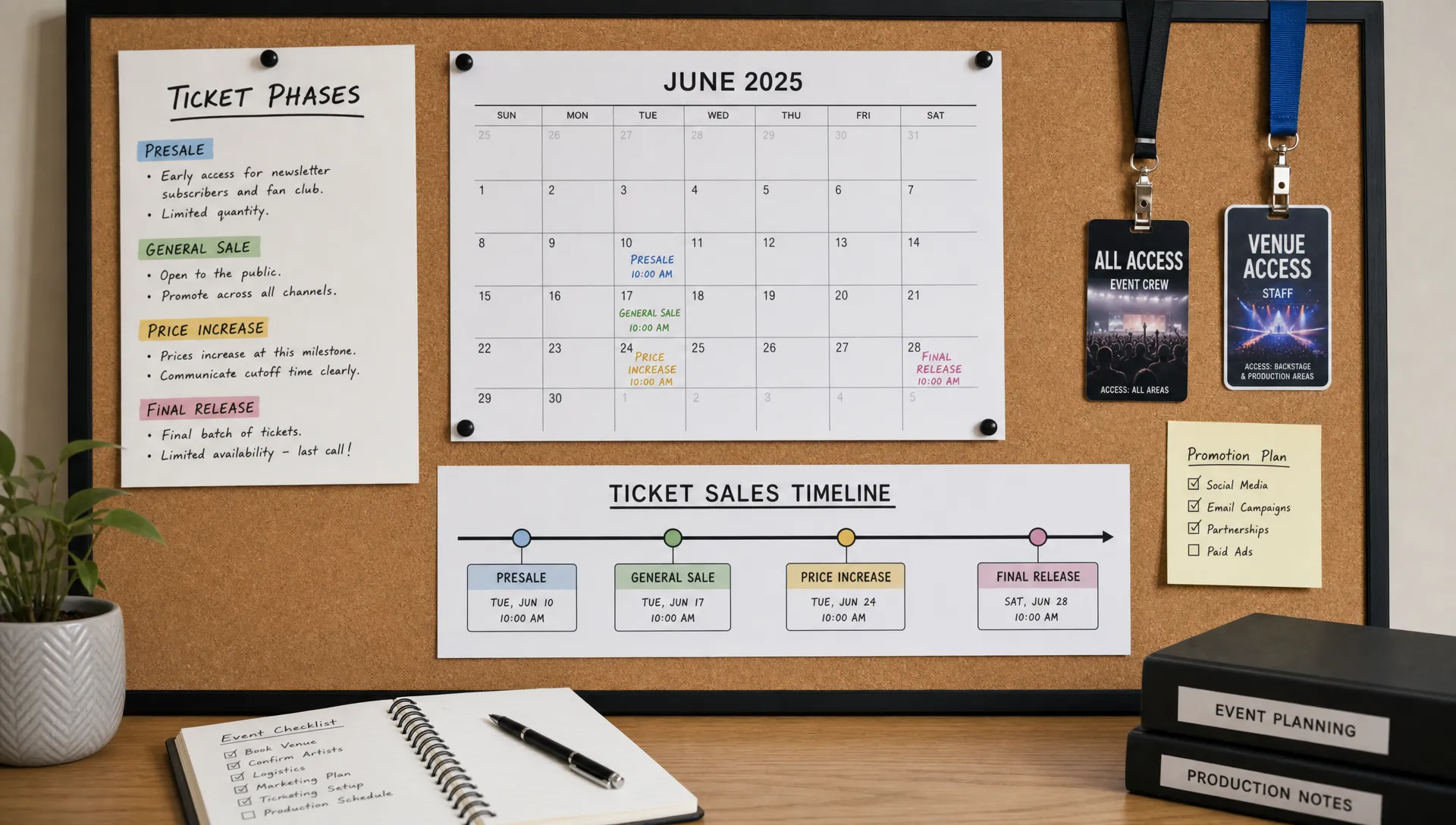
For many events, the best public on-sale date is tied to a clear campaign milestone: after a lineup reveal, after sponsors are confirmed, after venue details are locked, or after a meaningful presale window closes. If you are still deciding when to go live, use a structured approach to set ticket sale dates for maximum momentum instead of picking a date because it feels urgent internally.
A practical rule is to work backward from the event date and map the moments when buyers will naturally care. Weekend plans, payday cycles, travel needs, and competing events all affect when people are ready to purchase. Your sale calendar should respect that reality.
Structure ticket tiers so buyers have a reason to move
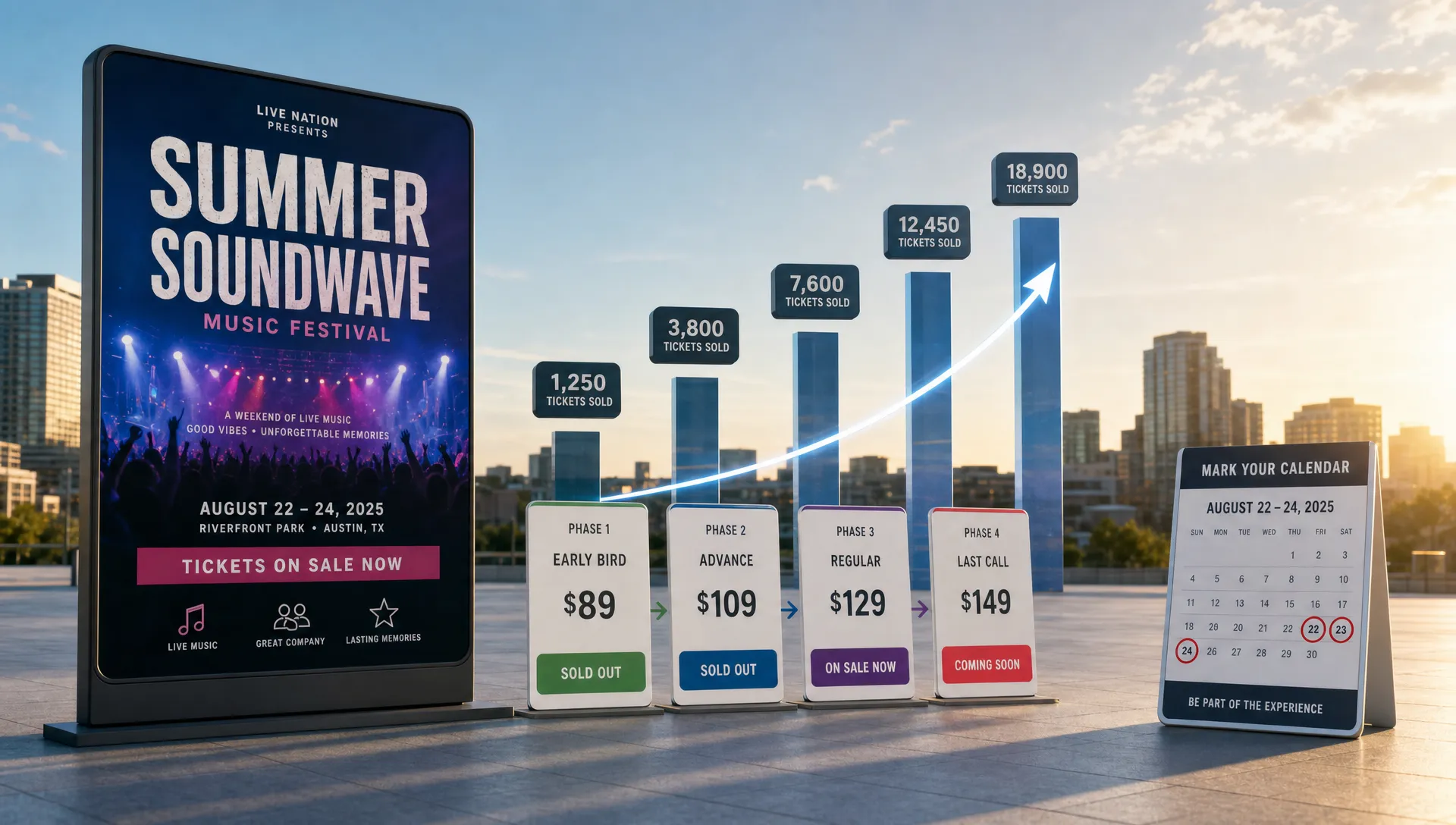
A flat ticket price can work for small, simple events, but it often weakens momentum because buyers have no reason to act now. Phased pricing gives the audience a fair signal that earlier commitment is rewarded and later commitment costs more.
That does not mean every event needs complicated tiers. The goal is clarity, not clutter.
| Ticket structure | Best used when | Momentum benefit |
|---|---|---|
| Early access or presale | You have a loyal list, fanbase, members, or past attendees | Rewards warm demand before public release |
| General admission | Most attendees receive the same core experience | Keeps the main offer easy to understand |
| Limited lower-price tier | You want early movement without heavy discounting | Creates a real reason to buy before the next price phase |
| Group ticket | Friends, teams, crews, or fan groups attend together | Increases order size and spreads word of mouth |
| Final release | The event is close or capacity is limited | Supports urgency without inventing scarcity |
The most common mistake is creating too many tiers with small differences. If buyers have to compare five nearly identical options, they slow down. Each tier should answer a distinct question: Why this price? Why now? What changes if I wait?
Make checkout friction part of the sales plan
Momentum does not only depend on promotion. It also depends on how easily a buyer can complete the order once they are interested. If checkout requires account creation, unclear fees, confusing ticket names, or too many steps, you can lose people who were already ready to buy.
This is where your ticketing setup affects revenue directly. A clean event page should make the main decision simple: choose the ticket, understand the total cost, and complete the purchase. For organizers, flat per-ticket fees can also make pricing easier to model because you can plan around known costs instead of guessing how much each order will actually return.
TixFlow is built around this kind of low-friction flow, with no buyer registration, customizable event pages, flat per-ticket fees, unlimited ticket tiers, automated sales phases, smart promo codes, real-time sales control, digital guest lists, Stripe Connect integration, and instant payouts. Those details matter because the public sale is not just a marketing moment. It is an operational moment.
Treat the first 72 hours like a campaign
The first 72 hours of general ticket sales set the tone. A single launch post is rarely enough, especially if your audience is split across email, Instagram, SMS, artist pages, partner lists, and group chats.
Plan the opening window as a sequence. Each touchpoint should have a specific purpose, not just repeat the same message.
| Launch moment | Main goal | Message angle |
|---|---|---|
| Opening announcement | Convert the warmest buyers | Tickets are live, here is the clearest reason to buy today |
| Same-day reminder | Catch people who saw but did not act | First tier is moving, do not wait if you plan to attend |
| 24-hour update | Show real activity | Thank early buyers, mention demand, highlight what is included |
| 48-hour push | Convert undecided buyers | Price phase or capacity update, plus social proof |
| 72-hour reset | Avoid the post-launch dip | New content angle, partner push, artist reminder, or attendee FAQ |
This cadence prevents the public sale from feeling like a one-day event. It also gives your team room to adapt based on what is actually happening.
Use sales signals without reacting emotionally
Momentum planning should include checkpoints. If sales are ahead, you may want to increase urgency, close a tier, or hold back inventory for later. If sales are behind, the answer is not always to discount. Sometimes the problem is unclear messaging, weak creative, poor timing, or friction at checkout.
Useful signals include sales velocity, conversion rate, tier performance, promo code usage, refund requests, and the gap between page visits and completed purchases. The point is not to stare at numbers all day. It is to make better decisions before the campaign stalls.
For example, if traffic is strong but orders are weak, your event page or price presentation may need work. If a promo code gets many uses but low order value, the discount may be too broad. If group tickets move faster than individual tickets, your audience may be buying socially, and your messaging should encourage crews to commit together.
A consistent reporting rhythm helps here. This guide on how to use ticket statistics to improve event sales goes deeper into the metrics worth tracking, but the main principle is simple: data should sharpen your next move, not create panic.
Protect cash flow while keeping demand alive
General ticket sales are not only about attendance. They are also about timing revenue so you can run the event properly. Deposits, artist payments, venue balances, security, production, staff, insurance, and marketing expenses often land before the event happens.
That is why ticket pricing and payout timing need to be part of the same conversation. Instant payouts can help organizers access revenue faster, while predictable per-ticket fees make it easier to understand net income. Pricing should be planned around what you keep, not only what the buyer sees.
If you are using discounts, keep them targeted. A smart promo code for a partner, artist, school, community, or returning attendee can drive action without training the whole market to wait for cheaper tickets. Broad public discounts are harder to control and can weaken urgency if buyers assume another code is coming.
For deeper margin planning, review these event ticket pricing strategies that protect your margins before you finalize the public sale structure.
Give undecided buyers more confidence each week
After the first wave, people who have not bought yet usually need confidence, relevance, or a reminder that waiting has a cost. Repeating tickets are on sale is less effective than answering the questions that keep them from buying.
Strong follow-up content can include:
- A clear schedule or run of show, especially for multi-part events.
- Artist, speaker, vendor, or performer spotlights that make the value feel concrete.
- Venue access details, parking, transit, accessibility notes, and arrival guidance.
- Social proof from past events, early buyers, partners, or community groups.
- Capacity or price-phase updates when they are real and useful.
For destination events or any event that draws travelers, practical details can be a conversion tool. Hotel blocks, nearby transit, bag policies, airport notes, and even travel prep resources such as a quick way to check airport liquid rules before they pack can reduce uncertainty for attendees who need to plan more than just the ticket purchase.
The closer you get to event day, the more specific your messaging should become. Early in the campaign, sell the promise. Later, remove the remaining doubts.
Avoid the momentum killers
Even strong events can lose sales energy because of small planning mistakes. Most of them are preventable.
| Momentum killer | What it causes | Better approach |
|---|---|---|
| Launching with incomplete event details | Buyers delay because they lack confidence | Publish the essentials before the public sale opens |
| Keeping one static price for too long | No reason to buy now | Use honest price phases or capacity-based tier changes |
| Discounting too early | Buyers wait for cheaper tickets | Fix messaging and targeting before lowering price |
| Sending every update to everyone | Audience fatigue | Segment by interest, past attendance, partner source, or buyer status |
| Ignoring checkout friction | Lost orders from ready buyers | Simplify ticket names, fees, and purchase steps |
| Waiting until the final week to check numbers | Panic decisions | Review sales signals on a regular schedule |
The goal is not to create fake urgency. It is to build a buying path that makes sense from the first public announcement to the final release.
Frequently Asked Questions
What are general ticket sales? General ticket sales are the public phase when tickets are available to the broader audience, often after a presale, early access period, or private release. This is usually the main sales window for converting public demand into paid orders.
How do I keep general ticket sales from slowing down after launch? Plan a sequence of updates instead of one announcement. Use price phases, capacity signals, fresh content, social proof, and attendee FAQs to give buyers new reasons to act throughout the campaign.
Should I discount tickets if general sales are slow? Not immediately. First check whether the event page is clear, the checkout is simple, the right audience is seeing the offer, and the value is specific. If you use discounts, make them targeted and time-limited.
How many ticket tiers should I use? Use only as many tiers as buyers can understand quickly. A simple structure with a presale, general admission, group option, and final release is often stronger than many small variations that create confusion.
What should I track during general ticket sales? Track sales velocity, tier performance, conversion rate, promo code usage, traffic sources, and cash collected. These signals help you decide whether to adjust messaging, pricing, inventory, or promotion.
Plan your next public sale with less friction
General ticket sales work best when your pricing, timing, checkout, and follow-up all support the same goal: steady demand that turns into paid orders. If your team wants more control over ticket phases, promo codes, guest lists, buyer friction, and cash flow, TixFlow gives organizers a modern ticketing setup built for fast, flexible event sales.