
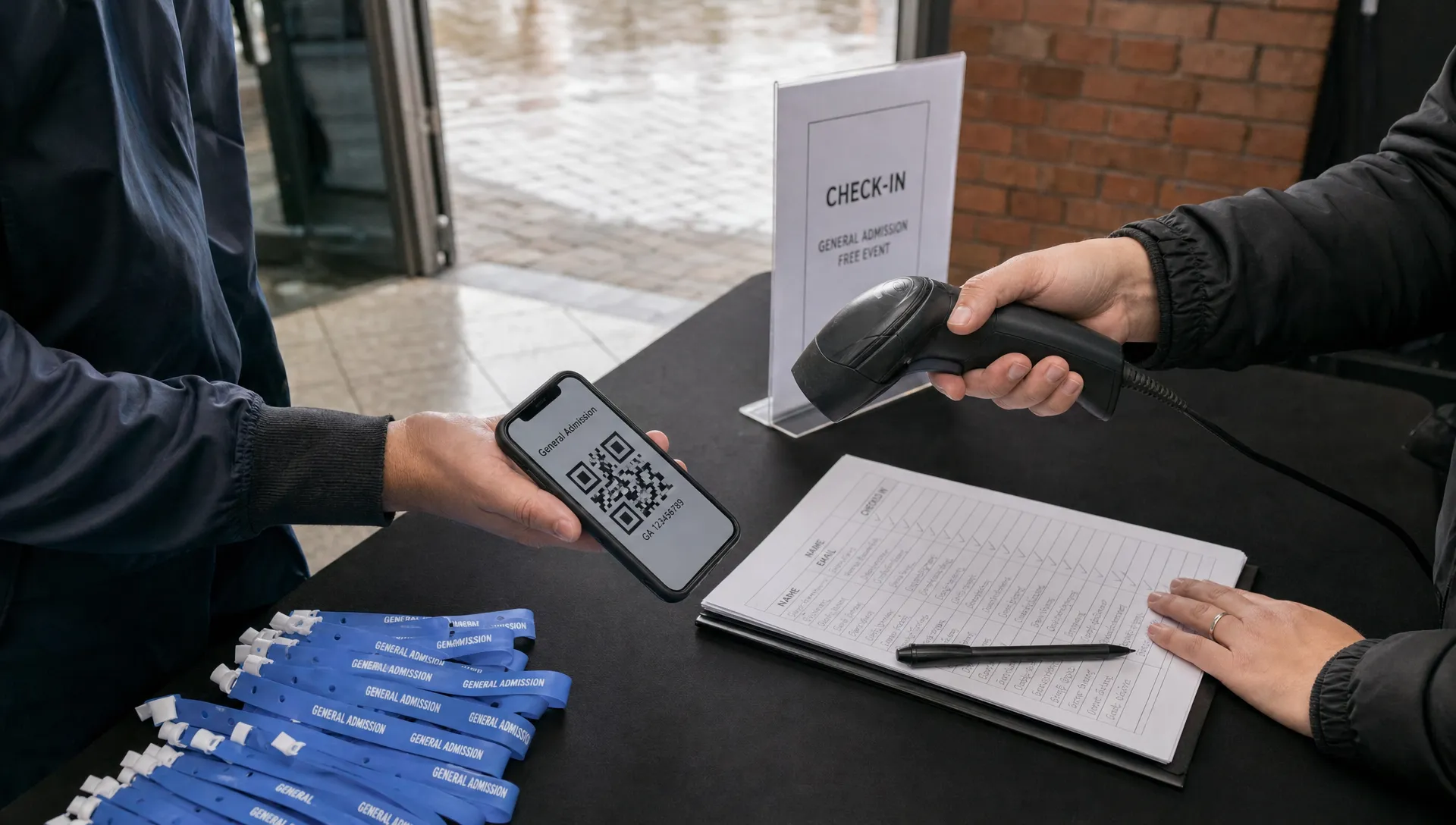
Free Event Ticketing That Helps Cut No-Show Rates
Free event ticketing can fill an RSVP list quickly, but claimed tickets are not the same as committed attendees. For organizers, the real win is not getting the largest possible registration count. It is getting the right number of people to show up, buy drinks, support artists, meet sponsors or experience the room you planned. If your guest list looks strong on Monday and half-empty on event night, the ticket was free but the empty space was expensive.
No-show reduction starts before the reminder email. It comes from how you frame the event, how much friction you remove, how clearly you communicate expectations and how easy you make it for people to release a spot they no longer need. A free ticket should feel simple, not disposable. That balance is where organizers protect capacity without turning a welcoming event into a complicated one.
Why free event ticketing can raise no-show risk
When admission costs nothing, the attendee loses very little by skipping. That is useful for discovery events, community nights, RSVP-only showcases, album release parties and brand activations because it lowers the barrier to entry. The same low barrier can also encourage casual reservations from people who are only mildly interested.
The issue is not that people are careless. Plans change, friends cancel, weather gets bad, childcare falls through and inboxes get crowded. A smarter free event ticketing strategy assumes those things will happen, then creates small signals of intent at each step. The goal is to make attendance feel easy and meaningful enough that people remember they said yes.
This is why free admission works best when it is attached to a clear attendance strategy. If you are still deciding whether a $0 ticket fits your format, this guide on when free ticketing makes sense for event organizers can help you choose the right use case before you optimize the flow.
Start with the commitment your room actually needs
For free event ticketing to reduce no-shows, define what a claimed ticket means operationally. Is it a seat you must hold? A spot within venue capacity? A lead for a future paid event? A comp for a guest who should be treated differently from the public RSVP list?
Different events need different commitment levels. A seated panel with catering needs stronger confirmation than a warehouse showcase with standing room. A producer running a listening party may care more about industry attendance and room energy than exact headcount. A nonprofit open house may need contact details for follow-up as much as the live turnout.
Before publishing the event page, write down the outcome you need:
- Minimum attendance needed for the room to feel active
- Maximum capacity the venue can safely hold
- Number of high-priority guests, such as artists, press, sponsors or VIPs
- Latest moment when you can release unused spots
- Follow-up action after the event, such as a mailing list, merch sale or paid ticket offer
Once those numbers are clear, the ticket flow becomes easier to design. You are no longer collecting RSVPs because that is what events usually do. You are collecting the exact commitment your event model needs.
Remove friction without making the RSVP disposable
With free event ticketing, reducing checkout friction is still one of the best ways to increase completed reservations. People should not have to create an account, remember a password or answer a long survey just to claim a free spot. Every unnecessary field creates drop-off before the person has even committed.
At the same time, frictionless does not mean contextless. The event page should answer the questions that make someone hesitate: start time, location, age restrictions, accessibility notes, lineup, refund or cancellation expectations, entry cutoff and whether a ticket guarantees admission. If a free RSVP does not guarantee entry after a certain time, say that clearly.
A good flow asks for only what you will actually use. Name and email are often enough for general admission RSVPs. Phone numbers may be useful if SMS reminders are part of your plan, but they should not be collected casually. For more practical checkout decisions, TixFlow has a separate guide on how to create a free ticket for an event without extra friction.
Design tickets so free admission still feels valuable
The best free-ticket RSVP setups make the ticket feel like access, not a throwaway reservation. That comes from positioning, timing and ticket structure. A ticket labeled General RSVP is less compelling than Early Entry RSVP, Listening Session Access or Community Guest List, provided the label is honest and the experience matches it.
You can also use the event environment to reinforce value. For private launches, gallery nights, intimate performances or sponsor experiences, the room itself affects whether people treat the event as a real commitment. Details like sound, seating, flow, signage and customizable designer lighting can make a free RSVP feel like entry to a planned experience rather than an open door.
Ticket structures that encourage follow-through
| Ticket structure | Best use case | How it can reduce no-shows |
|---|---|---|
| Early access RSVP | Music nights, launch events, community meetups | Creates a reason to arrive during the first attendance window |
| Limited batch release | High-demand free events | Encourages people to claim only when they are ready to commit |
| Free RSVP plus paid upgrade | Shows with VIP areas, merch bundles or reserved seating | Separates casual interest from higher-intent attendees |
| Time-slot ticket | Workshops, galleries, tastings or demos | Gives attendees a specific arrival plan instead of a vague intention |
| Guest list code | Press, sponsors, artists, partners or members | Keeps priority attendees visible and easier to manage |
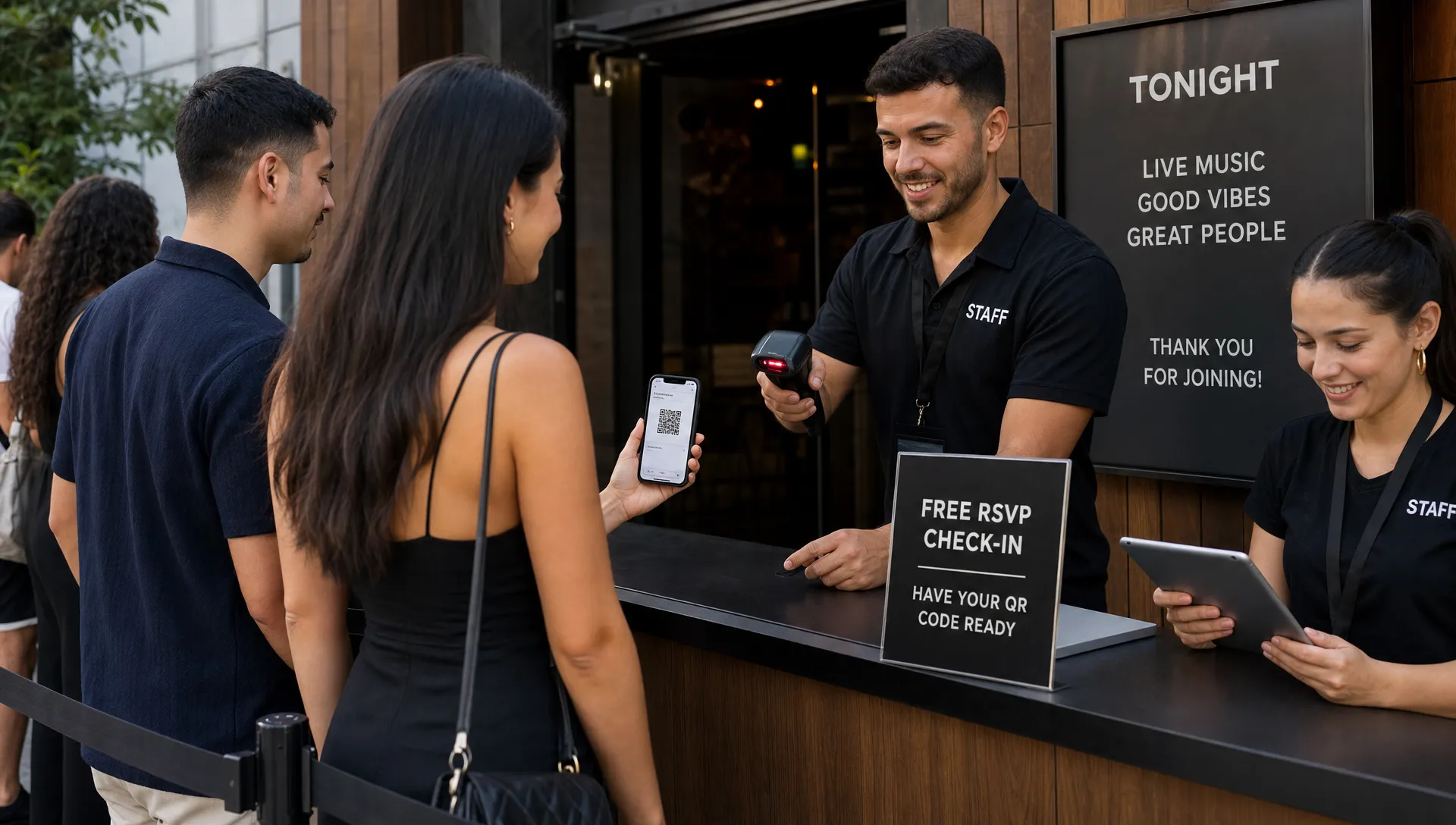
Ticket design should never mislead people. Scarcity only works long term if attendees trust you. If a ticket is first come, first served, explain it. If the ticket guarantees a seat until a specific time, state the cutoff. Clear expectations reduce support messages and make check-in calmer.
Communication timing that turns reservations into arrivals
Free event ticketing needs a reminder plan because a $0 transaction is easy to forget. The first confirmation should arrive immediately with the core details, including date, time, address, entry conditions and a clear calendar prompt. Do not bury the practical details under promotional copy.
A second reminder 48 to 72 hours before the event gives attendees time to adjust their plan. This is a good moment to include transportation tips, parking notes, set times or any changes since the original RSVP. For music events, lineup updates and set-time clarity can materially improve intent because people know when the artists they care about are performing.
The final reminder should be short and useful. Send it the day of the event with doors, address, entry cutoff and a way to cancel or release the ticket. The cancellation link matters. When people can easily give up a ticket they will not use, you recover capacity and make room for someone else.
Avoid sounding annoyed in reminder copy. A practical tone works better than guilt. You can say capacity is limited and unused tickets may be released after a cutoff without scolding people for having normal life changes.
Use scarcity fairly, not aggressively
Good free ticketing gives people a reason to act without creating fake pressure. Artificial urgency may fill a list, but it can also damage trust if attendees arrive and see that the event was never actually constrained. Use scarcity only when it reflects a real limit: venue capacity, seating, production resources, staff coverage, catering or a timed experience.
Batch releases are one fair option. Instead of releasing every free ticket at once, open a first batch to your core audience, a second batch after you confirm demand and a final batch close to the event. This gives you more data and reduces the risk that all capacity is locked up by early casual interest.
Confirmation requests can also help. For high-demand events, ask attendees to confirm attendance 24 to 48 hours before doors. If they do not confirm, you can move them to a lower-priority list or release the spot, as long as that policy was communicated clearly when they claimed the ticket.
Blind overbooking is riskier. Some organizers assume a certain percentage of people will not show, then issue more tickets than capacity. That can work for some standing-room formats, but it can create door conflict if turnout is stronger than expected. A transparent release and waitlist process is usually safer for your brand.
How TixFlow supports low-friction attendance control
For organizers who use free event ticketing alongside paid tiers, comps or upgrades, the platform should help you move quickly without losing control. TixFlow is built around a simple buyer experience, including no buyer registration, customizable event pages and real-time sales control. That matters because fewer steps can improve RSVP completion, while real-time control helps your team respond when demand changes.
Flexible ticketing also supports better commitment signals. Unlimited ticket tiers let you separate public RSVPs, artist comps, sponsor access, early entry and paid upgrades without mixing every attendee into one messy list. Automated sales phases can support batch releases, and smart promo codes can give specific audiences access without exposing every ticket publicly.
On the operations side, digital guest lists help door teams see who is expected and who has arrived. For paid portions of an event, instant payouts, flat per-ticket fees and Stripe Connect integration support organizers who care about cash flow as much as turnout. If you want a broader operations checklist, these ticket management tips cover planning, guest lists and entry-day workflows.
Measure the no-show rate that matters
If free event ticketing is part of your growth strategy, measure more than total RSVPs. A large list can hide a weak turnout pattern, especially if you compare events only by reservation count. Track claimed tickets, confirmed tickets, check-ins and late arrivals separately.
The basic formula is simple: no-show rate = tickets claimed minus attendees checked in, divided by tickets claimed, multiplied by 100. For example, if 500 people claim tickets and 325 check in, the no-show rate is 35 percent. The exact acceptable number depends on the event format, but the trend over time is what matters most.
| Metric | What it tells you | How to use it |
|---|---|---|
| RSVP conversion | How many visitors claim a ticket | Improve event page clarity and checkout flow |
| Confirmation rate | How many ticket holders still plan to attend | Decide whether to release more spots |
| Check-in rate | How many claimed tickets become arrivals | Compare reminder timing and ticket structures |
| Arrival time | When attendees actually enter | Adjust doors, set times and staffing |
| Cancellation rate | How many people release spots | Improve waitlist or final ticket release plans |
Review these numbers after every event. If reminders improve check-ins but not early arrivals, adjust your door messaging. If early access tickets outperform general RSVPs, make that tier more prominent next time. Data should make each event easier to run than the last.
Frequently Asked Questions
Can free tickets really reduce no-shows? Yes, if the ticket flow is designed around commitment. Clear event details, useful reminders, limited releases, easy cancellation and a clean check-in process can turn casual RSVPs into stronger attendance signals.
Should I charge a small deposit instead of offering free tickets? A refundable deposit can reduce no-shows for some formats, but it also adds payment friction. Use it only when the seat, meal or experience has a real cost that you need to protect.
How many reminders should I send for a free event? Most events can use three touchpoints: instant confirmation, a reminder 48 to 72 hours before the event and a short day-of reminder. Keep each message practical and focused on attendance details.
What should I do if my free event is over capacity on paper? Do not rely only on hope or blind overbooking. Use confirmation requests, batch releases and clear entry cutoffs so you can recover unused capacity before doors open.
Run free tickets with stronger attendance signals
A strong free event ticketing plan does not make attendees jump through hoops. It removes pointless friction, then adds the right signals: clear value, honest scarcity, timely reminders, easy cancellation and a guest list your team can trust at the door.
TixFlow helps organizers create flexible ticket tiers, manage sales phases, customize event pages and keep ticket operations moving without forcing buyer registration. If your goal is to grow attendance while keeping control of capacity and cash flow, start with a ticketing setup that makes commitment easier to capture and easier to act on. Explore TixFlow and build your next event flow with fewer gaps between RSVPs and real arrivals.