
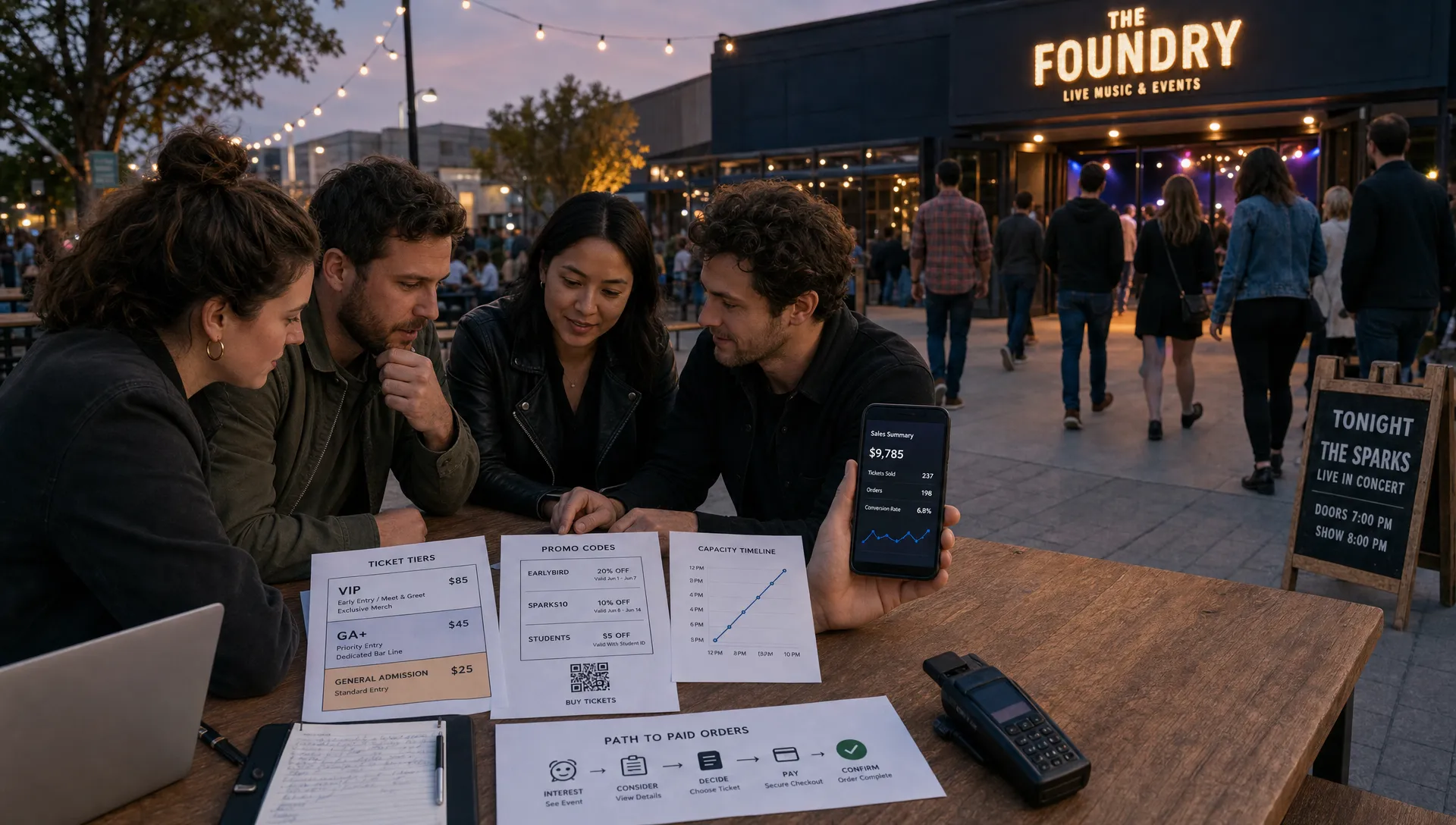
Event Selling Tactics That Turn Interest Into Paid Orders
A packed comment section, a crowded RSVP list, and dozens of “I’m interested” replies can feel like momentum. But for event organizers, interest only matters when it becomes a paid order. The real work of event selling is not just getting attention. It is guiding people from curiosity to confidence, then from confidence to checkout.
That journey is shorter than many organizers think. A buyer may see a lineup announcement, check the date, ask a friend, compare the price, and decide within minutes. If anything feels confusing, expensive, risky, or slow, they postpone the purchase. Many never come back.
The most effective event selling tactics remove that hesitation. They make the value obvious, give buyers a reason to act now, and keep the checkout experience simple enough that motivation does not leak away before payment.
Start with the conversion gap, not the promotion plan
Most event marketing starts with the question, “How do we get more people to see this?” That matters, but it is not the first question to ask. A better starting point is, “Why would someone who already cares still not buy?”
Common reasons include unclear pricing, no visible urgency, uncertainty about the experience, extra checkout steps, weak social proof, or a lack of trust in the ticketing flow. If those issues are present, more traffic simply creates more abandoned purchases.
Before you increase ad spend, post more often, or ask partners to promote, review the buying path like an attendee. Can they understand the event in ten seconds? Can they see what is included with each ticket? Can they pay without creating an account? Can they tell whether the price will change later? If the answer is no, your event selling problem may be conversion, not reach.
Make the event promise specific
People do not buy “a night out.” They buy a specific feeling, identity, memory, or access point. A vague event page asks buyers to imagine the value on their own. A specific event promise does the work for them.
For a music event, the promise might be a rare back-to-back set, a high-energy warehouse atmosphere, or an intimate listening session with limited capacity. For a conference, it might be direct access to operators, practical workshops, or a room full of decision-makers in one niche. For a community event, it might be belonging, discovery, or a shared local moment.
The promise should appear everywhere a buyer makes a decision: the event page headline, the first social caption, the checkout page, and reminder messages. This does not mean writing long copy. It means choosing the clearest reason to buy and repeating it consistently.
A useful test is simple: if someone forwards your event link to a friend, can they explain why it is worth attending in one sentence? If not, your event selling message needs sharpening.
Match ticket tiers to buyer motivation
Not all interested buyers are waiting for the same reason. Some want the lowest possible price. Others want flexibility, premium access, group entry, or a status-based experience. Strong ticket structures convert more interest because they give different buyers a path that feels made for them.
Early-bird pricing works well for decisive fans and loyal communities. Standard admission suits the broad middle of your audience. Last-chance tiers help late buyers understand that waiting has a cost. VIP, backstage, table, or premium tiers can raise average order value when the added value is clear.
The key is to avoid creating tiers that only look different in name. If one ticket costs more, the buyer should immediately understand why. Better access, better timing, better placement, bundled perks, or limited availability all create a stronger reason to upgrade.
If you are refining your pricing structure, this guide to ticket pricing strategies for small events gives a deeper framework for making prices feel fair while still protecting revenue.
Remove checkout friction before you drive demand
Checkout friction is one of the most expensive hidden problems in event selling. A person can be excited, convinced, and ready to buy, then drop off because the final step asks for too much effort.
For events, the most damaging friction points are forced buyer registration, unclear fees, slow mobile pages, confusing ticket selection, and discount codes that do not work as expected. Every unnecessary step gives the buyer a moment to reconsider.
A high-converting ticket flow should make the next action obvious. The buyer chooses a ticket, enters only the necessary information, pays securely, and receives confirmation quickly. If they are buying on mobile while messaging friends or standing in line somewhere, the flow still needs to work.
TixFlow is designed around this principle with no buyer registration, customizable event pages, flat per-ticket fees, and Stripe Connect integration. For organizers, that means fewer operational obstacles between buyer intent and paid order.
The platform you choose can directly shape sales outcomes, which is why it is worth understanding how ticket purchasing websites impact event sales before your next campaign goes live.
Use urgency that buyers can trust
Urgency helps buyers act, but fake urgency damages trust. If every post says “almost sold out” for three weeks, people stop believing you. Real urgency is tied to something concrete: limited capacity, a deadline, a price increase, a lineup reveal, a bonus ending, or a sales phase closing.
The strongest urgency is visible before the buyer reaches checkout. If early-bird tickets end on Friday, say so on the event page and in the announcement. If only a limited allocation exists at the current price, make that clear. If a promo code expires after 48 hours, use it for a specific segment rather than broadcasting it forever.
Automated sales phases can help here because they remove manual guesswork. Instead of remembering to change prices at midnight or close a tier during a busy week, you can set the structure in advance and let the ticketing flow reflect the real buying window.
For more ideas on urgency without sounding pushy, see this breakdown of how to promote tickets on sale now.
Turn buyer hesitation into the right tactic
A useful way to improve event selling is to map each hesitation to a direct response. This keeps your marketing focused and prevents random posting.
| Buyer hesitation | What it sounds like | Event selling tactic that helps |
|---|---|---|
| “I’m not sure it is worth it.” | The value is unclear. | Show the specific experience, lineup, access, or outcome included with the ticket. |
| “I’ll decide later.” | There is no reason to act now. | Use a real deadline, tier change, or limited allocation. |
| “My friends have not bought yet.” | The buyer wants social confidence. | Promote group tickets, share attendee momentum, or use referral-friendly messaging. |
| “The price feels high.” | The value-price connection is weak. | Clarify what is included and offer tier options instead of defaulting to discounts. |
| “Checkout is annoying.” | Motivation is being lost at the final step. | Use a fast, mobile-friendly checkout with minimal required fields. |
| “I do not know if this is legit.” | Trust is missing. | Use consistent branding, clear organizer details, secure payment, and confirmation emails. |
This table is also useful for team planning. Instead of asking, “What should we post today?” ask, “Which hesitation are we trying to remove today?”
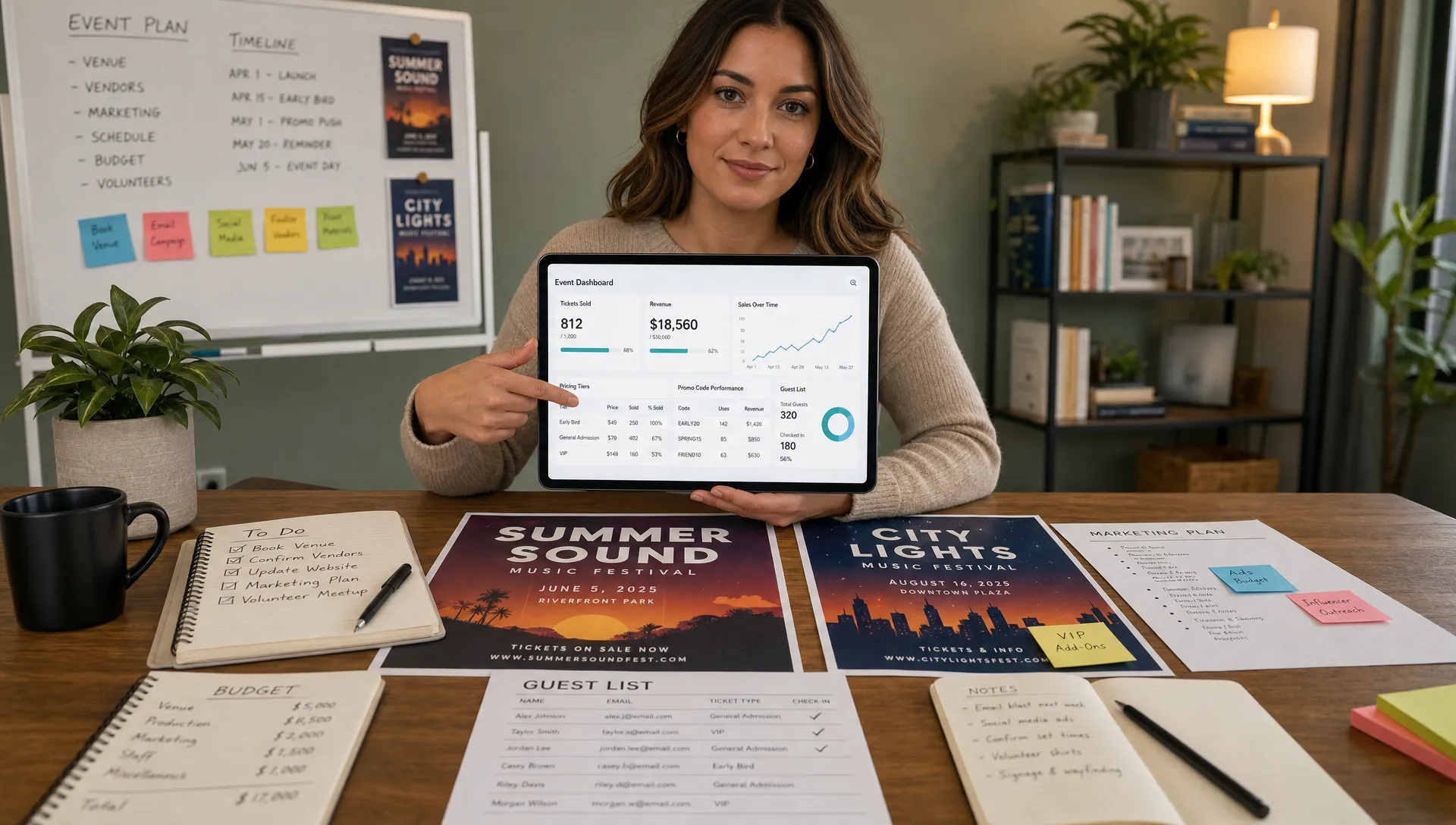
Create social proof before the room is full
Many organizers wait until sales are strong to show social proof. But early social proof can be created ethically without pretending the event is bigger than it is.
You can share artist clips, speaker credentials, partner announcements, venue photos, behind-the-scenes setup, community comments, past event highlights, or confirmed attendance from relevant groups. The goal is to help potential buyers feel that the event is real, active, and socially safe to join.
For music producers, this might mean releasing short rehearsal clips, DJ mini-mixes, crowd footage from a previous night, or quotes from artists about the concept. For workshops and conferences, it might mean speaker previews, agenda snapshots, or examples of what attendees will learn.
Social proof works best when it answers the buyer’s silent question: “Will this be worth showing up for?” The more concrete your proof, the easier it is for them to say yes.
Follow up with high-intent people personally
Broadcast promotion is useful, but some of the highest-converting event selling happens through direct follow-up. People who commented, saved a post, joined a waitlist, clicked a promo link, attended a previous event, or asked a question are warmer than the average audience member.
Your follow-up should not feel like pressure. It should feel helpful. A simple message can remind them of the deadline, answer a practical question, or point them to the right ticket tier. For groups, sponsors, partners, and VIP buyers, a more polished message may be appropriate.
If you need to draft formal outreach for a sponsor, venue, partner, or group buyer, an AI letter generator can help turn your key details into a professional message quickly, which is especially useful when your team is juggling promotion, operations, and sales.
Personal outreach also helps you learn why people hesitate. If several people ask the same question, add the answer to your event page. If buyers are confused about tiers, rename them. If groups want a simpler checkout path, create a group ticket or promo code.
Use promo codes strategically, not automatically
Discounting can drive orders, but it can also train buyers to wait. Smart promo codes should have a purpose. They can reward loyal attendees, track partner performance, unlock group sales, support ambassador campaigns, or re-engage people who showed intent but did not purchase.
Avoid public discounts that run for too long. If buyers believe a cheaper code will always appear later, your normal price loses credibility. Instead, connect promo codes to a clear reason: a launch window, a partner community, a student group, a returning attendee list, or a limited campaign.
Smart promo codes are especially valuable when paired with real-time sales control. You can see which channels are producing paid orders, not just clicks, and shift effort toward what is actually working.
Watch sales velocity, not just total sales
Total tickets sold tells you where you are. Sales velocity tells you where you are going. If sales spike after a lineup post and then flatten, you may need a new proof point or urgency trigger. If early-bird tickets sell quickly but standard tickets stall, your price jump may need better value framing. If traffic is strong but orders are weak, checkout or page clarity may be the issue.
Track a few practical signals throughout the campaign:
- Ticket sales by day and by tier
- Conversion after major announcements
- Promo code usage by partner or channel
- Checkout drop-off patterns, when available
- Questions buyers ask before purchasing
- Group sales and repeat buyer behavior
These signals help you make adjustments while there is still time. Event selling is not a single launch moment. It is a feedback loop from announcement to final door scan.
Keep operations aligned with sales
A sale is not the end of the buyer experience. If your guest list is messy, confirmations are unclear, or the door team cannot validate tickets quickly, sales momentum can turn into operational stress.
Digital guest lists help connect the sales process to the event-day experience. They reduce manual reconciliation, support faster check-in, and give your team a clearer view of who is attending. This matters for small and mid-size events where one organizer may be managing marketing, finance, and operations at the same time.
Cash flow also matters. Organizers often need funds before the event to pay vendors, talent, production teams, or venue costs. Instant payouts can make event selling more practical because revenue becomes usable sooner, rather than being locked away until after the event.
A simple event selling checklist
Before your next ticket push, use this quick checklist to find weak spots:
- The event promise is clear in one sentence.
- Ticket tiers have obvious differences and value.
- Buyers can check out without creating an account.
- Fees and final price are easy to understand.
- Urgency is tied to a real deadline, capacity limit, or price change.
- Social proof appears before the final sales push.
- Promo codes have a clear purpose and expiration.
- Sales data is reviewed often enough to adjust the campaign.
- Guest list and payment operations are ready before volume increases.
If any item is missing, fix it before sending more traffic to the page. Small conversion improvements can have a large revenue impact when the audience is already interested.
Frequently Asked Questions
What is event selling? Event selling is the process of turning audience interest into paid ticket orders through clear positioning, pricing, promotion, checkout design, follow-up, and sales control.
How do I turn interested attendees into buyers? Give them a specific reason to attend, remove checkout friction, use real urgency, show social proof, and follow up with high-intent people before they forget or postpone the decision.
Should I use discounts to sell more event tickets? Discounts can work when they have a purpose, such as rewarding loyal attendees or tracking partner campaigns. Avoid constant public discounts because they can reduce perceived value and train buyers to wait.
Why do people abandon event ticket purchases? Buyers often abandon purchases because of unclear pricing, unexpected fees, forced registration, slow mobile checkout, lack of trust, or no immediate reason to buy.
What ticketing features help event selling the most? Useful features include flexible ticket tiers, automated sales phases, smart promo codes, real-time sales control, customizable event pages, digital guest lists, and a low-friction checkout experience.
Turn more interest into paid orders with TixFlow
Event selling works best when your message, pricing, checkout, and operations all support the same goal: making it easy for interested people to buy now.
TixFlow helps organizers create customizable event pages, set flexible ticket tiers, run automated sales phases, use smart promo codes, manage digital guest lists, and receive instant payouts with low, flat per-ticket fees. If your audience is already paying attention, the next step is to give them a faster path to purchase.