
9 Ticket Promotion Ideas Beyond Social Media Posts
When ticket sales slow down, the first instinct is usually to post more. More Instagram stories. More Facebook updates. More “tickets on sale now” captions. Social media matters, but it is not a complete ticket promotion strategy. Algorithms limit reach, audiences get used to repeated posts, and the people most likely to buy often need a more direct reason to act.
The strongest ticket promotion plans use social posts as one part of a bigger system. They combine partner distribution, direct outreach, local visibility, smart offer design, and a buying experience that removes friction at the exact moment someone is ready to purchase.
If you are organizing a concert, club night, festival, workshop, fundraiser, or private experience, the ideas below will help you sell beyond the feed.
Before you promote, make the buying path easy
Promotion only works if the ticket page can convert interest into orders. Before launching any campaign, check the basics: the event promise should be clear, ticket tiers should be easy to understand, the checkout should work well on mobile, and buyers should not have to create an account just to buy.
This matters because every extra step weakens your promotion. A great newsletter mention, podcast shoutout, or QR code campaign can still underperform if the buyer lands on a confusing page. If you want a deeper breakdown of the conversion side, TixFlow’s guide to event selling tactics that turn interest into paid orders pairs well with the promotion ideas in this article.
Here is a quick way to think about the nine ideas before you choose where to start:
| Ticket promotion idea | Best for | What to track |
|---|---|---|
| Partner email swaps | Events with artists, speakers, sponsors, or venues | Sales by partner link or code |
| Community presales | Events with niche audiences or loyal fan groups | Presale conversion rate |
| QR code placements | Local events and nightlife | Scans, sales, and venue source |
| Ambassador codes | Music, culture, fitness, and student events | Sales by ambassador |
| Local media and niche newsletters | Events with a story, cause, or unique lineup | Referral traffic and orders |
| Local business bundles | Events tied to food, hospitality, wellness, or retail | Bundle sales and partner redemptions |
| Sponsor and vendor promotion | Festivals, expos, markets, and brand-backed events | Orders by sponsor channel |
| Direct reactivation | Organizers with past attendee lists | Repeat buyer rate |
| Checkout optimization | Every event | Conversion rate and completed orders |
1. Run partner email swaps instead of asking partners to “share the post”
A partner repost is easy to request, but it is also easy to ignore. A partner email is more intentional. It reaches people in an inbox, often with more attention than a crowded social feed.
Start with anyone who has a real reason to help you sell tickets: artists, DJs, speakers, venues, sponsors, vendors, community leaders, labels, collectives, nonprofits, student groups, or local businesses. Instead of sending them a generic flyer and hoping they post, give them a short email they can adapt for their audience.
The key is to make the message feel native to the sender. A venue might lead with the atmosphere and location. A performer might lead with why this set or appearance is special. A sponsor might frame the event around community or customer access. If every partner sends the same copy, the campaign feels mechanical. If each partner adds a personal reason to attend, it feels like a recommendation.
Use unique links or promo codes to see who actually drives sales. This protects you from guessing and helps you reward the partners who bring real buyers, not just impressions.
2. Create community presales for specific audience groups
A public discount can train buyers to wait. A community presale does something better: it gives a specific group a reason to buy early without making the general ticket feel less valuable.
For example, a music producer could offer a 48 hour presale to fans of a headliner, members of a local creative collective, or subscribers to a venue newsletter. A workshop organizer could open a limited early window for past attendees. A festival could give partner communities first access before general sales.
The offer does not always need to be cheaper. It can be earlier access, a better ticket tier, a limited add-on, or first choice before capacity gets tighter. This works especially well when paired with automated sales phases and clear ticket tiers, because the buyer can immediately see what changes after the window closes.
The best community presales feel earned. Do not say “exclusive” if anyone can access the code from a public post. Give each group a dedicated code, a clear deadline, and a message that explains why they are getting access first. If urgency is part of your campaign, use a real trigger, not vague pressure. TixFlow’s guide on creating urgency once tickets are live can help you structure that without sounding pushy.
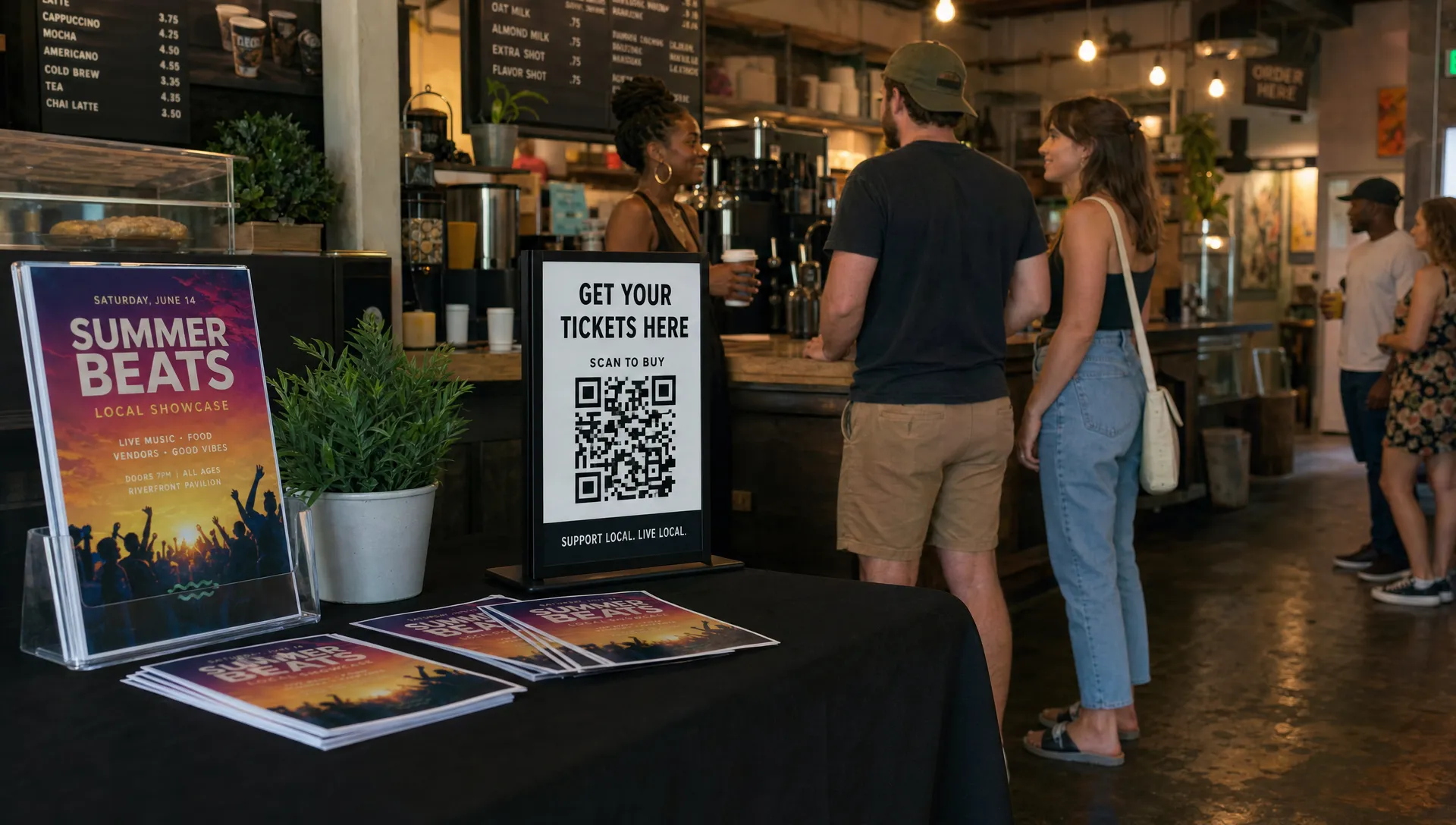
3. Put QR codes where your buyers already spend time
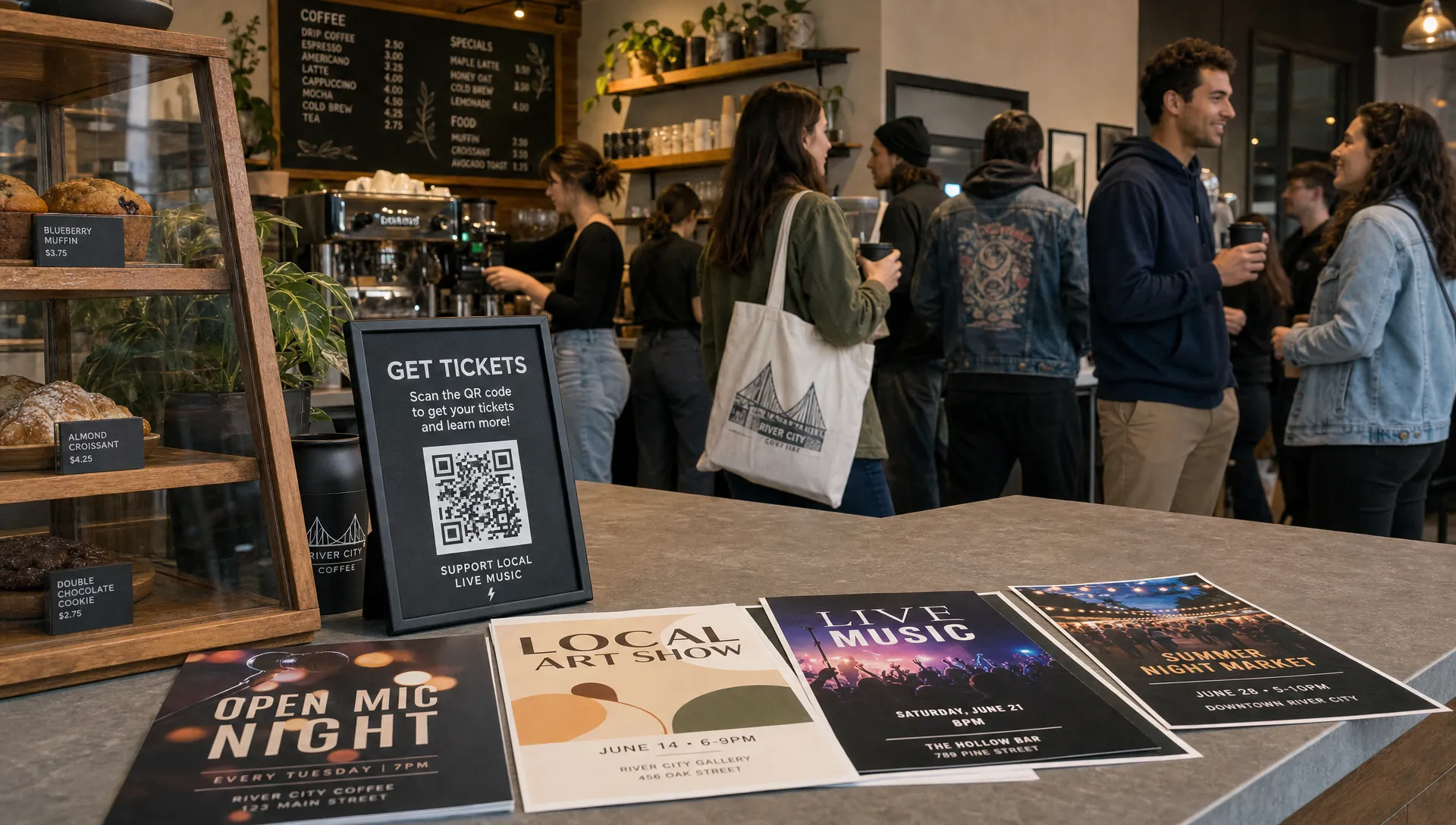
QR code promotion works when placement is intentional. Random posters on random walls rarely move many tickets. Strategic QR placements in trusted local spots can create high intent traffic because the buyer is already in the right mindset.
Think about where your audience spends money, waits, browses, or talks about weekend plans. For a club night, that might be record stores, barber shops, cafes, campus boards, rehearsal studios, vintage shops, restaurants, or the venue itself. For a wellness event, it might be gyms, yoga studios, smoothie bars, coworking spaces, or clinics. For a film screening, it might be bookstores, art spaces, coffee shops, and local theaters.
The QR code should not be the whole message. Pair it with a clear reason to scan: “Limited early tickets,” “Scan for lineup and tickets,” “Local presale ends Friday,” or “Get your ticket before the next tier.” Make sure the QR code leads directly to the event page, not a homepage or social profile. The fewer steps between interest and checkout, the better.
If you want to understand which physical locations work, use location-specific codes. A cafe code, campus code, and venue code can show you where offline attention becomes paid orders.
4. Give ambassadors trackable codes, not vague instructions
Street teams, ambassadors, artists, and community hosts can be powerful, but only when the system is clear. “Help us promote” is vague. “Use your code to invite your audience, and we will track the results” is measurable.
Ambassador promotion works best when the person has real influence inside a specific group. That does not always mean a large following. A student who knows everyone in a campus scene, a DJ with a loyal local crowd, a fitness instructor with an engaged class, or a promoter connected to a niche community can outperform a large account with passive followers.
Give each ambassador a unique promo code or link. Make the offer simple, such as a small discount, early access, or a limited ticket tier. Keep the code easy to say out loud and easy to type. For example, using a recognizable name or crew reference is usually better than a long string of numbers.
If ambassadors receive perks, commissions, free entry, or any other incentive, transparency matters. In the United States, the FTC expects clear disclosure when there is a material connection between an endorser and a brand or organizer. The FTC’s guidance on social media disclosures for influencers is a useful reference, even if your ambassadors promote through email, group chats, or in-person communities.
5. Pitch local media, niche newsletters, and podcasts with an actual angle
Many organizers send a poster to local media and call it PR. That usually is not enough. Editors, newsletter writers, and podcast hosts need a reason their audience will care.
The angle could be a rare artist appearance, a community cause, a new venue opening, a collaboration between local creatives, a cultural moment, a seasonal experience, a charity component, or a strong founder story. A ticket link alone is not a story. A specific reason this event matters right now is.
Keep the pitch short. Lead with the audience fit, not your need to sell tickets. A strong pitch might say, “This is relevant to your readers because it brings together three independent producers from the local electronic scene for one night only,” or “Your audience has been following the city’s growing sober nightlife movement, and this event is designed specifically around that trend.”
Make the practical details easy to copy: event name, date, location, age requirements if relevant, ticket link, pricing from the lowest available tier, and a contact person. If the event has strong visuals, include a press image or flyer, but do not make the image the only source of information.
6. Build ticket bundles with nearby businesses
A ticket becomes easier to buy when it connects to the rest of the night. This is especially useful for events where attendees plan around food, drinks, travel, styling, shopping, or group activities.
A concert could partner with a nearby restaurant for a pre-show dinner perk. A comedy night could team up with a bar for a ticket holder special. A workshop could bundle entry with a product sample or local cafe voucher. A market could work with vendors on limited packages that include event entry plus a redeemable item.
Keep operations simple. A bundle should not create confusion at the door or slow down your team. If the offer requires manual redemption, make the instructions clear for buyers, staff, and the partner business. If it only works on certain dates or for certain ticket types, say that upfront.
Bundles can also protect your margins better than blanket discounts. Instead of reducing the ticket price, you add perceived value. That is especially helpful for organizers who need to control cash flow and avoid training their audience to wait for cheaper tickets.
7. Turn sponsors and vendors into distribution channels
Sponsors often get logo placement, then nothing else. Vendors get a booth, then wait for foot traffic. Both groups can help sell tickets if you give them a reason and a process.
A sponsor may want attendance because more people means more brand exposure. A food vendor may want attendance because more people means more sales. A nonprofit partner may want attendance because it helps their cause. Your job is to make promotion easy for them.
Create a small partner kit with a short event description, approved images, email copy, text message copy, posting copy, and a trackable link or code. Then tailor the ask. A sponsor with a customer list might send an email. A vendor might put a QR code at their shop. A community partner might mention the event at a meeting. A venue might include it in its upcoming events calendar.
The difference between this and normal social posting is accountability. You are not asking for vague awareness. You are giving each partner a clear action and a way to measure results.
8. Reactivate past attendees through direct channels
Your easiest future buyer is often someone who already bought from you. If you have permission to contact past attendees, direct reactivation can outperform public promotion because the trust is already there.
Segment your past buyers by event type, price point, location, or behavior. Someone who bought a VIP package may respond to a premium offer. Someone who attended a weekday workshop may care more about schedule and practical value. Someone who attended a past show by a similar artist may need a reminder that this lineup matches their taste.
The message should not sound like a mass blast. Reference the connection: “You came to our last rooftop session,” “You joined us for the spring market,” or “You bought early for our last showcase.” Then explain what is new, what is limited, and why buying now makes sense.
Respect consent rules and unsubscribe preferences. Direct channels are powerful because they are personal. Overusing them can damage the relationship you are trying to reactivate.
9. Make checkout part of your promotion strategy
Promotion does not end when someone clicks. If the checkout feels slow, confusing, or risky, buyers leave. That means you can increase sales without increasing reach by improving the final step.
A strong ticket checkout should make the next action obvious. Buyers should see the right ticket tier, understand fees, complete the purchase quickly, and receive confirmation without unnecessary account creation. For mobile buyers, this is even more important. Many event purchases happen in the middle of a conversation, after seeing a flyer, while leaving work, or while making weekend plans with friends.
This is where platform choice affects promotion. TixFlow is built for fast event setup, customizable event pages, no buyer registration, flat per-ticket fees, real-time sales control, unlimited ticket tiers, smart promo codes, digital guest lists, Stripe Connect integration, and instant payouts. Those details are not just operational features. They influence how confidently you can promote, test, adjust, and manage cash flow.
If you are spending time and money to drive attention, your checkout should not be the bottleneck. A smoother buying path makes every partner email, QR scan, presale, and ambassador code more valuable.
How to choose the right ticket promotion ideas for your event
You do not need to run all nine ideas at once. The right mix depends on your audience, timeline, capacity, and existing relationships.
If your event is local, start with QR placements, local business partnerships, and niche media. If your event has performers or speakers with loyal followings, start with partner emails and community presales. If you already have a buyer list, prioritize direct reactivation. If you have sponsors, vendors, or community partners, turn them into measurable distribution channels.
A practical promotion plan often includes three layers: one direct channel, one partner channel, and one conversion improvement. For example, you might email past attendees, give artists unique codes, and simplify the event page before the next ticket tier increases. That combination usually beats posting the same flyer five more times.
Measure promotion by revenue, not noise
A ticket promotion campaign should be judged by paid orders, not likes. Social engagement can be useful, but it does not always predict sales. The metrics that matter most are closer to the transaction.
Track sales by channel, code usage, ticket tier performance, conversion rate, sales velocity, and revenue after fees. Watch when sales spike, where they come from, and which partners drive actual buyers. If an ambassador creates attention but no orders, the offer may be wrong. If a QR code gets scans but no sales, the landing page or price may need work. If a presale sells quickly, you may have underpriced the first tier or chosen the right community.
For a deeper measurement framework, use TixFlow’s guide on using ticket statistics to adjust sales in real time. The goal is not just to report what happened after the event. It is to make better decisions while there is still time to sell.
Frequently Asked Questions
What is the best ticket promotion idea beyond social media? The best idea depends on your audience, but partner emails and direct reactivation are often the strongest starting points because they reach people through trusted, high intent channels. For local events, QR placements and business partnerships can also work well.
How early should I start promoting event tickets? Start as soon as your event page, pricing, and checkout are ready. For many small to mid-sized events, promotion begins with a presale or early access window, then continues through partner outreach, direct reminders, and final urgency near the event date.
Should I discount tickets to sell more? Not always. Discounts can help in specific situations, but they can also reduce margins and teach buyers to wait. Consider early access, limited tiers, bundles, or community-specific codes before using broad public discounts.
How do I know which promotion channel is working? Use unique links, promo codes, or ticket tiers for each channel. Track completed orders, revenue, conversion rate, and sales timing. Avoid judging channels only by impressions, likes, or comments.
Can these ideas work for small events? Yes. Small events often benefit the most because local partnerships, niche communities, and direct outreach can be more effective than broad awareness campaigns. The key is to focus on the people most likely to buy, not the largest possible audience.
Sell tickets with less friction
Social media can help people discover your event, but stronger ticket promotion comes from a system: trusted partners, clear offers, measurable codes, direct buyer communication, and a checkout that makes purchasing easy.
If you want a ticketing platform built for that kind of control, TixFlow helps organizers set up events quickly, sell with flexible ticket tiers and promo codes, manage digital guest lists, and get instant payouts through a modern checkout experience designed to reduce buyer friction.