
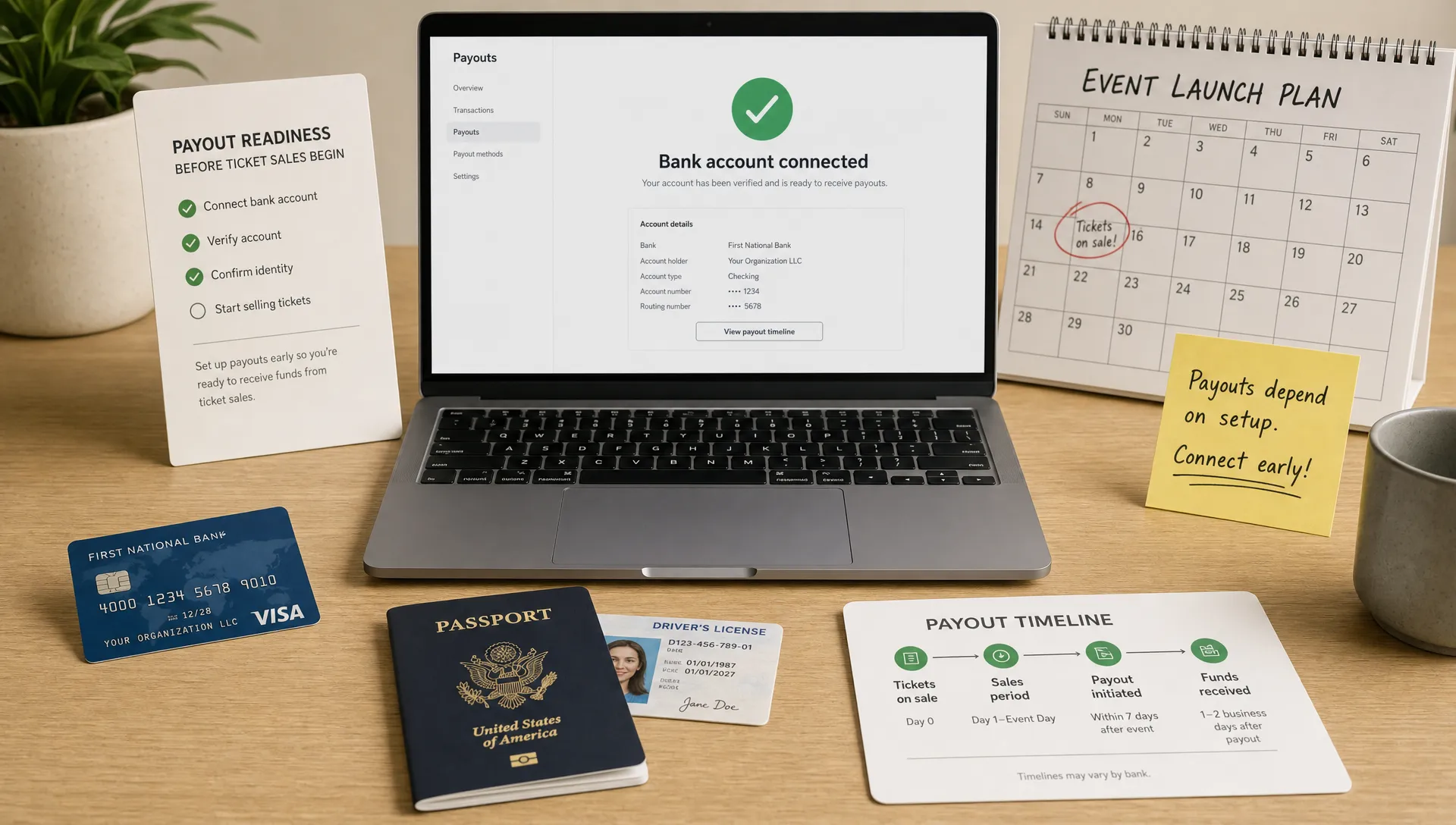
Why Your Ticketing Account Setup Affects Payout Speed
Payout speed is not only a payment processor issue. It often starts with the way your ticketing account is created, verified, and connected before the first attendee buys a ticket.
For event organizers, that detail matters. A delayed payout can affect venue deposits, artist guarantees, staffing, production rentals, bar inventory, security, and marketing spend. For music producers and independent promoters, cash flow can be the difference between scaling the next show and scrambling after the doors close.
A fast ticket checkout helps you sell. A well-set-up ticketing account helps you actually access the revenue you earned.
Your ticketing account is part of your cash flow system
Many organizers treat account setup as admin work: create a login, add an event name, connect payments, publish the page. But your ticketing account is also the financial identity behind every transaction.
It tells the payment infrastructure who is selling, where money should go, which bank account should receive funds, who has permission to manage payouts, and whether required verification has been completed. If any of that is missing, mismatched, or changed late, payouts can slow down even when ticket sales are strong.
This is especially important when you are selling tickets before paying suppliers. If you expect ticket revenue to fund part of the event budget, your payout setup needs to be ready before launch, not fixed after you sell out.
For a deeper look at reducing payment bottlenecks across the whole sales process, TixFlow has a separate guide on simplifying ticketing payments for faster payouts. This article focuses specifically on the setup decisions inside your ticketing account that can influence payout speed.
Why verification affects when money can move
Modern ticketing platforms do not simply collect money and forward it blindly. Payment providers must follow financial compliance rules, verify account information, and manage risk before funds can be paid out.
If your platform uses a connected payment system, details such as your legal name, business type, tax information, bank account, and location may need to be reviewed. Stripe, for example, explains in its Connect identity verification documentation that connected accounts may need to provide information before they can receive payouts.
That does not mean every account will experience the same timeline. Payout availability can depend on factors such as region, bank, verification status, account type, payment method, risk review, and processor rules. The key point is simple: complete setup lowers the chance of avoidable payout delays.
The account details that most often slow down payouts
Small setup issues can create big timing problems. Before you launch sales, review the parts of your ticketing account that directly affect money movement.
| Ticketing account detail | Why it matters for payout speed | What to check before launch |
|---|---|---|
| Legal name or business name | Payment providers need to verify who is receiving funds | Use the exact name tied to your bank or business records |
| Account type | Individual, company, nonprofit, or production entity details may differ | Choose the correct seller type from the start |
| Bank account | Funds cannot be routed correctly if bank details are wrong | Confirm routing, account number, currency, and ownership |
| Verification documents | Missing or mismatched information can trigger review | Complete onboarding before opening ticket sales |
| Payout permissions | The wrong team member may not be able to resolve issues quickly | Assign access to someone responsible for finance |
| Event and business location | Region can affect payment and payout requirements | Make sure location settings match the actual seller setup |
| Refund and dispute handling | Unclear policies can create risk signals and cash flow pressure | Set policies before traffic arrives |
These are not glamorous details, but they are operational leverage. The more complete your setup is before sales begin, the less likely your revenue is to get stuck waiting for corrections.
Business identity: the first payout checkpoint
Your ticketing account should match the person or entity that is actually receiving event revenue. If you are running a one-off underground show as an individual, your setup may look different from a registered production company, venue group, label, or nonprofit.
Problems usually appear when the seller identity does not match the bank account. For example, a producer might create an account under a personal name but connect a business bank account. Or a venue might use a staff member’s login while payouts are intended for the venue’s legal entity.
That kind of mismatch can trigger additional verification. Even if the issue is easy to fix, it may take time right when you need funds most.
Before launch, decide who the seller of record is. Then keep the legal name, bank account, tax information, and payout ownership aligned.
Bank setup: the difference between collected revenue and usable cash
A ticket sale is not useful to your operation until the money reaches the right account. Bank setup is one of the most practical factors in payout speed because even a small typo can block or return a payout.
Check your bank details carefully before promoting the event. Confirm that the account can receive payouts in the correct currency, that the account is active, and that the account holder matches the seller information on your ticketing account.
If you are managing multiple events, do not assume every event should pay into the same bank account. A festival, club night, private workshop, and branded pop-up may have different financial structures. For example, a boutique wellness business such as Lumina Skin Sanctuary could sell tickets for a grand opening, skincare workshop, or VIP retail evening where early revenue helps cover staffing, products, and local promotion. The same principle applies to music events: the bank account should match the entity responsible for the event’s costs and revenue.
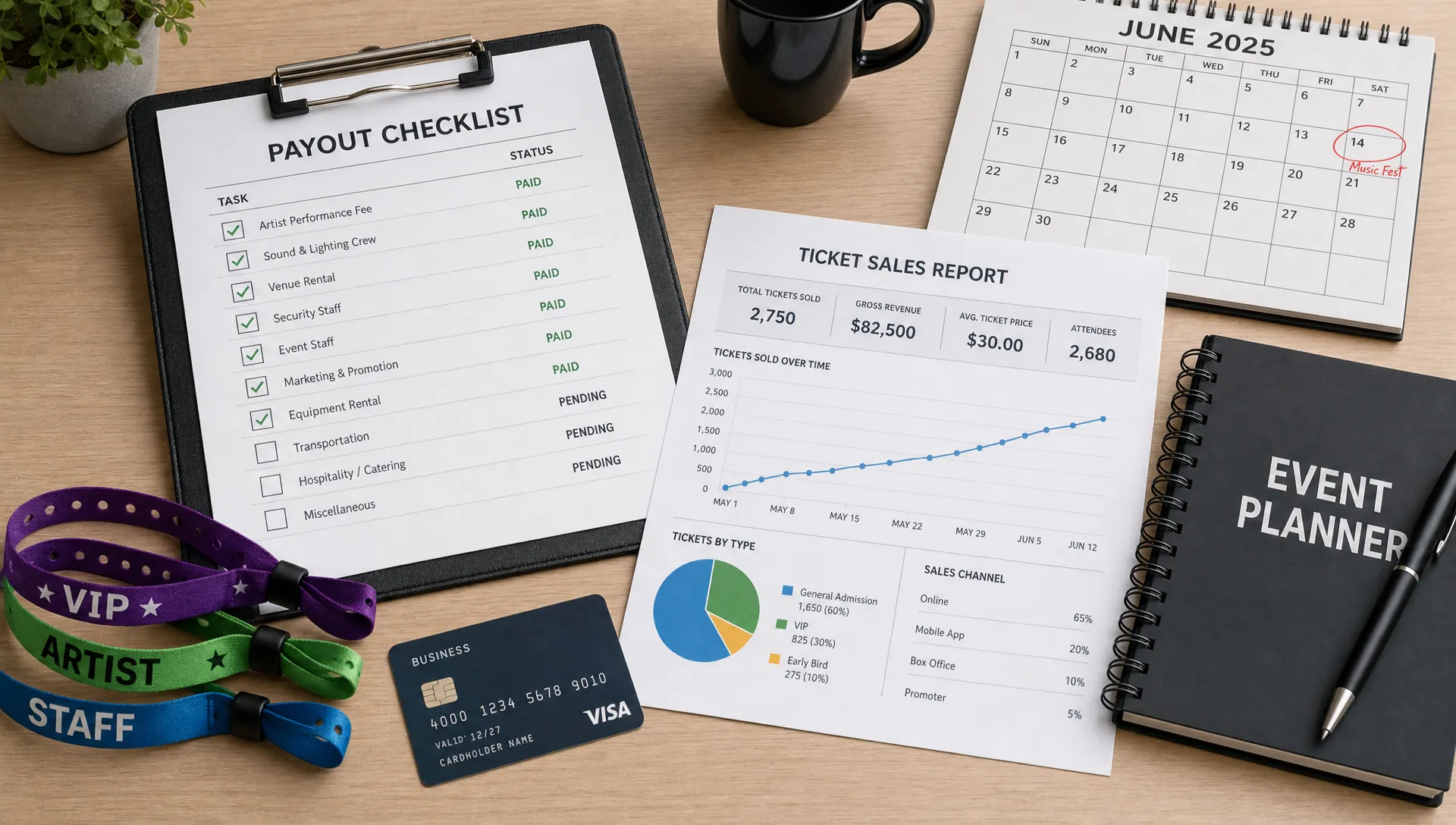
Team access: payout speed depends on who can fix issues
Payout delays sometimes last longer than necessary because the right person does not have account access. A marketing lead may publish the event page, but a finance manager may be the only person who can confirm bank details. A promoter may monitor sales, but the business owner may need to complete verification.
Before tickets go live, assign clear responsibilities. Someone should own payment setup, someone should monitor sales, and someone should be available to respond quickly if the platform or processor requests more information.
This matters most during high-velocity sales windows. If you announce a lineup and sell hundreds of tickets in a few hours, you do not want verification requests sitting unread in an inbox.
Ticket tiers and sales phases can affect cash flow planning
Your ticketing account setup is not only about banking details. It also includes how you structure sales inside the platform.
Unlimited ticket tiers, early-bird windows, VIP packages, group offers, and automated sales phases can all influence when revenue comes in. A strong setup gives you more predictable cash flow because you can plan how quickly tickets move and how much money each phase is expected to generate.
For example, if your first sales phase is heavily discounted, you may sell fast but collect less usable revenue per ticket. If your VIP tier includes premium perks with higher delivery costs, that revenue may need to be tracked separately. If promo codes are too broad, you may reduce margin without improving sales quality.
This is why payout speed and pricing control should be planned together. The faster you understand what is selling, the easier it is to decide whether to release another tier, adjust pricing, or hold inventory. TixFlow’s article on using ticket statistics to improve event sales is a useful companion if you want to connect sales data with better revenue decisions.
Buyer friction can indirectly affect payout timing
Payout speed is mainly a back-end issue, but buyer experience still matters. If checkout is slow, confusing, or requires unnecessary account creation, sales arrive later. Later sales mean later revenue collection and less time to use those funds before the event.
A ticketing account that supports a smoother checkout experience can help cash flow by increasing completed purchases earlier in the campaign. TixFlow is built with no buyer registration, customizable event pages, flexible pricing, smart promo codes, and real-time sales control, all of which help organizers reduce friction while keeping control of the sales process.
If you are evaluating the front-end side of this problem, read TixFlow’s guide on why guest checkout can increase ticket sales. Faster purchase completion does not replace payout readiness, but it helps revenue start flowing sooner.
A practical pre-launch payout checklist
Use this checklist before you announce ticket sales, especially if payout speed is critical to your event budget.
- Confirm the seller name matches your bank account and business records.
- Complete payment onboarding before publishing the event page.
- Verify bank account details, currency, and account ownership.
- Assign payout and finance responsibilities to the right team member.
- Review refund, cancellation, and dispute policies before sales begin.
- Set ticket tiers and sales phases based on expected cash flow needs.
- Test the buyer checkout path so sales are not delayed by friction.
- Monitor early transactions and resolve verification requests quickly.
This checklist is simple, but it prevents the most common avoidable delays. The worst time to discover a setup issue is after your launch campaign is already live.
How TixFlow supports faster, cleaner ticketing operations
TixFlow is designed for organizers who want ticketing to be fast for attendees and manageable for teams. Its setup focuses on reducing friction across the sales and payment flow, with features such as instant payouts, flat per-ticket fees, Stripe Connect integration, real-time sales control, digital guest lists, smart promo codes, automated sales phases, and customizable event pages.
The benefit is not just speed for its own sake. It is operational clarity. When your ticketing account is properly set up, your sales data, payout flow, pricing strategy, and attendee experience work together instead of creating separate admin problems.
That matters whether you are producing a club night, running a conference, hosting a wellness event, managing a venue calendar, or selling tickets for a one-off cultural experience.
Common mistakes that create avoidable payout delays
Even experienced organizers can overlook account setup when the pressure is on to launch. Watch for these mistakes:
| Mistake | Why it creates risk | Better approach |
|---|---|---|
| Launching before verification is complete | Required information may be requested after sales begin | Finish onboarding first |
| Using a personal account for a business event | Identity and bank details may not align | Match the seller to the true revenue owner |
| Changing bank details close to the event | Updates can require review or confirmation | Finalize payout routing early |
| Giving account access only to marketing staff | Finance issues may not be handled quickly | Include the person responsible for payouts |
| Ignoring refund exposure | Refunds and disputes can affect available cash | Set clear policies and keep reserves in mind |
The goal is not to make setup complicated. It is to make it predictable. When your account structure is clean, your ticketing platform can do its job with fewer interruptions.
Frequently Asked Questions
What is a ticketing account? A ticketing account is the organizer-side setup used to create events, sell tickets, connect payments, manage sales settings, and receive payouts. It usually includes business identity, payment onboarding, bank details, and team access.
Why can incomplete account setup delay payouts? Payouts may be delayed when identity, business, tax, or bank details are missing or do not match. Payment providers often need complete information before funds can be released.
Should I complete payout setup before selling tickets? Yes. If ticket revenue is important for deposits, vendors, artists, or production costs, complete payout setup before launch so any verification issues can be resolved early.
Does faster checkout improve payout speed? Faster checkout does not directly change processor payout rules, but it can help sales happen earlier. Earlier completed purchases can improve cash flow planning when your payout setup is already ready.
Can TixFlow help organizers control cash flow? TixFlow is built for organizers who need low-friction ticket sales and clearer control, with features such as instant payouts, flat per-ticket fees, real-time sales control, flexible pricing, and Stripe Connect integration.
Set up your ticketing account before sales start
If payout speed matters to your event, do not wait until after launch to think about payment setup. Align your seller identity, bank account, verification details, ticket tiers, and team roles before your campaign goes live.
With TixFlow, organizers can create a smoother ticketing flow for attendees while keeping control over pricing, sales phases, guest lists, and payouts. Start with a clean account setup, then let your event sales move with less friction from checkout to cash flow.