
Why Instant Ticketing Creates Faster Sales and Shorter Lines
Speed is one of the most underrated growth levers in event ticketing. When people can discover an event, choose a ticket, pay, and receive confirmation without friction, more of them complete the purchase. When those same tickets are ready for fast validation at the door, lines move faster and your team spends less time solving avoidable problems.
That is the core promise of instant ticketing: not just digital tickets, but a faster path from interest to entry. For organizers, music producers, venue teams, and anyone managing event cash flow, the impact shows up in two places that matter most: revenue comes in sooner, and attendees get through the door with less waiting.
What instant ticketing actually means
Instant ticketing is more than sending a QR code by email. A truly instant ticketing flow removes delays across the full event journey, from the moment an attendee lands on your event page to the moment they are checked in.
In a slow ticketing setup, buyers may be asked to create an account, verify an email, wait for a manual confirmation, or navigate a checkout page that feels disconnected from the event. On the organizer side, teams may wait for sales reports, manually reconcile guest lists, or deal with payout timing that makes planning harder.
An instant flow connects the pieces:
- A clear event page that helps people decide quickly
- A checkout that does not force unnecessary registration
- Immediate ticket delivery after payment
- Real-time sales control for the organizer
- A digital guest list ready for door staff
- Faster access to ticket revenue
That end-to-end speed is why the ticketing system affects more than admin work. It shapes buyer confidence, sales momentum, staffing plans, and the first impression attendees have when they arrive. If you want a deeper look at the attendee journey, TixFlow also covers how online tickets improve checkout and entry in practice.
Faster sales start with fewer buyer decisions
Most event tickets are impulse-sensitive. Someone sees a lineup announcement, a friend shares a link, or a limited tier is about to end. At that moment, every extra step creates space for hesitation.
A fast checkout reduces the number of questions a buyer has to answer before committing. Do they need an account? Will the ticket arrive immediately? Is the price clear? Can they buy from their phone? Does the page feel trustworthy? The less mental effort required, the easier it is to say yes.
This is why no-registration checkout matters. Buyer accounts can be useful in some industries, but for event tickets they often create a barrier at exactly the wrong moment. A person who is ready to buy should not have to pause to create a password. TixFlow discusses this problem in more detail in its article on why guest checkout increases ticket sales.
| Checkout friction | What buyers often feel | Instant ticketing approach |
|---|---|---|
| Forced account creation | “I will do this later.” | Let attendees buy without registration |
| Too many form fields | “This is taking too long.” | Ask only for what is needed |
| Unclear fees | “Why did the price change?” | Show pricing transparently before payment |
| Delayed confirmation | “Did my order work?” | Deliver tickets immediately after purchase |
| Poor mobile experience | “This is hard on my phone.” | Build checkout for mobile-first behavior |
For organizers, this is not just a user experience issue. It is a revenue issue. A cleaner path to purchase helps convert the attention you already worked hard to earn through artists, partners, social campaigns, email lists, and word of mouth.
Urgency works only when the system can move quickly
Event sales often depend on momentum. Early-bird tiers reward quick buyers. Final-release pricing creates urgency. Promo codes help partners, artists, communities, or sponsors drive targeted sales. But these tactics work best when the ticketing system can keep up in real time.
If an organizer has to manually update inventory, switch pricing at midnight, or wait to see whether a promo campaign worked, the event loses agility. Instant ticketing gives teams faster feedback. When a tier moves quickly, you can understand demand sooner. When a promo code underperforms, you can adjust messaging. When a high-demand announcement hits, you can respond before the spike fades.
For music producers and nightlife organizers, this is especially important. Ticket demand may surge after a headliner post, a support act announcement, or a short-form video gaining traction. A slow setup turns that traffic into missed opportunity. A fast setup turns it into confirmed revenue.
TixFlow is built around this kind of control, with flexible pricing, unlimited ticket tiers, automated sales phases, smart promo codes, and real-time sales control. Those features help organizers manage urgency without turning ticketing into a manual spreadsheet exercise.
Cash flow improves when ticketing delays disappear
Faster ticket sales are valuable, but only if organizers can use that revenue when it matters. Events have upfront costs: deposits, production, promotion, staffing, permits, artists, rentals, security, and vendors. If ticket money is locked in a slow payout cycle, even strong sales can create cash flow pressure.
Instant payouts change the planning rhythm. Instead of waiting until after the event or relying on delayed settlement windows, organizers can make decisions with clearer access to funds. That can reduce the need to front costs personally, delay vendor payments, or make conservative choices because ticket revenue is not yet available.
Flat per-ticket fees also help with planning. When fees are predictable, it is easier to calculate net revenue by ticket tier, estimate break-even points, and decide whether to absorb fees or pass them to buyers. For a more focused guide on the money side, see TixFlow’s article on simplifying ticketing payments for faster payouts.
Ticketing is only one part of the financial workflow, of course. Teams that manage multiple companies, projects, or vendors also benefit from clear invoicing and reporting systems, especially when event revenue starts moving faster. Pairing immediate ticket revenue visibility with an online invoicing and accounting workflow can help keep the back office from becoming the next bottleneck.
Shorter lines begin before attendees arrive
Long entry lines are often blamed on the door team, but many line problems are created much earlier. If tickets are hard to find, confirmations are delayed, names are not synced, or too many people need on-site help, the entrance becomes a support desk.
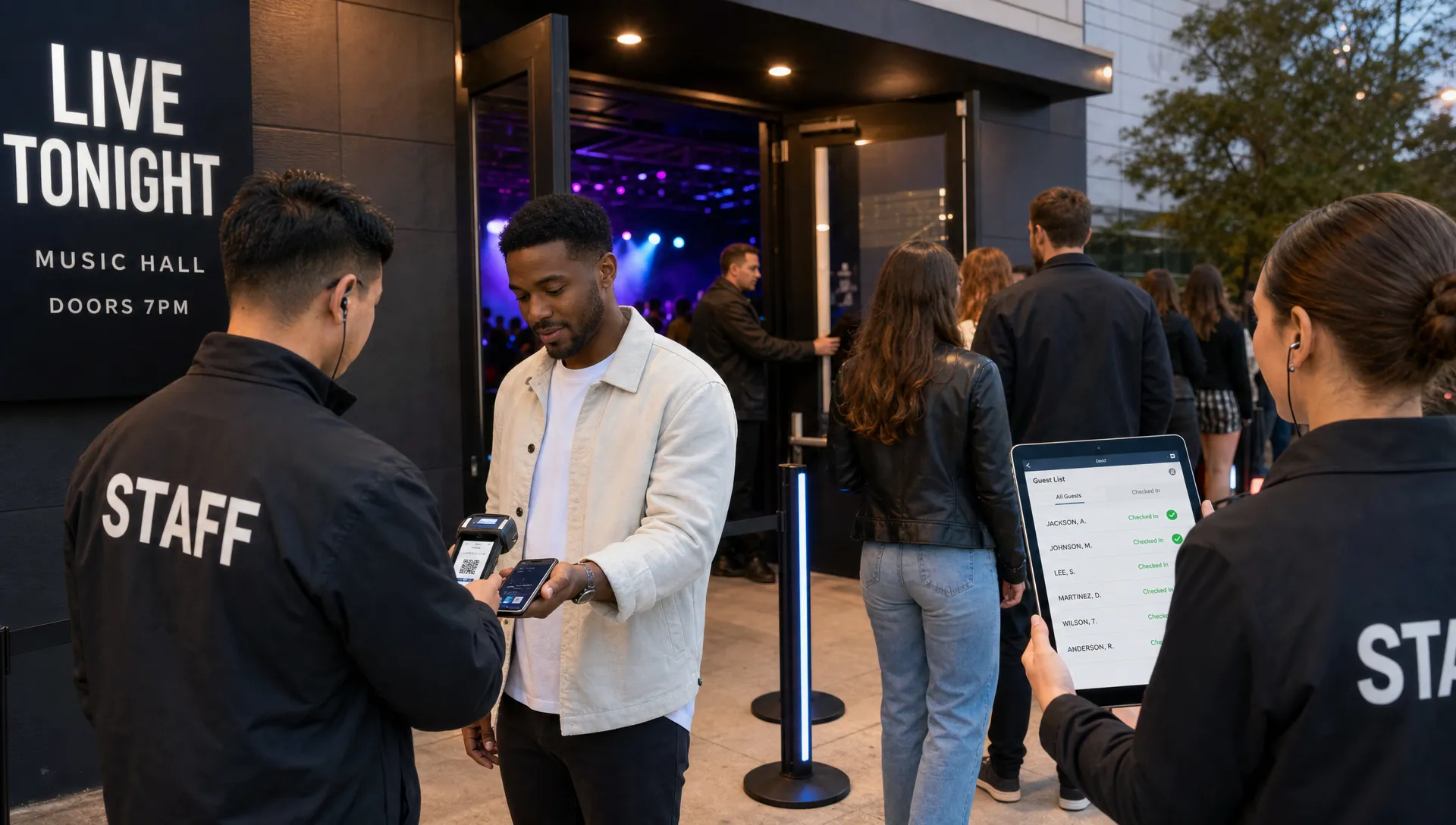
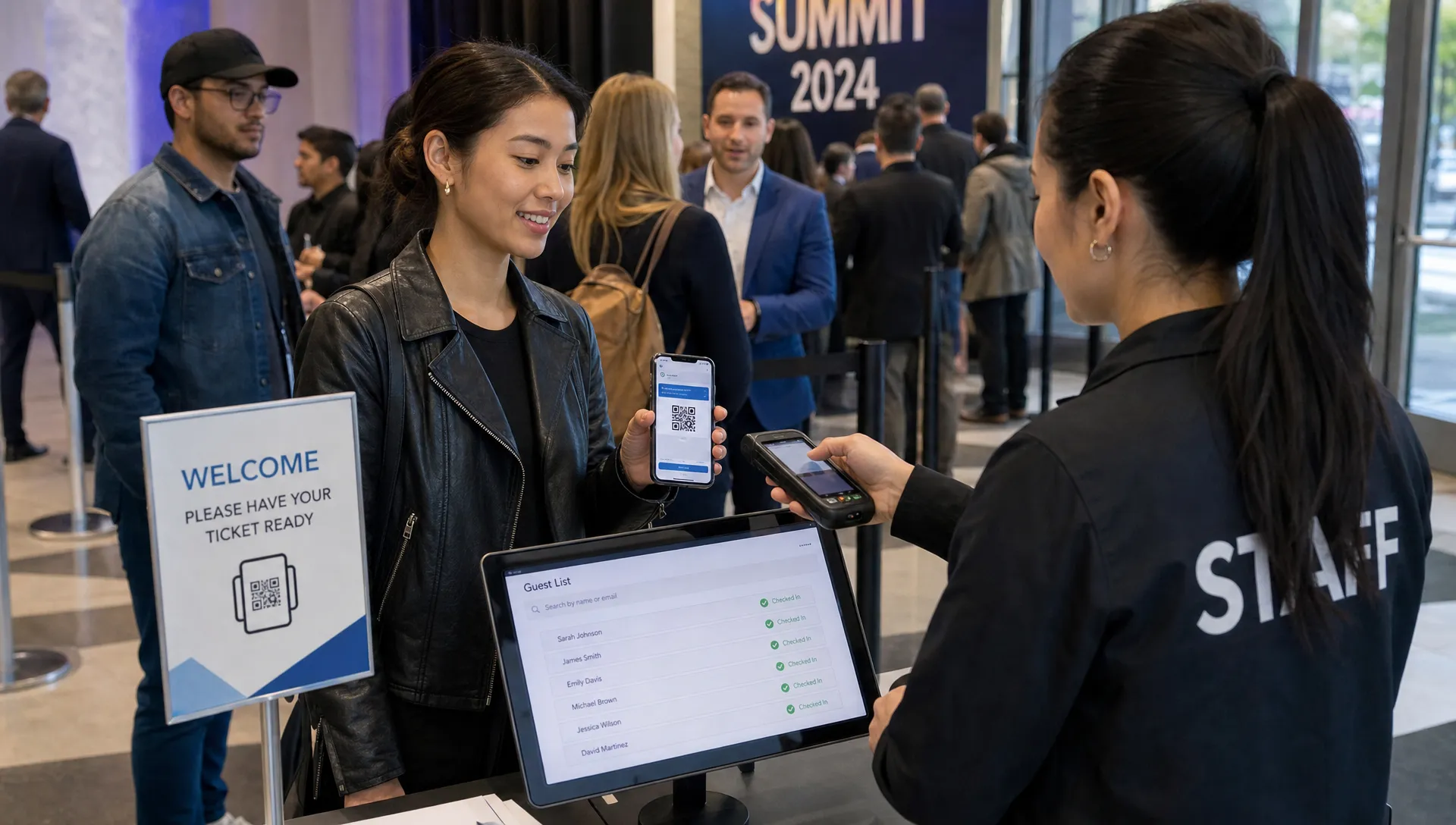
Instant ticketing reduces that pressure by making each attendee easier to validate. A buyer receives the ticket immediately. The organizer has a digital guest list. Door staff can check people in without digging through spreadsheets or asking for proof of purchase screenshots. The goal is simple: fewer exceptions, faster scans, and less confusion at peak arrival time.
This matters most during the first rush. Many events have a short window where a large share of attendees arrive at once. A 10-second delay per person may not sound like much, but at scale it creates a visible line. When the system reduces small delays for every attendee, the door operation feels dramatically smoother.
| Entry delay source | Why it creates lines | How instant ticketing helps |
|---|---|---|
| Attendees cannot find tickets | Staff must search names or emails | Tickets are delivered immediately and digitally |
| Manual guest list updates | Door staff use outdated information | Sales and guest lists stay easier to align |
| Walk-up confusion | People ask pricing and availability questions at the door | Clear online ticket tiers reduce uncertainty earlier |
| Payment issues at entry | Staff handle transactions instead of scanning | More sales happen before arrival |
| Unclear ticket types | Staff need to interpret access rules | Defined tiers make validation simpler |
Why attendees perceive fast entry as a better event
The line is part of the event experience. Before people hear the first track, see the stage, or enter the venue, they are already judging the organization behind the event. A slow, unclear entry process can make a premium event feel amateur. A quick, calm entrance makes attendees feel expected.
That perception has commercial value. People who have a smooth experience are more likely to return, recommend the event, arrive earlier next time, and trust future announcements. For recurring parties, concert series, conferences, workshops, or community events, smoother entry compounds into stronger brand trust.
Instant ticketing also helps protect staff morale. Door teams deal with the most pressure when systems are unclear. If they have accurate digital guest lists and attendees have valid tickets ready, staff can focus on hospitality, safety, and flow instead of troubleshooting preventable issues.
Where instant ticketing has the biggest impact
Some events benefit from speed more than others, but almost every organizer gains something from reducing friction. The impact is especially visible when sales windows are short, audience attention is fragmented, or entry happens in a compressed timeframe.
Music events and club nights often rely on fast purchase decisions after social promotion, artist announcements, and peer recommendations. Festivals and multi-stage events need clear ticket tiers and fast validation because the volume is higher. Workshops, pop-ups, and community events benefit because smaller teams have less time for manual admin. Corporate or brand events gain from smoother guest list control and a more polished arrival experience.
For cash-sensitive productions, the benefits are even clearer. Faster sales and instant payouts can help organizers make smarter decisions before the event date instead of waiting for post-event reconciliation. That can influence marketing spend, staffing levels, production upgrades, and vendor timing.
The organizer’s playbook for faster sales and shorter lines
Instant ticketing works best when it is designed into the event plan early. The technology matters, but so do the choices organizers make before tickets go live.
Start with the event page. The page should answer the buyer’s most important questions quickly: what the event is, when it happens, where it is, who is involved, what ticket options exist, and why someone should buy now. A beautiful page that hides basic information will still slow people down.
Then simplify the checkout. Avoid unnecessary fields, forced accounts, unclear add-ons, or surprises at payment. If buyers can complete the purchase in a few focused steps, you preserve momentum from the original click.
Finally, plan the door before the first ticket sells. Decide how ticket types will be checked, how guest list access will work, who handles exceptions, and what information staff need during the rush. A digital guest list is only useful if the team knows how to use it under pressure.
| Planning area | What to decide before launch | Why it matters |
|---|---|---|
| Ticket tiers | Early, general, VIP, group, or access-based options | Buyers choose faster when options are clear |
| Sales phases | When each tier starts and ends | Urgency works without manual changes |
| Promo codes | Who gets codes and how they are tracked | Partners can drive sales without confusion |
| Checkout fields | What attendee data is truly necessary | Shorter forms reduce drop-off |
| Door workflow | Who scans, who handles exceptions, and where lines form | Entry stays organized during peak arrival |
| Payout timing | How revenue becomes available for expenses | Cash flow decisions become easier |
Metrics that show instant ticketing is working
The strongest event teams do not judge ticketing only by total sales. They watch the operational signals that explain why sales and lines improve. A few simple metrics can reveal whether your ticketing flow is actually reducing friction.
| Metric | What it tells you | Why organizers should track it |
|---|---|---|
| Checkout conversion rate | How many visitors become buyers | Shows whether the buying flow is persuasive and simple |
| Time from page visit to purchase | How quickly people commit | Reveals friction in decision-making or checkout |
| Sales by ticket tier | Which pricing phases drive demand | Helps plan future release strategies |
| Promo code performance | Which partners or channels convert | Improves marketing allocation |
| Percentage sold before doors | How much entry pressure is reduced | More advance sales usually mean fewer door transactions |
| Average check-in speed | How quickly staff validate tickets | Directly affects line length |
| Exception rate at entry | How often staff need manual help | Identifies issues with ticket delivery, names, or access rules |
You do not need a complex analytics operation to learn from these numbers. Even basic tracking helps organizers move from guesswork to repeatable improvement.
Mistakes that slow instant ticketing back down
Instant ticketing can still feel slow if the event setup is confusing. The most common mistake is offering too many ticket options without clear differences. Buyers should not need to decode your pricing strategy. If VIP, entry-only, group, early-bird, and final-release tickets all appear at once without explanation, speed disappears.
Another mistake is treating the door as a separate operation from ticket sales. The guest list, ticket tiers, access rules, and refund policies all affect entry. If those details are not aligned before doors open, staff are forced to make decisions in real time while attendees wait.
Avoid these common friction points:
- Creating ticket names that sound similar but grant different access
- Launching promo codes without clear expiration rules
- Asking for attendee data that is not needed for the event
- Waiting until event day to brief door staff on ticket types
- Ignoring payout timing when planning marketing and production expenses
The fix is to design for the buyer and the door team at the same time. A good ticketing setup should help someone buy quickly and help staff validate that purchase just as quickly.
Frequently Asked Questions
What is instant ticketing? Instant ticketing is a ticketing flow where attendees can buy tickets quickly, receive confirmation immediately, and use digital tickets for fast entry. For organizers, it also means real-time control over sales, ticket tiers, guest lists, and revenue workflows.
How does instant ticketing increase event sales? It reduces friction during the buying process. When attendees do not have to create accounts, wait for confirmation, or navigate confusing checkout steps, they are more likely to complete the purchase while their intent is high.
Can instant ticketing really reduce lines at the door? Yes. Shorter lines come from fewer manual checks, fewer payment issues at entry, clearer ticket types, and digital guest lists that help staff validate attendees faster.
Is instant ticketing only useful for large events? No. Smaller events often benefit even more because teams have less time and fewer staff to manage manual ticketing tasks. A smoother system can reduce admin work before, during, and after the event.
Why do instant payouts matter for organizers? Instant payouts help organizers access ticket revenue sooner, which can improve cash flow for marketing, production, staffing, vendor payments, and other event expenses.
Turn speed into an event advantage
Instant ticketing creates faster sales because it respects buyer intent. It creates shorter lines because it prepares the door before attendees arrive. Together, those advantages give organizers more control over revenue, operations, and the attendee experience.
TixFlow is built for that modern event workflow, with instant payouts, no buyer registration, flat per-ticket fees, real-time sales control, customizable event pages, unlimited ticket tiers, automated sales phases, smart promo codes, digital guest lists, and Stripe Connect integration.
If you want ticketing that helps people buy faster and enter with less friction, explore TixFlow and build your next event around speed from the first click to the front door.