

Who Can Sell and Buy Tickets When an Event Has Age Restrictions?
The people who can sell and buy tickets for an age-restricted event are not necessarily the people allowed through the door. An adult may be allowed to buy for a younger guest, but that guest must still meet the admission rules. A minor’s ability to purchase or sell also depends on platform terms and applicable law.
For organizers, the safest approach is to separate purchase eligibility, seller eligibility and admission requirements before sales open. A successful payment does not prove that an attendee qualifies for entry.
Four permissions that organizers need to separate
Age restrictions can come from several sources, including local law, a liquor license, venue policy and ticketing or payment-provider terms. Those requirements answer different questions:
| Permission | What determines eligibility | What it does not establish |
|---|---|---|
| Purchasing a ticket | Checkout terms, contractual capacity and applicable law | The purchaser’s right to attend |
| Attending the event | Admission policy, age on the event date and any required accompaniment | Permission to purchase alcohol |
| Selling tickets | Organizer authorization, account eligibility and applicable sales rules | Permission to resell every ticket |
| Reselling or transferring | Event terms, ticket type, platform rules and local law | An exemption from admission restrictions |
An event can therefore allow an adult to purchase a ticket for an eligible teenager without allowing that teenager to operate a seller account. Treat each permission separately rather than using one age setting as a substitute for the others.
Who can sell and buy tickets under the event’s rules?
The organizer or an authorized ticketing partner can generally sell primary tickets, subject to applicable business requirements and the platform’s account terms. Someone selling a spare ticket faces a different question: whether that particular ticket may be resold and through which channels.
An organizer does not necessarily have to meet the event’s audience age requirement personally. A younger music producer’s involvement in an 18+ show, for example, is separate from whether they can sign the venue agreement, hold the seller account or access restricted parts of the venue.
For anyone under 18, check contractual capacity and account requirements before collecting money. Parental permission alone may not satisfy a platform or payment provider. Stripe’s published age requirements for creating an account show why payment-account eligibility needs its own review.
If an adult representative is required, that person must be authorized under the provider’s rules and understand their responsibilities. A minor should not simply enter an adult’s identity details to bypass an age restriction.
The same distinction applies to buyers: being old enough to attend does not automatically mean someone meets every checkout provider’s account or contracting requirements.
Buying for someone else: gifts, groups and guardians
Adults can often sell and buy tickets on behalf of other eligible people, but authorization and event terms still apply. For purchases, the attendee’s age usually matters at admission, while the purchaser must separately meet the checkout requirements.
A parent buying a ticket for a 17-year-old does not make that teenager eligible for an 18+ event. Likewise, a 20-year-old buying several tickets for friends cannot enter a strictly 21+ event merely because some members of the group qualify.
Accompaniment is another separate condition. An event might admit under-18s with a parent or legal guardian, but that exception must actually exist. “Responsible adult,” “parent” and “legal guardian” are not interchangeable terms. Organizers should define the permitted relationship, whether the adult needs a ticket and whether the group must arrive and remain together.
Alcohol rules add another layer. The National Institute on Alcohol Abuse and Alcoholism explains the U.S. minimum legal drinking age of 21. That does not create one nationwide admission rule for every concert venue. An 18+ show may have separate alcohol controls, while a liquor license or local rule may restrict entry to an entire premises.
Never advertise parental accompaniment as an exception until the venue confirms it is legally permitted.
Publish an age policy that answers practical questions
Before people sell and buy tickets, they should be able to identify the minimum attendance age, the relevant event date and the evidence required at entry. “Age restrictions apply” is not enough information for a purchase decision.
State whether eligibility is measured on the event date, not the purchase date. Someone who is 17 when booking could qualify for an 18+ show after their birthday. For a multi-day event, define how eligibility works across individual dates or sessions.
A hypothetical policy for a strictly adult-only show could read:
Admission is 18+ only. Every attendee must be at least 18 on June 12, 2027. Bring an original, unexpired passport or state-issued photo ID. Parent or guardian accompaniment does not waive the minimum age. Gift purchases are allowed, but every attendee must independently qualify for entry.
Use that wording only if it matches the venue’s actual requirements. Some venues accept different documents or impose additional conditions. Publish the accepted-ID list rather than leaving door staff to invent it during check-in.
Place the policy on the event page, beside relevant ticket choices and in the confirmation message. Keep the same wording across promotional channels. The principles behind listing tickets without confusing buyers are especially useful when a missing detail could lead to refused admission.
Verify admission eligibility at the door
People may sell and buy tickets through a valid payment process without completing any age verification. A purchase confirmation proves that an order exists, not that the person presenting it meets the venue’s admission requirements.
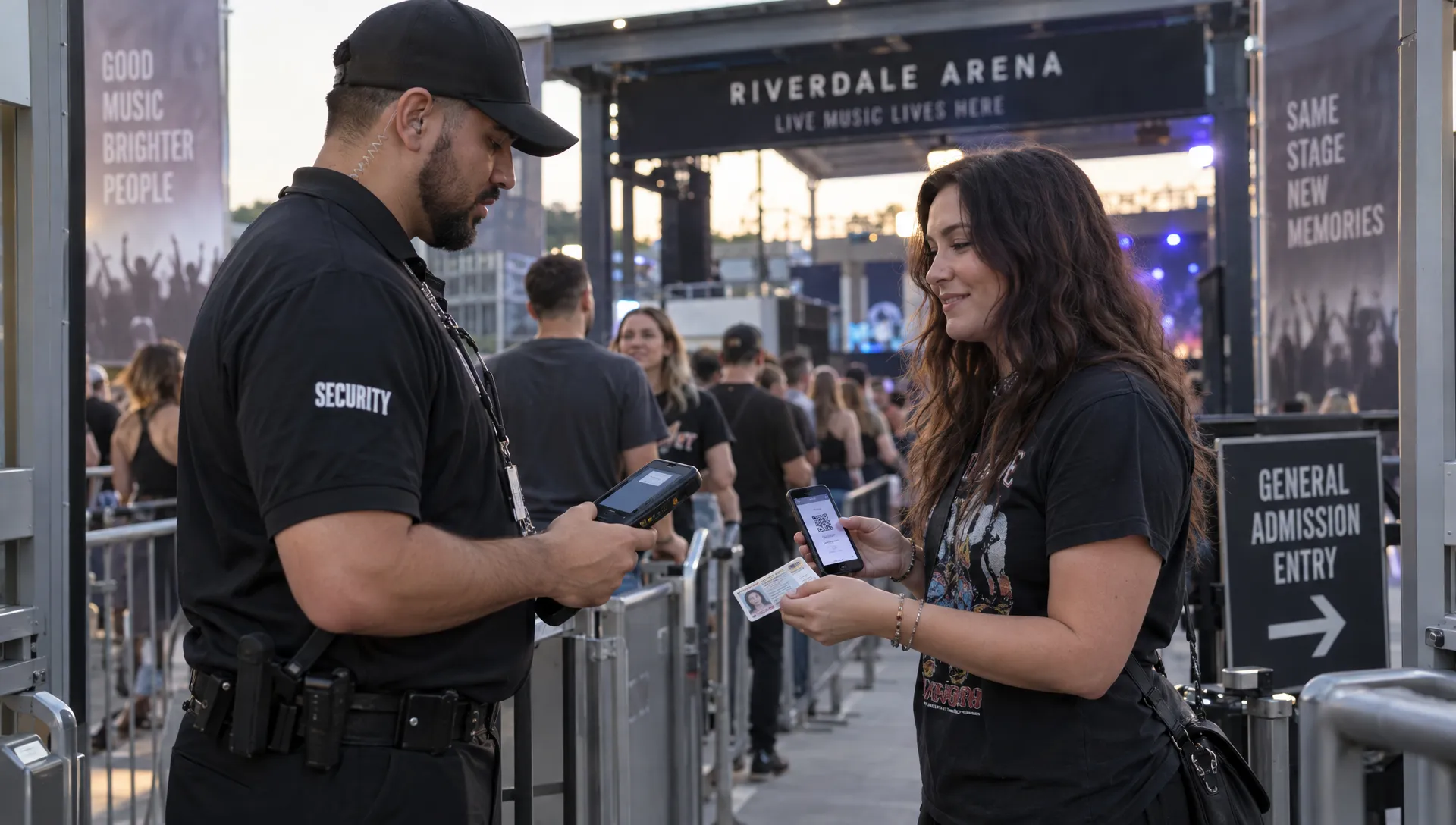
Build a check-in procedure that distinguishes ticket validation from age checking. Staff need to know which IDs the venue accepts, how to handle an unclear document and who can make a final admission decision. A valid ticket should not automatically override an unmet age condition.
The name on a payment card is also not a reliable substitute for attendee identification. Gift purchases and group bookings can legitimately involve different names. If tickets must be personalized or the lead purchaser must attend, disclose that requirement before checkout.
For mixed-age events, separate admission checks from alcohol-service controls. A wristband or stamp can support the venue’s process, but it does not remove obligations imposed by local law or the license.
Avoid collecting more personal information than necessary. Checking an ID does not automatically require photographing it or retaining a copy. If you collect birth dates, guardian details or ID information, establish a lawful purpose, appropriate security and a retention policy.
Provide a pre-event contact route for identification questions. Resolving an unusual document or accompaniment arrangement in advance is better than improvising while a queue builds.
Resale and transfers do not reset the age restriction
A ticket keeps its admission conditions when it changes hands. Buying from an adult, receiving a gift or paying above face value does not make an otherwise ineligible attendee eligible.
Organizers should distinguish a free transfer, an official resale channel and a general resale marketplace. An official exchange may impose face-value pricing or buyer-eligibility conditions. A third-party marketplace may have different account rules, and its willingness to accept a listing does not establish that the event permits the sale.
The original seller should communicate the age restriction accurately. Buyers should verify the policy on the official event page rather than relying on a listing that says only “general admission.” That describes a ticket category, not necessarily an all-ages event.
Before a paid transfer, check whether the ticket is transferable, whether the recipient must accept it through an account and whether a deadline applies. Compare the buyer’s total payment with the seller’s net proceeds after fees. Neither number changes admission eligibility.
Organizers can reduce disputes by explaining permitted transfer methods before launch. A broader policy for limiting unauthorized ticket transfers should carry the age restriction through every authorized sales channel.
Do not assume a buyer guarantee covers refused admission caused by the buyer failing to meet a clearly disclosed age requirement. Read the actual protection terms.
Decide refund outcomes before spending ticket revenue
When people sell and buy tickets for restricted events, refund disputes often turn on what was disclosed and whether the delivered ticket matched the sale. A blanket “no refunds” statement does not resolve every situation or override applicable consumer law.
Separate avoidable buyer mistakes from organizer-side changes. A buyer who overlooked a clearly displayed 21+ rule presents a different case from someone who bought an advertised all-ages ticket before the organizer changed the event to 21+.
If the restriction changes after purchase, notify affected buyers promptly and explain the available remedy. Review legal obligations and provider rules rather than assuming an event-page edit applies retroactively to every order.
For a failed transfer, first confirm whether the ticket was eligible for transfer and whether the recipient completed the required steps. Preserve order records and contact the authorized seller or platform before arranging another payment. For a canceled event, follow the refund instructions for the actual purchase channel, since a resale purchase can involve different parties and fees from a primary sale.
Keep a reasonable refund reserve when planning production spending. Fast access to proceeds helps cash flow, but it does not eliminate refund obligations or payment disputes. Retain the policy version shown at purchase, transaction records and relevant communications so your team can explain decisions consistently.
Frequently asked questions
Can someone under 18 sell and buy tickets online? Sometimes, but purchase, sale and attendance are separate permissions. A minor may meet an event’s admission age while not meeting a seller-account requirement. Check the ticketing service’s terms, payment-provider requirements and applicable law. Do not use someone else’s identity to get around an account restriction.
Does a parent’s permission override an 18+ or 21+ rule? No, not automatically. A parent or guardian exception must be expressly permitted by the event and compatible with the venue’s legal and licensing requirements. If the policy says strictly 18+ or 21+, obtain clarification before purchasing for someone younger.
Can I buy a ticket before I reach the required age? Often, eligibility for admission is based on your age on the event date. You still need to satisfy the purchase terms. Check the published policy carefully, especially for festivals, overnight events or passes covering several dates.
Does every attendee need to show ID? That depends on the event, venue and applicable requirements. A ticketing platform accepting payment does not establish which documents the door team accepts. Check the official ID policy, including whether original documents are required and whether any alternatives are allowed.
Can adults sell and buy tickets for younger family members? Often yes, if the transaction is permitted and the intended attendees qualify. Buying a ticket for someone is not the same as accompanying them, however. An event may require a parent or legal guardian to attend, purchase a separate ticket or remain with the younger guest throughout the show.
What if a resale listing omitted the age restriction? Save the listing, receipt and messages, then contact the seller or marketplace promptly. Explain the mismatch between the listing and the official admission policy. Available remedies depend on the facts, applicable law and the service’s terms. Do not assume the venue must admit an ineligible attendee because a reseller omitted the rule.
Make eligibility clear before checkout
Confirm the venue’s age and licensing requirements first, then align your ticket pages, confirmations and door procedures around one policy.
TixFlow offers customizable event pages, unlimited ticket tiers and digital guest lists to support event sales and operations. Its no-registration checkout reduces buyer friction, but checkout convenience is separate from age verification. Confirm the admission checks and any additional verification workflow your event needs before opening sales.