
Ticket Service Charge: What Organizers Should Really Pay
A ticket service charge can look small on a checkout page, but for organizers it can decide whether an event ends with healthy profit, weak cash flow, or frustrated buyers. The problem is not that service charges exist. Ticketing platforms provide real infrastructure: payment acceptance, ticket delivery, fraud controls, sales tracking, guest list tools, refunds, support, and reporting.
The real problem is when organizers do not know what they are paying for, who is paying it, or how it affects attendee behavior.
A fair ticket service charge should be transparent, predictable, and tied to operational value. It should not punish you for selling more tickets, delay money you need for production costs, or create sticker shock at checkout. Here is how to think about what organizers should really pay.
What is a ticket service charge?
A ticket service charge is a fee added to, or deducted from, a ticket sale to cover the ticketing platform’s role in the transaction. Depending on the platform, it may include software access, checkout hosting, ticket delivery, scanning tools, sales reporting, guest list management, fraud prevention, customer communication, and basic event support.
It is often confused with a payment processing fee, but they are not always the same thing. A processing fee usually refers to card network and payment provider costs, while a service charge is the platform’s fee for running the ticketing infrastructure around the transaction. If you want a deeper breakdown of that distinction, TixFlow’s guide to the ticket processing fee explains the difference in plain language.
For organizers, the key question is simple: does the service charge fund something that improves sales, operations, attendee experience, or cash flow?
If the answer is yes, the fee can be justified. If the answer is unclear, buried, or bundled into vague percentages, you may be overpaying.
Why organizers often pay more than they realize
Ticketing costs are easy to underestimate because they rarely appear as one clean number. A platform may advertise a simple headline rate, then add separate charges for payment processing, payouts, refunds, premium support, scanning, reserved seating, add-ons, or attendee fees.
Even when the buyer technically pays the service charge, the organizer still feels the impact. Higher checkout totals can reduce conversion, make early-bird pricing less attractive, and create complaints at the door. If the fee is absorbed by the organizer, it directly reduces net revenue.
This is why the cheapest-looking platform is not always the most profitable. The real cost is the total effect on:
- Net revenue per ticket
- Buyer conversion at checkout
- Payout timing
- Refund and chargeback exposure
- Staff workload before and during the event
- Reporting accuracy after the event
A good fee model should make these costs easier to manage, not harder to understand.
What organizers should really pay for
Organizers should pay for ticketing infrastructure that removes friction, protects revenue, and gives them control. That does not mean every feature should be expensive. It means the fee should be linked to value you can see.
Here is a practical way to evaluate a ticket service charge.
| Fee component | What it should cover | Fair sign | Warning sign |
|---|---|---|---|
| Platform service charge | Event page, checkout, ticket delivery, sales tools, reporting | Clear per-ticket or clearly disclosed pricing | Vague percentage with unclear inclusions |
| Payment processing | Card, wallet, and payment provider costs | Separated or explained transparently | Hidden inside a bundled fee you cannot audit |
| Payout handling | Moving funds to the organizer account | Predictable payout timing | Long delays without a clear reason |
| Ticket management tools | Tiers, guest lists, promo codes, sales phases | Included in the core platform | Basic tools locked behind surprise add-ons |
| Support and operations | Help with technical issues or event setup | Scope is clear before launch | Support fees appear only after problems happen |
The best fee is not always the lowest fee. It is the fee that gives you enough infrastructure to sell confidently while preserving the margin you planned for.
Buyer-paid vs organizer-paid service charges
One of the most important decisions is whether the ticket service charge is passed to the buyer, absorbed by the organizer, or built into the listed ticket price.
Passing the service charge to buyers protects your gross ticket revenue, but it can increase checkout friction if the fee appears late or feels excessive. Absorbing the fee can make pricing feel cleaner, but it reduces your margin unless you adjust your base ticket price. Building it into the listed price is often the most transparent option, but it requires careful pricing discipline.
For example, a $40 ticket with a $3 visible service charge may feel different from a $43 all-in ticket, even if the buyer pays the same total. The better choice depends on your audience, event type, and competitive context.
If you are running a small community event, an all-in price may feel more honest and reduce complaints. If you are selling a high-demand music event, buyers may accept a separate service charge if the checkout is fast and trustworthy. If you are managing corporate, VIP, or sponsor-heavy events, transparency and reconciliation may matter more than shaving every cent from the fee.
TixFlow has covered this from a revenue angle in its article on how to stop absorbing ticket fees, which is especially useful if you have been covering fees by habit rather than strategy.
A fair ticket service charge should be predictable
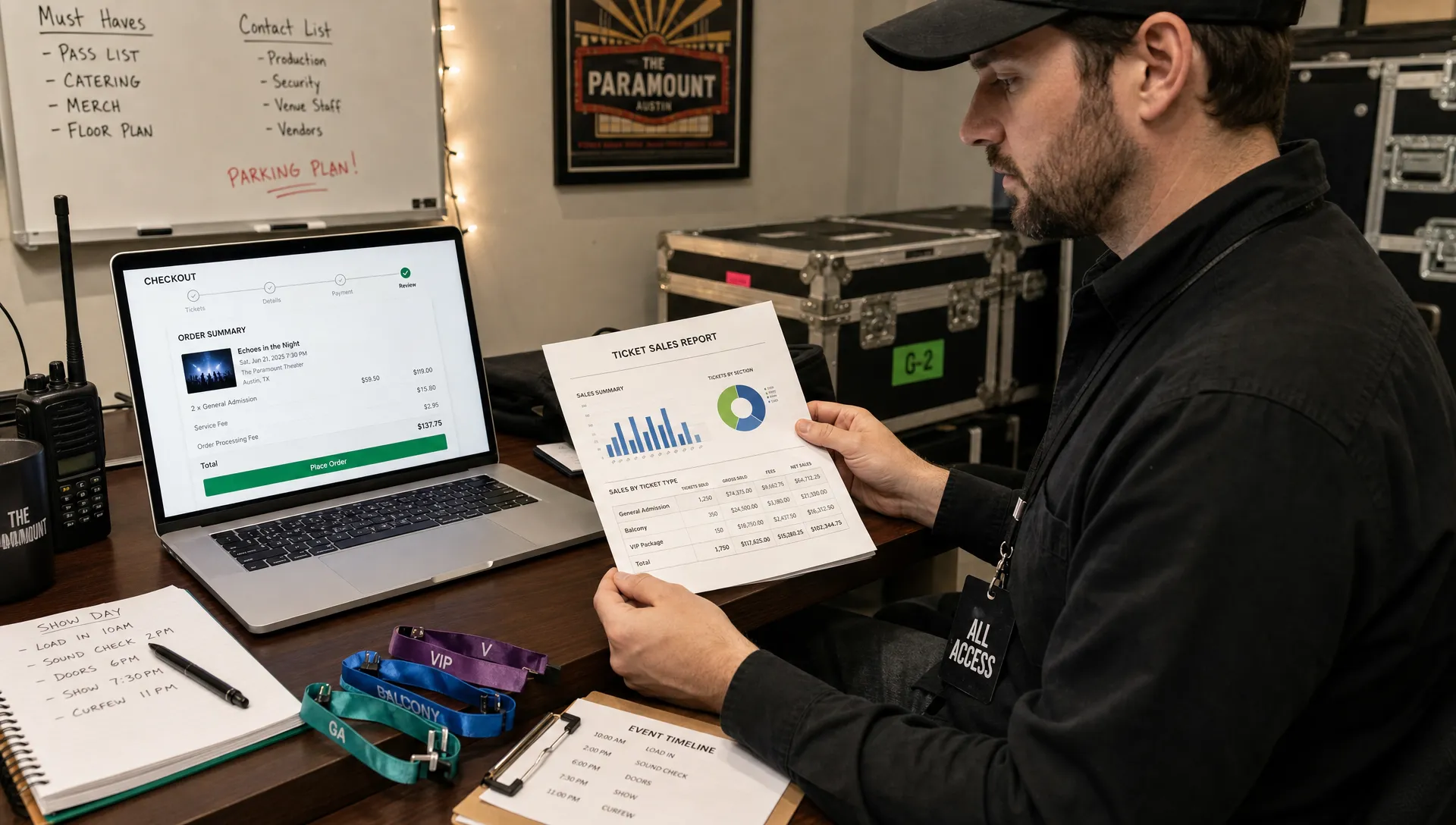
Predictability matters because event budgets are built before the room is full. Venue deposits, artist fees, production costs, security, staffing, insurance, marketing, hospitality, and transport often need to be paid before final ticket revenue is collected.
A fee model that changes as sales grow can make planning harder. Percentage-based fees may be reasonable in some cases, especially when the platform is absorbing more risk or providing advanced services. But they can also scale aggressively on high-ticket events.
Flat per-ticket fees are easier to model because your cost per attendee is known in advance. If you sell 200 tickets, 1,000 tickets, or 5,000 tickets, you can forecast the ticketing cost without guessing how much each price tier will be penalized. That kind of clarity is especially valuable for organizers who care about cash flow.
A simple planning formula helps:
Expected net ticket revenue = expected ticket sales minus ticketing fees, payment costs, refunds, discounts, taxes where applicable, and event operating costs.
The point is not to create a perfect spreadsheet. The point is to avoid pricing your event based on gross ticket sales, then discovering too late that your real margin is much thinner.
For a broader pricing framework, see TixFlow’s guide to event ticket pricing strategies that protect your margins.
Do not ignore payout timing
A ticket service charge is only one part of the cost equation. Payout timing can be just as important.
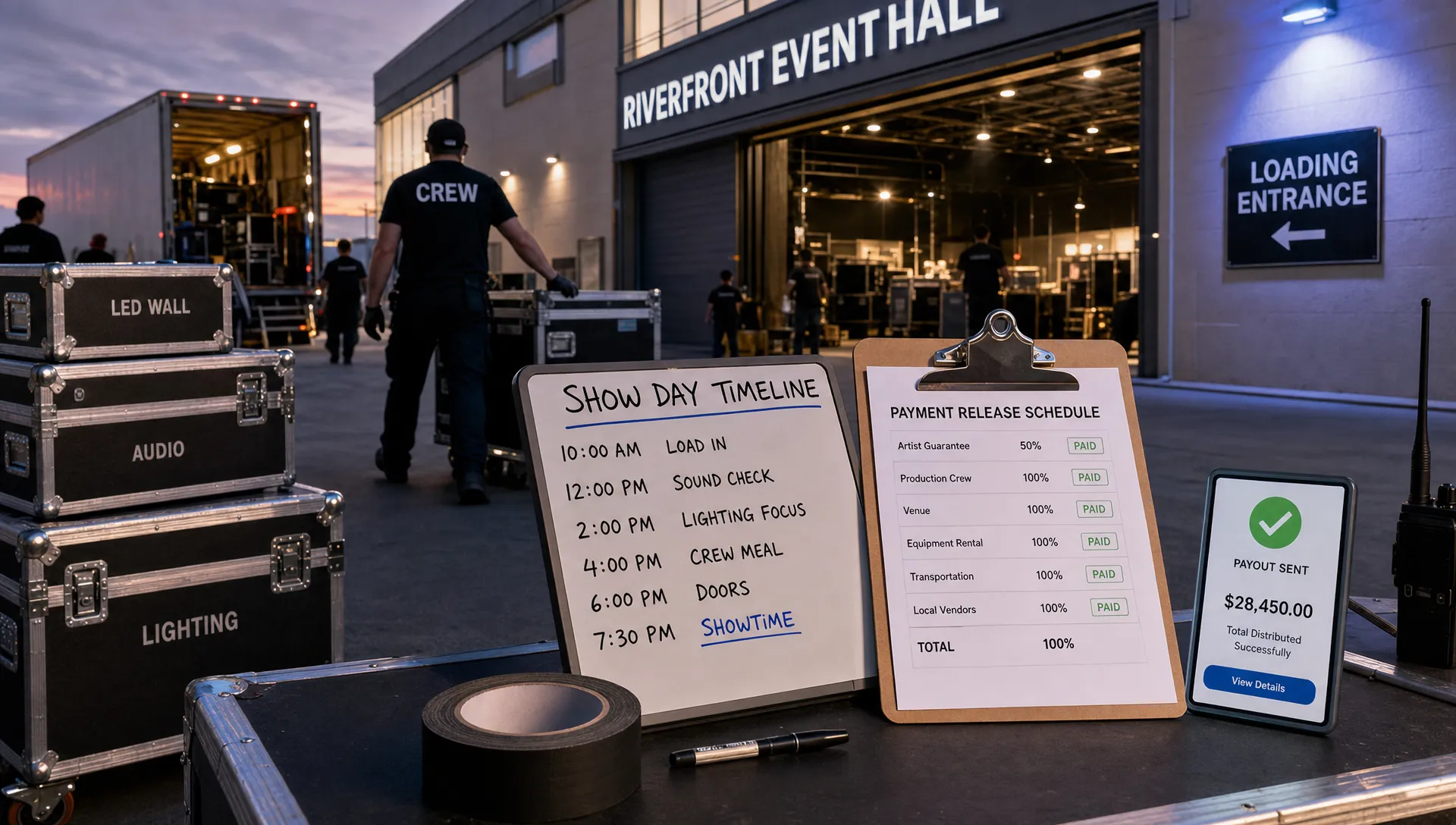
If a platform holds your funds for days or weeks, you may be forced to cover event expenses out of pocket. That is a hidden cost, even if the service charge looks low. For organizers booking talent, renting equipment, paying deposits, or scaling ad spend during the sales cycle, delayed access to revenue can create real pressure.
Instant or fast payouts can make the fee feel more valuable because they improve liquidity. Instead of waiting until after the event, you can use ticket revenue to fund the event as demand grows.
This is especially relevant for independent organizers, music producers, and teams running multiple events per month. A few days of payout delay may not hurt a large institution with deep reserves, but it can matter a lot to a promoter trying to secure production, marketing, and staffing on time.
Service charges should reduce operational work
A fair service charge should also save your team time. If you are still manually tracking ticket tiers, updating spreadsheets, reconciling discount codes, and building guest lists by hand, the platform fee is not doing enough.
Look for ticketing tools that support the way events actually run. Useful capabilities include flexible ticket tiers, automated sales phases, smart promo codes, real-time sales control, and digital guest lists. These features are not just conveniences. They can prevent overselling, reduce door issues, protect early-bird inventory, and help you react while there is still time to influence sales.
Operations outside ticketing matter too. If your event includes executives, artists, speakers, sponsors, or VIP guests, logistics can affect the experience as much as the checkout. For high-stakes arrivals and departures, working with a reliable partner for event transportation management can help protect the premium experience your ticket buyers or stakeholders expect.
The broader lesson is that fees should be evaluated against total event execution. A cheap tool that creates manual work, missed sales, or poor guest flow can cost more than it saves.
Red flags that a ticket service charge is too high
You do not need to reject every platform with fees. You do need to be alert when the fee structure makes it hard to understand your true cost.
Watch for these warning signs:
- The service charge is described in vague terms like “convenience” without explaining what is included.
- Buyer fees appear only at the final checkout step.
- The platform charges extra for basic tools such as ticket tiers, promo codes, or guest lists.
- Payout timing is unclear before you publish the event.
- Fees rise sharply for higher-priced tickets without adding proportional value.
- Buyers are forced to create accounts before purchasing, adding friction that can hurt conversion.
The more friction or uncertainty a platform adds, the harder the service charge is to justify.
What a modern organizer should expect
Modern event organizers should expect ticketing fees to be clear before launch, easy to model, and connected to practical outcomes. That means fast checkout for attendees, simple setup for the organizer, real-time control during the sales cycle, and reliable access to funds.
TixFlow is built around that expectation. The platform offers instant payouts, flat per-ticket fees, no buyer registration, flexible pricing, customizable event pages, unlimited ticket tiers, automated sales phases, smart promo codes, digital guest lists, and Stripe Connect integration. For organizers, the goal is to reduce friction without giving up control over pricing, cash flow, or the attendee experience.
This is the standard organizers should use when comparing any ticketing provider. Do not ask only, “What is the fee?” Ask, “What does this fee help me control, protect, or improve?”
Frequently Asked Questions
What is a reasonable ticket service charge? A reasonable ticket service charge is one that is transparent, predictable, and tied to real platform value. Organizers should understand whether it covers ticket delivery, checkout, reporting, guest lists, sales controls, support, or other operational tools.
Should organizers absorb the ticket service charge? Sometimes, but not automatically. Absorbing the charge can create a cleaner attendee experience, but it reduces margin unless your base ticket price accounts for it. Many organizers are better served by modeling both buyer-paid and all-in pricing before launch.
Is a flat ticket service charge better than a percentage fee? A flat fee is often easier to forecast because the cost per ticket stays predictable. A percentage fee may make sense in some situations, but organizers should check whether the platform adds more value as ticket prices rise.
Can high service charges hurt ticket sales? Yes. If buyers see unexpected fees late in checkout, they may abandon the purchase or lose trust. Clear pricing, fast checkout, and no unnecessary registration steps can reduce friction.
What should organizers compare besides the service charge? Organizers should compare payout timing, checkout experience, ticket tier flexibility, promo code controls, reporting, guest list tools, refund handling, and the amount of manual work the platform creates or removes.
Pay for control, not confusion
A ticket service charge should help you run a better event. It should not be a mystery cost, a margin leak, or a reason buyers hesitate at checkout.
Before choosing a ticketing platform, calculate the real cost per ticket, decide how fees will appear to attendees, and make sure the platform supports your cash-flow needs. If the fee gives you speed, clarity, control, and less manual work, it may be worth paying. If it only adds complexity, it is time to look for a better model.
With TixFlow, organizers can sell tickets through a modern platform designed for instant payouts, low-friction checkout, and predictable per-ticket pricing, so more of your attention stays where it belongs: on building a successful event.