
Should You Sell Tickets on Multiple Sites?
Selling through more than one ticketing site can feel like the obvious way to increase reach. More places to buy should mean more sales, right? For event organizers, music producers and small teams managing tight cash flow, the answer is more complicated.
You can promote your event everywhere. You can run posts, partner blasts, creator links, artist pages, venue newsletters, community calendars and paid ads. That does not always mean you should process ticket purchases through multiple ticketing platforms.
The real question is not whether you should sell tickets on multiple sites. The better question is whether multiple checkout points will create enough extra demand to justify the operational risk.
For many events, the strongest setup is simple: distribute attention across many channels, then send buyers to one fast, trusted checkout. In some cases, selling across multiple ticketing sites can make sense, but only when inventory, pricing, payouts and guest list management are tightly controlled.
First, separate promotion sites from ticketing sites
Organizers often mix up two different ideas: marketing distribution and checkout distribution.
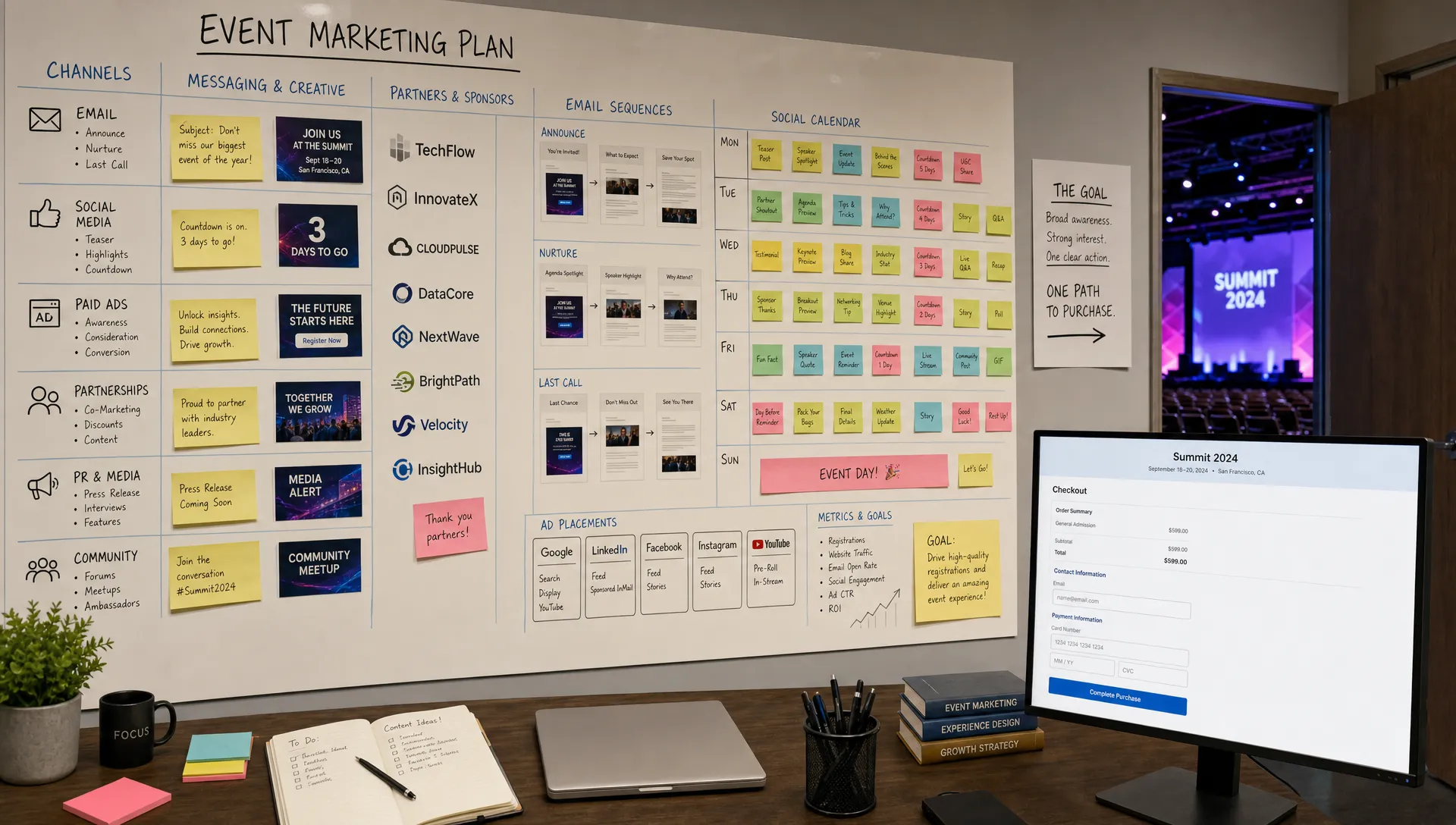
Promotion sites are the places where people discover your event. These include Instagram, Facebook, TikTok, artist pages, venue calendars, email newsletters, local media, community groups, partner websites and event listing pages.
Ticketing sites are the places where the transaction happens. They take payment, issue tickets, trigger confirmation emails, track sales, manage fees, support refunds, handle payouts and feed your guest list.
You usually want broad promotion. You do not always want broad ticketing.
If your audience finds your show through Facebook, a venue calendar or an artist story, that is a discovery path. The buyer can still land on one checkout page. This matters because each extra ticketing site creates another place where things can go wrong: different fee structures, delayed payouts, split reporting, duplicate guest lists, inconsistent promo codes and buyer confusion.
If your main concern is converting social demand into paid attendees, it may be more useful to improve the path from social posts to checkout than to add another ticketing platform. For example, organizers selling from Facebook should focus on reducing checkout drop-off by sending buyers to a simple purchase flow rather than forcing them through unnecessary account creation or extra steps.
Why organizers consider selling on multiple sites
There are valid reasons to consider multiple ticketing sites. The mistake is assuming that every extra platform adds incremental demand.
Most organizers consider it for one of five reasons:
- Reach: A marketplace, venue site or partner platform may expose the event to buyers who would not otherwise see it.
- Buyer trust: Some audiences are more comfortable buying from a platform they already know.
- Partner requirements: A venue, promoter, sponsor or artist team may require an allocation on their preferred system.
- Risk reduction: Organizers may worry that depending on one platform creates a single point of failure.
- Sales pressure: When early sales are slow, adding another platform can feel like action.
The first three reasons can be legitimate. The last two often create busywork without solving the real issue. If demand is weak, more checkout pages will not fix unclear positioning, poor timing, weak creative or friction in the buying process.
Before adding another site, ask whether that site brings its own audience. If it does not, you may simply be spreading the same demand across more admin work.
The hidden costs of multiple ticketing sites
Selling tickets in multiple places affects more than the sales page. It changes how your team manages the entire event.
Inventory becomes harder to control
If you sell general admission tickets on two or three platforms, you need a reliable way to prevent overselling. That may mean holding back inventory on each site, updating availability manually or reconciling orders every day.
For seated events, workshops with strict capacity or intimate music events, this can become risky quickly. Even one oversold room can damage trust with buyers and create a stressful door experience.
Reporting gets fragmented
A single dashboard shows you how sales are moving by tier, price phase, promo code and time. Multiple platforms force you to combine reports manually.
That slows down decisions. If one campaign is working, you may not see it fast enough. If one tier is moving faster than expected, you may miss the moment to adjust pricing or messaging.
This is one reason real-time sales control matters when choosing where to sell. If you are still evaluating platforms, this guide on how to compare event ticketing platforms in 2026 covers the operational factors that affect revenue, not just the surface-level sales page.
Fees and final prices can become inconsistent
Even if the base ticket price is the same, buyer fees can differ by platform. That means two attendees can pay different final prices for the same ticket, which can create complaints.
For organizers trying to protect margins, the issue is not only what buyers pay. It is also what you net after platform fees, payment fees, refunds, discounts and chargebacks. A platform with lower headline fees may still create leakage if it adds complexity or slows down sales decisions.
Payout timing can affect cash flow
Cash flow is not a small detail. Event teams often need ticket revenue before the event to pay deposits, production costs, artists, staff, travel, marketing and vendors.
If one platform pays quickly and another pays after the event, your sales report may look healthy while your bank balance stays tight. That gap can limit your ability to promote the event when momentum starts to build.
Support becomes less consistent
When buyers ask about missing confirmation emails, refunds, name changes, ticket transfers or door policies, your team needs to know where they bought the ticket. If orders are split across sites, support gets slower.
That matters most close to event day, when the volume of questions rises and your team is also handling production tasks.
Single checkout vs multiple ticketing sites
The right choice depends on the event, the team and the reason for using each channel. This table gives a practical comparison.
| Factor | One primary checkout | Multiple ticketing sites |
|---|---|---|
| Buyer journey | More consistent and easier to explain | Can confuse buyers if prices or steps differ |
| Inventory control | Easier to manage from one place | Requires allocations or frequent reconciliation |
| Cash flow | Easier to forecast if payout terms are clear | Payouts may arrive on different timelines |
| Reporting | Cleaner view of sales performance | Data must be combined manually or across tools |
| Partner visibility | Partners can promote your main link | Partners may prefer their own ticket allocation |
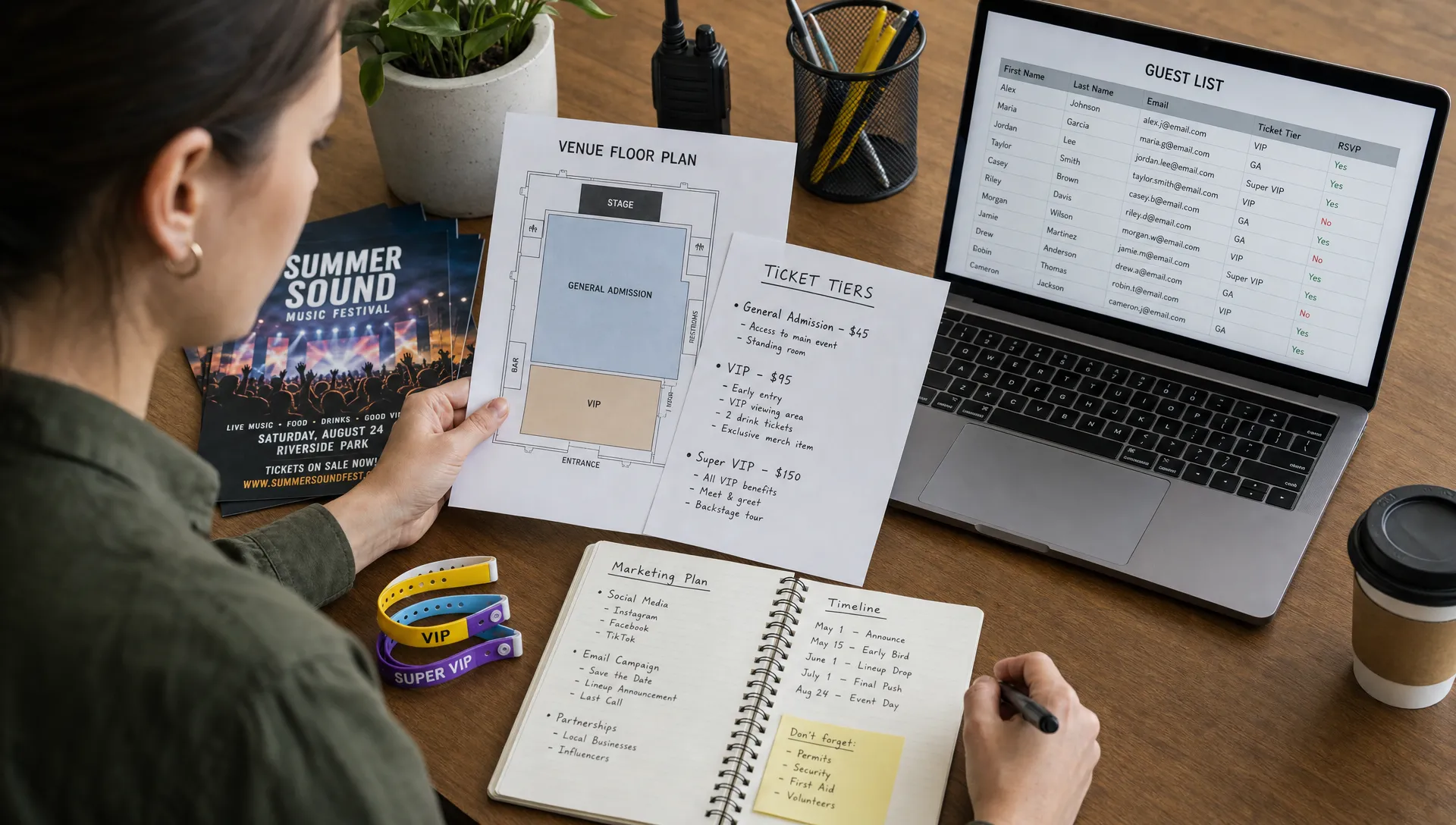
| Door operations | One guest list is easier for staff | Guest lists must be merged or checked separately |
| Best fit | Small to mid-size events, lean teams, fast-moving campaigns | Large events, mandated partner allocations, marketplaces with real demand |
For small and mid-size events, the operational advantage of one primary checkout is often worth more than the theoretical reach of another platform. If you are still choosing that primary home, this breakdown of the best place to sell your tickets for small and mid-size events explains what matters most: checkout speed, transparent fees, payout timing, flexible pricing and guest list control.
When selling tickets on multiple sites can make sense
There are situations where multiple ticketing sites are not only reasonable, but useful. The key is that each site must have a clear job.
A partner platform brings real demand
If a venue, media partner, festival network or niche marketplace has an audience that actively buys through its platform, a separate ticket allocation may be worthwhile. This is different from simply copying your event to another site and hoping people find it.
The test is simple: would the audience discover and buy the event there even if you did not send them to that site yourself? If yes, the platform may be a genuine demand source.
The venue or promoter requires an allocation
Some venues and promoters operate with preferred systems. If the partnership is valuable, you may need to allocate a portion of inventory to that system.
In that case, treat it as an operational requirement, not a loose extra sales channel. Define the number of tickets, the price, the fee treatment, the sales cutoff and the guest list process before launch.
You are separating audiences intentionally
A music producer might want a small allocation for a fan club, a sponsor might receive a private code, or a community partner might sell a limited block to members. This can work if the boundaries are clear.
The cleaner version is often not a separate ticketing site, but a dedicated ticket tier or promo code inside one platform. That gives the partner a tailored offer without splitting the entire transaction system.
The event is large enough to support ticketing operations
Large events may have the staff to reconcile several platforms daily, manage multiple guest lists and coordinate reporting. Smaller teams usually do not.
If your event team is one producer, one marketer and one door lead, every extra system adds strain. The platform decision should match the team you actually have, not the team you wish you had.
When one ticketing site is usually the better choice
A single ticketing site is usually better when your event has general admission tickets, limited staff, fast-moving promotions or a strong need for predictable cash flow.
This is especially true for:
- Local concerts and producer showcases
- Workshops, classes and creator-led events
- Club nights and pop-ups
- Community events with small teams
- Events where paid ads, email or social posts drive most traffic
- Events where door operations need to stay simple
In these cases, the goal is not to appear on as many checkout pages as possible. The goal is to make the buying decision easy, then keep operations clean after the sale.
A simple ticketing setup also makes it easier to test pricing. You can start with early bird tickets, move into general release, open a final tier, pause a ticket type, adjust availability or use targeted promo codes without updating several systems.
A practical decision framework
Before you sell tickets on multiple sites, use this decision framework. If you cannot answer yes to most of these questions, a single checkout is probably safer.
| Question | Why it matters |
|---|---|
| Does the extra site bring buyers you cannot reach yourself? | If not, it may only duplicate your existing traffic. |
| Can you cap inventory by channel? | This helps prevent overselling and last-minute confusion. |
| Can you keep final buyer prices consistent? | Different fees can create trust issues and support requests. |
| Do you know when each platform pays out? | Payout timing affects deposits, production costs and marketing spend. |
| Can your team merge or manage guest lists cleanly? | Door delays hurt the attendee experience. |
| Is one person responsible for reconciliation? | Shared ownership often means no ownership. |
| Can you explain the buying options clearly? | If buyers hesitate, extra channels can reduce conversion. |
If the extra platform fails the demand test, do not add it. If it passes the demand test but creates operational risk, use a limited allocation rather than opening your full inventory everywhere.
The better model: promote everywhere, sell through one controlled flow
For many organizers, the strongest model is to promote across many sites while keeping purchases centralized.
That means your artist partners, venue, sponsors, email list, social posts and community pages all point buyers toward one clear checkout. You still get broad exposure, but you avoid split inventory and reporting.
A controlled flow also gives you more room to improve conversion. Baymard Institute checkout research has consistently found that extra friction in checkout contributes to abandonment. For event tickets, friction can include forced account creation, unclear fees, slow pages, confusing ticket tiers or too many choices.
TixFlow is built around that simpler path: no buyer registration, customizable event pages, unlimited ticket tiers, automated sales phases, smart promo codes, flat per-ticket fees, real-time sales control, digital guest lists, Stripe Connect integration and instant payouts. For organizers who need to move quickly and protect cash flow, those details matter more than adding another place to copy and paste an event listing.
The promotion side can still be wide. The checkout side should stay focused.
If you do sell on multiple sites, set rules before launch
If you decide multiple ticketing sites are necessary, do not improvise after sales start. Create a written ticketing plan before the event goes live.
Your plan should define:
- Inventory allocation: Set an exact number of tickets per site and decide when unsold allocations return to the main pool.
- Price consistency: Decide whether final buyer prices must match across platforms, including fees.
- Sales phases: Make sure early bird, general release and final release dates are aligned.
- Promo code ownership: Assign each discount or partner code to one owner so codes do not spread uncontrolled.
- Payout expectations: Confirm when each platform releases funds and how that affects event expenses.
- Guest list process: Decide how lists will be combined, who checks them and when the final export happens.
- Support routing: Give your team a simple way to identify where each buyer purchased.
- Cutoff timing: Close secondary channels early enough to reconcile orders before doors open.
The more sites you add, the more this process matters. A second platform can be manageable. Three or four can become a ticketing operation of its own.
Common mistake: using multiple sites to fix weak demand
If ticket sales are slow, adding more ticketing platforms may feel productive. It is often the wrong fix.
Slow sales usually come from one of these issues: unclear audience fit, weak offer, poor timing, underpowered promotion, lack of urgency, high perceived price or checkout friction. More ticketing sites do not solve those problems by themselves.
Before adding another platform, improve the demand side. Tighten the event page, clarify the lineup or value, use timed ticket phases, create partner-specific offers, send better emails, improve the checkout path and make sure your highest-intent audiences see the event more than once.
If the issue is visibility, add more promotion. If the issue is conversion, fix checkout. If the issue is trust, improve the event page and communication. If the issue is operations, adding platforms usually makes it worse.
Final recommendation
Most event organizers should not sell tickets on multiple sites by default. They should promote on multiple sites, then centralize purchases through one fast and reliable checkout.
Multiple ticketing sites are worth considering only when each one brings unique demand, satisfies a real partner requirement or serves a clearly defined audience allocation. Even then, the safest approach is to cap inventory, align pricing, define payout expectations and reconcile guest lists early.
For cash-flow-sensitive teams, small and mid-size events, music producers and lean event crews, one controlled ticketing flow usually wins. It gives you cleaner data, fewer support issues, easier door management and a better chance of turning buyer interest into paid attendance.
Frequently Asked Questions
Should I sell tickets on multiple sites for a small event? Usually not. Small events benefit from a simple checkout, clean guest list and clear sales reporting. Promote across many channels, but send buyers to one purchase flow unless another platform brings proven demand.
Can selling on multiple ticketing sites increase sales? It can, but only if the additional site has its own audience or a partner actively driving buyers there. If you are sending the same traffic to every site, you are more likely splitting data than creating demand.
What is the biggest risk of selling tickets on multiple sites? The biggest risk is losing control of inventory, reporting and buyer support. Overselling, inconsistent fees and fragmented guest lists can create problems close to event day.
Is it better to list my event everywhere but sell tickets in one place? For most organizers, yes. Listing and promoting the event widely helps discovery, while one checkout keeps purchasing, payouts and door operations easier to manage.
How should I handle partner ticket allocations? Give partners a fixed ticket allocation, private tier or promo code with clear limits. Avoid open-ended selling across multiple platforms unless you have a process for reconciling sales daily.
Keep ticket sales simple with TixFlow
If you want broad promotion without messy ticketing operations, TixFlow gives organizers a streamlined way to sell tickets through a customizable checkout with no buyer registration, flat per-ticket fees, real-time sales control, automated sales phases, smart promo codes, digital guest lists and instant payouts.
Use multiple channels to create demand. Use one clean ticketing flow to capture it.