
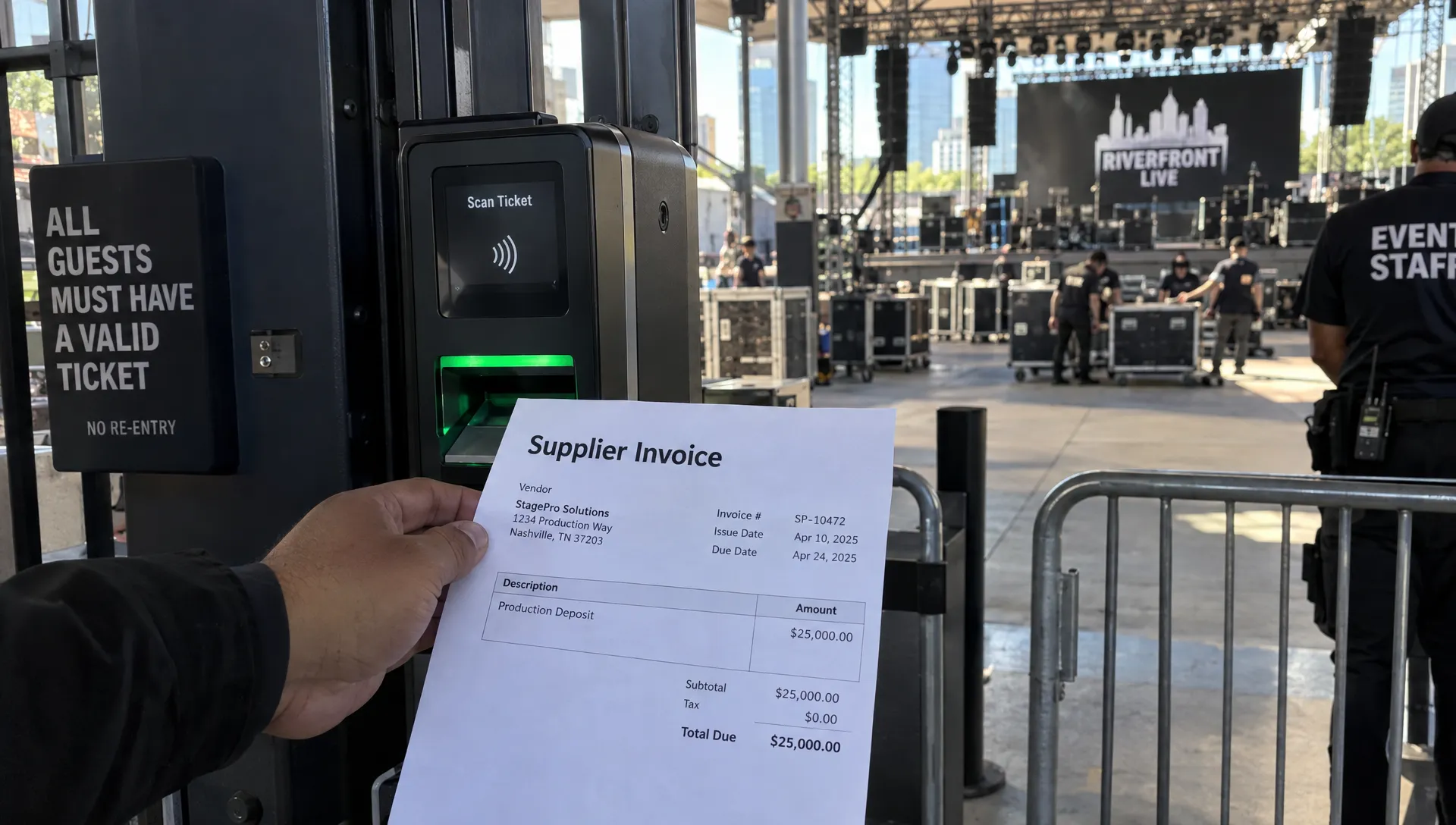
Sell Tickets and Get Paid Immediately Without Overspending
If you are searching for “sell tickets get paid immediately,” you probably have a bill due before your event happens. Venue deposits, artist advances and equipment rentals rarely wait until the last guest leaves. Early access to ticket revenue can help, but an expensive payout option or an overly aggressive spending plan can erase that advantage.
The practical approach is to sell directly through an organizer platform with suitable payout access, verify the total fees and spend only cleared funds after setting aside your obligations. The goal is not simply faster money. It is enough usable cash to deliver the event without creating a bigger shortfall later.
1. Choose organizer ticketing, not a resale workaround
Selling admission to your own event is different from reselling tickets you already own. That distinction determines which payout options are relevant.
| Selling situation | Appropriate starting point | What to verify |
|---|---|---|
| You organize a concert, workshop or fundraiser | A primary ticketing platform for organizers | Access to proceeds before the event, total fees and payout eligibility |
| You cannot attend someone else’s event | An authorized resale or transfer channel | Resale permission, seller verification and payment timing |
| You organize an event with a venue partner | Your venue agreement and chosen ticketing setup | Who collects revenue, who receives payouts and who handles refunds |
A resale marketplace is not a substitute for an organizer’s working-capital system. Its payment rules may depend on the event taking place, ticket delivery or other seller requirements.
For your own concert, establish who controls ticket revenue before publishing the sales page. If a venue or promoter collects the money, your agreement with that party matters as much as the ticketing platform’s advertised payout speed.
2. Run a “sell tickets get paid immediately” cost check
Faster access is valuable only when its cost is lower than the problem it solves. Start with the next bill you need to pay, its deadline and the amount already available in your bank account.
Suppose you need $6,000 for a production deposit. In a purely hypothetical comparison, an accelerated payout charge of 1.5% would cost $90. That might be reasonable if it avoids a larger financing charge or preserves a documented supplier discount. It is less compelling if a standard payout would arrive before the deposit deadline anyway.
Compare the incremental cost of faster access, not just the advertised ticketing fee. Check whether the proposal includes:
- A platform fee per ticket or order
- Payment-processing charges and any applicable cross-border costs
- A separate charge for accelerated payouts
- Nonreturned fees or additional costs associated with refunds and disputes
These are questions to ask, not charges every platform necessarily applies.
Also compare costs at your expected ticket price. A hypothetical $1 fee equals 10% of a $10 ticket but 2% of a $50 ticket. A flat fee is easy to calculate, yet its effect on a low-priced community event can be substantial.
To sell tickets and get paid immediately without overspending, pay for speed where it changes a real deadline, not simply because the option is available.
3. Verify when the money becomes usable
An order confirmation, an available payment balance and cash in your bank account are three different things. A successful sale does not automatically mean you can pay a supplier from those proceeds that minute.
Payment providers distinguish settlement from payout delivery. Stripe’s payout documentation explains how payout schedules work, while its Instant Payouts documentation describes separate eligibility and availability requirements. Check the rules that apply to your actual account rather than assuming an advertised feature applies to every organizer.
Before announcing sales, confirm these details with your platform or payment provider:
- Verification: Which identity, business and bank-account checks must be completed?
- First payout: Does a new account face a different initial timeline?
- Eligibility: Which balances and destination accounts support accelerated payouts?
- Exceptions: Can reserves, reviews, payout limits or bank restrictions affect access?
Ask for the full path from purchase to spendable bank balance. “Immediate payout” should not be treated as a promise that every transaction clears instantly under every circumstance.
Complete onboarding early and, where supported, use the platform’s approved testing process. Check that payment, ticket delivery and payout information behave as expected before a major launch.
If your setup involves several disconnected tools, this guide to simplifying ticketing payments for faster payouts can help you review the workflow. Keep the focus on confirmed access: a plan to sell tickets and get paid immediately is only useful when it matches your supplier deadlines.
4. Calculate spendable cash before increasing your budget
The number on your sales dashboard is not your remaining production budget. Some of that revenue may already belong to tax obligations, refund exposure or suppliers you have committed to pay.
Use this planning formula:
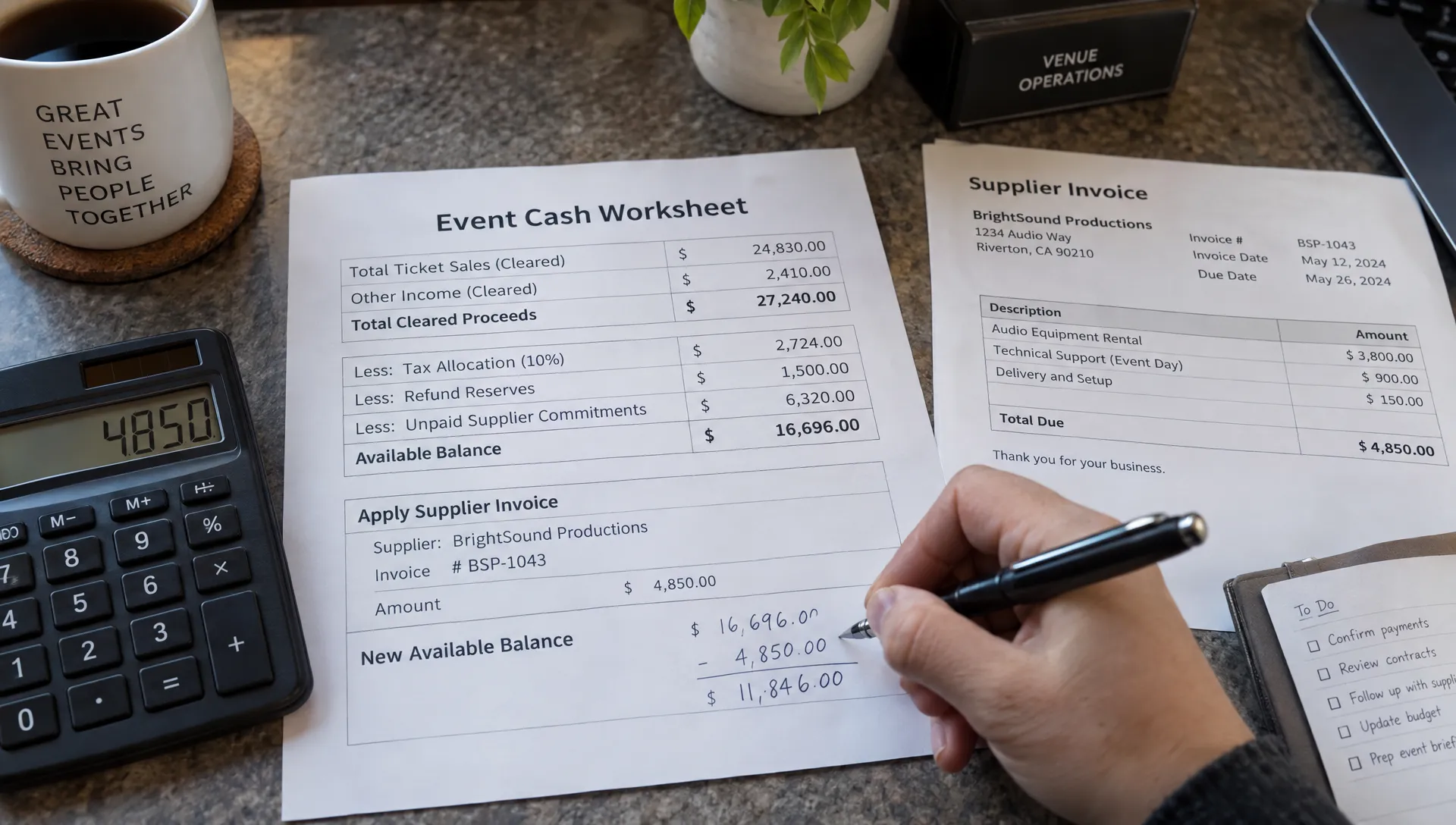
Uncommitted cash = cleared proceeds − tax allocation − refund and dispute reserve − unpaid commitments.
Consider a fictional event selling 400 tickets at $30 each. Assume all net proceeds have already reached the organizer’s bank account. The figures below are illustrative, not TixFlow pricing or a recommended reserve percentage.
| Budget item | Illustrative amount |
|---|---|
| Gross ticket receipts | $12,000 |
| Total platform and payment fees | −$600 |
| Cleared proceeds after fees | $11,400 |
| Estimated tax allocation | −$600 |
| Refund and dispute reserve | −$1,200 |
| Existing unpaid supplier commitments | −$8,000 |
| Uncommitted cash | $1,600 |
The organizer has $1,600 left to allocate, not $12,000. Even that amount depends on the accuracy of the estimates and whether all other obligations are accounted for.
Set reserves according to your cancellation exposure, refund policy and supplier contracts. A reserve cannot guarantee that a cancellation is affordable, especially when production deposits are nonrefundable. Check the downside before spending proceeds.
If you sell tickets and get paid immediately, that calculation becomes more important, not less. Early access lets you spend sooner, including money you may later need to return.
5. Release spending in stages, not after every sales spike
Decide in advance which expenses early ticket sales are allowed to fund. This prevents a strong launch day from turning into an unplanned production upgrade.
A practical policy separates essential commitments from optional additions. Venue access, required staffing and agreed artist payments belong in the first group. Extra lighting, upgraded décor and additional advertising need their own approval threshold.
Write a simple rule such as: “Approve optional production spending only when cleared proceeds cover existing commitments, required reserves and the proposed purchase.” Recalculate before each meaningful commitment, rather than treating yesterday’s sales total as today’s available budget.
Budget for the audience you actually serve
A club show, a workshop and a school fundraiser have different operational requirements. For a proposed fundraiser involving a bilingual school such as Colegio Pioneros in Chicureo, ask whether bilingual event information, school approval or specific refund terms are required. Include any resulting costs before opening sales.
For concerts, check venue capacity and the financial consequences of changing the lineup. For workshops, account for materials that must be purchased before attendance is final.
Then launch to people most likely to buy. Reaching your warmest audience before buying more advertising can help you test demand without immediately expanding the marketing budget.
The ability to sell tickets and get paid immediately should support a spending policy. It should not replace one.
6. Match platform features to the costs you need to control
TixFlow offers instant payouts, flat per-ticket fees and Stripe Connect integration. For an organizer comparing payout options, those are relevant starting points. Confirm the applicable payout conditions, processing costs and any separate charges before committing your budget.
Its other features address different parts of the event’s economics:
| TixFlow feature | How to use it in your plan |
|---|---|
| No buyer registration | Remove a required account-creation step from purchasing |
| Unlimited ticket tiers | Define admission options without treating every buyer as the same segment |
| Automated sales phases | Schedule pricing changes instead of relying on manual updates |
| Smart promo codes | Give promotions a defined purpose and track their effect on net receipts |
| Real-time sales control | Review current sales before making another spending commitment |
| Digital guest lists | Support entry operations without maintaining a separate handwritten list |
These tools do not remove the need for a viable budget. For example, an early-bird tier brings revenue forward only if people buy it, and a discount reduces the amount retained per ticket.
Before launch, calculate the net contribution of each tier and promotion. Avoid offering a larger discount merely to avoid a smaller payout charge.
A platform that helps you sell tickets and get paid immediately is most useful when its pricing, checkout and operational features fit the event you are actually running.
Frequently asked questions
What is the best way to sell tickets to a concert I organize? Start with a primary ticketing platform that fits your payout needs, capacity and budget. Confirm your agreement with the venue, calculate net revenue per ticket and launch to your existing audience before expanding paid promotion.
Does StubHub pay sellers right away? Generally, StubHub seller payouts are tied to the event taking place rather than simply to the moment of sale. Check its current terms for your market and order. Do not use an expected resale payout to fund a bill due before the event without confirming the timeline.
How do I get paid for tickets sold through Ticketmaster? For eligible resale transactions, follow Ticketmaster’s seller verification and payout instructions in your account. Payment timing depends on its applicable terms and completed requirements. If you are the event organizer, your ticketing or venue agreement is a separate arrangement.
Is the lowest ticketing fee always the cheapest choice? No. Compare total costs, including processing, payout access and any costs relevant to refunds or disputes. A low headline fee can still be a poor fit if the money arrives after a critical bill is due.
Can I spend all the proceeds if payouts are instant? No. If you sell tickets and get paid immediately, you still need to account for taxes, refunds, disputes and unpaid commitments. Faster access changes when cash is available, not how much of it is safe to spend.
Choose faster access with a clear spending limit
Before publishing your event, confirm three numbers: the net amount retained per ticket, the cost of accessing funds sooner and the cash required to cover existing obligations.
Explore TixFlow’s event ticketing platform with those numbers in hand. Evaluate instant payouts alongside total fees and keep optional spending within the cleared cash your event can actually afford.