
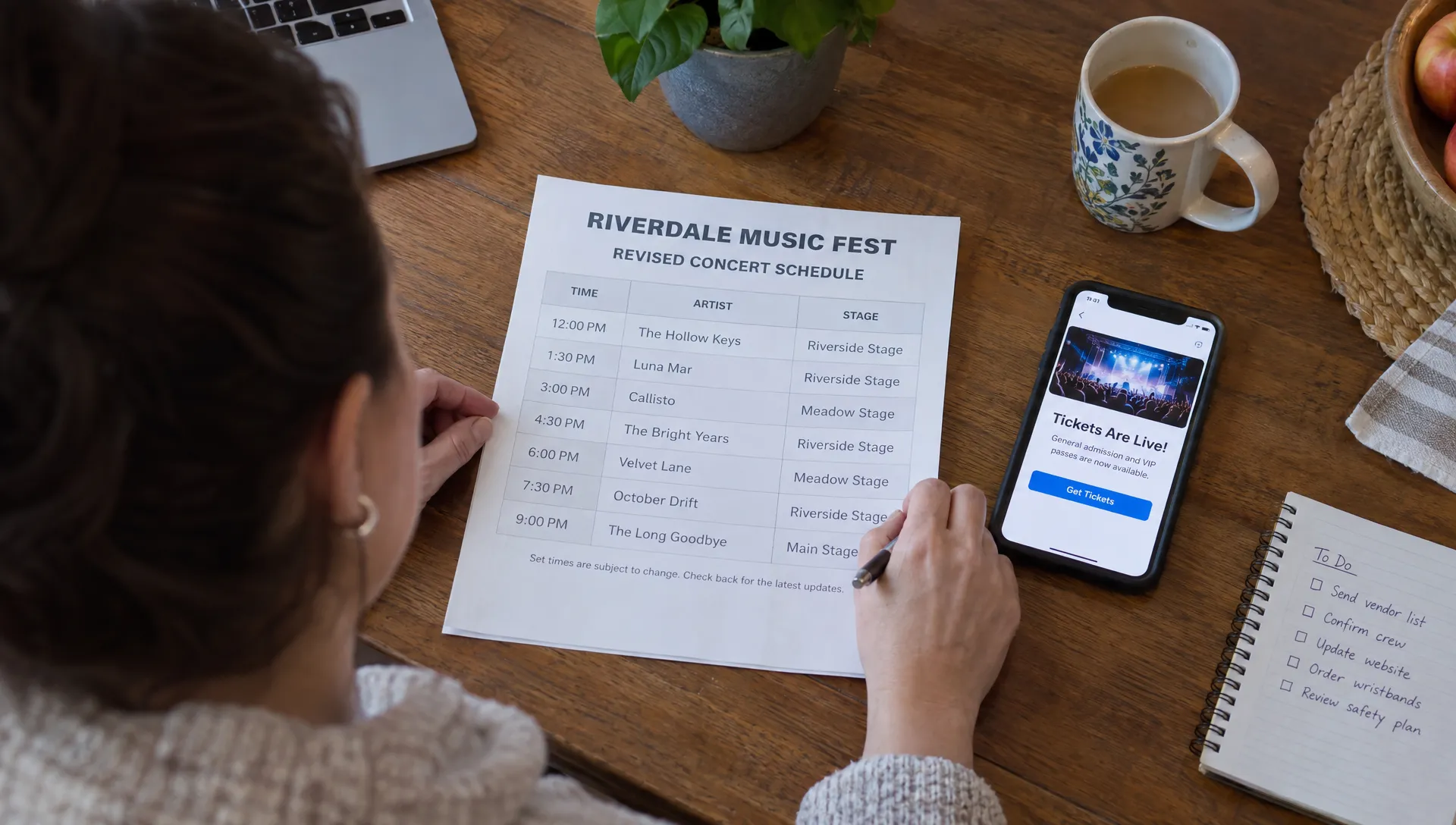
Keep Event Tickets for Sale After a Lineup Change
A lineup change does not automatically mean pulling your event tickets for sale. It does mean checking whether the event you are selling still matches the promise buyers saw when they paid. A replacement support act, a missing headliner and a shortened program require different responses.
The goal is not to preserve sales at any cost. It is to keep selling a clearly described event while giving existing ticket holders accurate information and handling refunds appropriately. For organizers and music producers, that requires coordinating the announcement, ticket page, sales controls and cash-flow plan before promotion resumes.
Assess whether the event still matches its promise
Start with the original offer, not just the revised running order. Review the event page, paid ads, ticket descriptions and artist announcements. Which performer or experience gave buyers a reason to purchase?
A lineup change becomes more consequential when it removes something central to that offer. These examples can help you triage the situation, but they are not legal classifications:
| Change | What to assess | Immediate sales response |
|---|---|---|
| A support act is replaced | Whether the act was a major selling point or had a dedicated ticket package | Correct the lineup and explain the replacement |
| The advertised headliner withdraws | Whether the event's main attraction has disappeared | Pause affected promotion while reviewing the revised offer and refund obligations |
| A set moves to a different time | Whether buyers can still attend and receive the advertised experience | Publish the new schedule and contact affected buyers |
| The program becomes substantially shorter | Whether duration, access or ticket value has materially changed | Review pricing, buyer options and the accuracy of the listing |
Keeping event tickets for sale is easier to justify when the remaining experience is confirmed and the change is disclosed before checkout. Do not assume that a “lineup subject to change” clause settles every complaint or overrides applicable consumer rights.
For multi-artist shows, distinguish the overall event identity from individual artist promises. TixFlow's guide to ticketing for multi-artist lineups provides useful background for that distinction.
Stabilize the facts before the next sale
Avoid announcing a replacement before its participation is confirmed. A second correction creates more support work and makes the first announcement harder to trust.
Assign one person to approve the public update. That person should collect verified information from production, artist management, the venue and the ticketing team. Establish:
- Which artist is no longer performing and what explanation you are authorized to publish.
- Which remaining performers and replacements are confirmed.
- Whether doors, set times, duration, venue or age restrictions have changed.
- Whether artist-specific benefits, such as a meet-and-greet, remain available.
- What existing buyers can do and who will handle their requests.
You do not need to disclose private medical details or contract disputes. You do need to distinguish confirmed information from unresolved plans. “Replacement to be announced” is accurate only if a replacement is genuinely being arranged, not merely hoped for.
Pause ads and scheduled posts that contain the old promise while this review happens. If the revised event is still uncertain, a temporary sales pause is more defensible than continuing checkout under an outdated headline. Preserve copies of the original listing and each approved revision so your team can establish what buyers saw.
Keep event tickets for sale accurate across every channel
Updating the poster alone is not enough. Buyers may arrive through an old ad, an artist's post, a venue listing or a saved link that bypasses your latest announcement.
Put a visible lineup update near the top of the event page. Name the change, identify the confirmed program and explain whether the date and venue remain the same. Do not bury this information beneath a long description or inside an FAQ.
Then check the ticket options themselves. A tier named after the departing artist can remain misleading even when the main page is correct. Artist-specific VIP benefits require particular attention: stop selling unavailable benefits and review what existing purchasers are entitled to receive.
The US Federal Trade Commission's truth-in-advertising guidance establishes the general principle that advertising must be truthful and not misleading. Specific refund obligations depend on the transaction and applicable law, so get appropriate advice when the change is substantial.
TixFlow's customizable event pages and unlimited ticket tiers give organizers tools to describe the revised offer. Check every active tier and any upcoming automated sales phase rather than assuming that an edit reaches every promotion.
For a broader page review, use the principles in listing tickets without confusing buyers. After a lineup change, buyers still need clear answers about access, benefits and total cost.
Tell existing buyers directly, not just social followers
Keeping event tickets for sale requires two separate messages: an accurate offer for new buyers and a direct update for people who already purchased. A social post cannot reliably serve both groups.
Use your existing buyer communication tools to contact ticket holders. Put the change in the subject line rather than disguising it as a routine event reminder. Explain what changed, what remains confirmed and what action, if any, the recipient needs to take.
A practical announcement can follow this structure:
Lineup update for [Event]: [Artist] will no longer perform. [Confirmed replacement or remaining program] will appear at [venue] on [date]. [Doors and timing information]. Existing tickets [confirmed validity details]. For [refund or other available option], contact [support channel] by [applicable deadline]. We will publish any further confirmed changes on the event page.
Only include a deadline if it is applicable, clearly justified and consistent with buyer rights. Do not invent a short request window simply to protect cash flow.
Adapt the explanation to the audience. Consider a hypothetical fundraiser for a community like Colegio Pioneros Costa in Maitencillo, a school that emphasizes close family-school relationships. Families would need to know whether the fundraiser's purpose, supervision and schedule remain unchanged, not just who replaces the performer. For an artist-led concert, the replacement's role and set details may matter more.
Acknowledge disappointment without pressuring buyers to accept the revised event. Avoid implying that requesting a refund harms the artists or community.
Protect cash flow without restricting valid refunds
Before you spend more revenue from event tickets for sale, separate cash received from cash safely available to commit. Money in your account may still need to cover refunds, disputes and supplier obligations.
Build a short-term cash view using confirmed balances, committed costs, expected refund requests and upcoming payment dates. Treat future ticket sales as a forecast, not cash already available. Likewise, do not count an artist deposit recovery until repayment is confirmed and its timing is known.
A simple planning calculation is:
Planning reserve = expected refund outflows + near-term committed costs + contingency buffer.
For illustration, 100 expected full refunds at $40 each create $4,000 of anticipated refund outflows. Add $3,000 in bills due before the next reliable inflow and the reserve is $7,000 before any contingency buffer. These are example figures, not a recommended reserve for every event.
The forecast is not a cap on valid refunds. If more buyers qualify than expected, revise the plan and arrange sufficient funding. Check processor rules for refund funding, fees and negative balances rather than assuming every cost is returned automatically.
TixFlow offers instant payouts and Stripe Connect integration, which can help organizers access proceeds. That access does not make the funds free of future obligations. Actual availability can also depend on account status and payment-provider requirements.
Review the replacement artist's fee, production changes and any additional marketing spend against the revised budget. A sellout is not a recovery if the replacement plan leaves the event unable to meet its obligations.
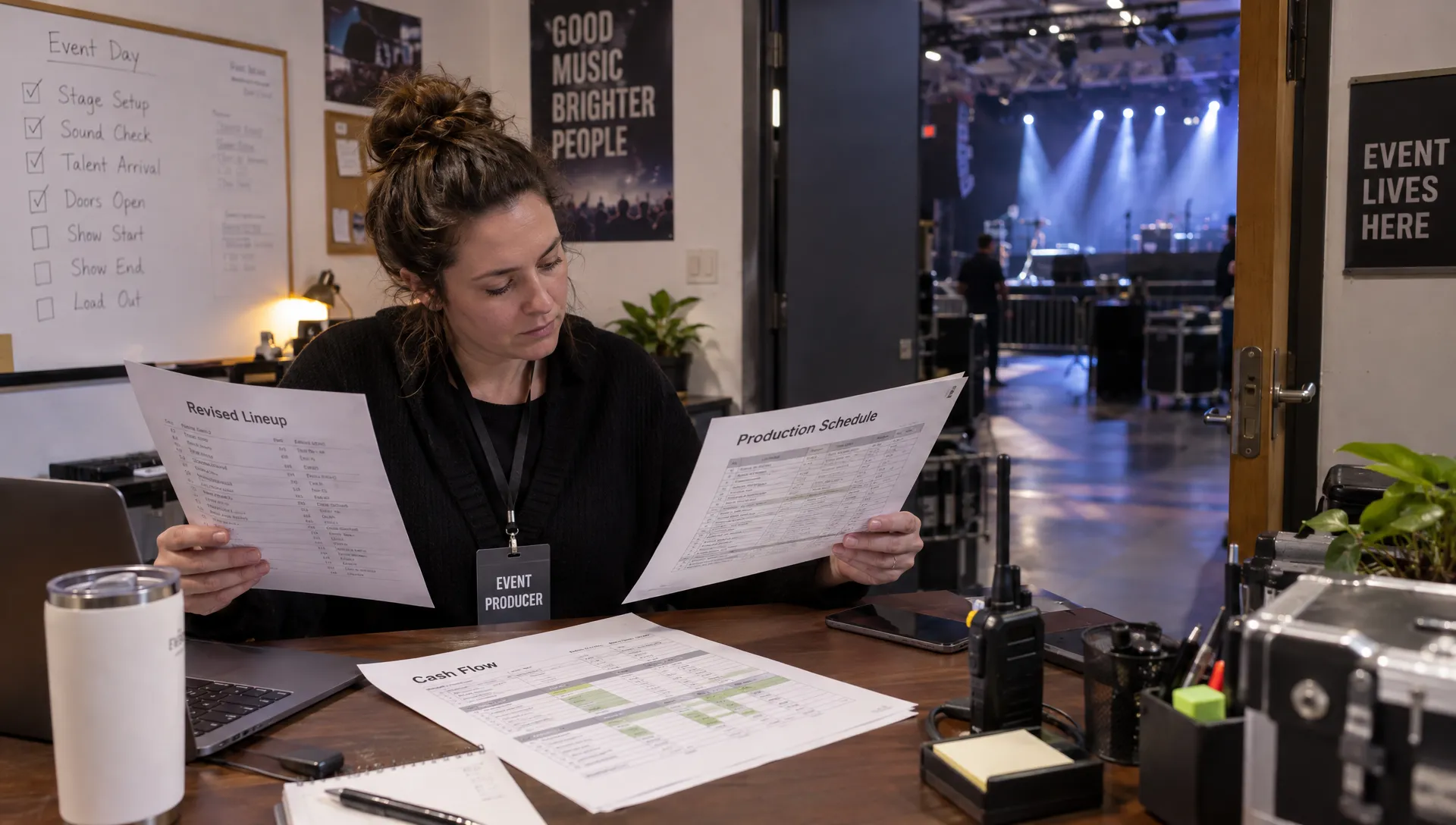
Restart promotion around the confirmed experience
Once the updated offer is accurate and existing buyers have been contacted, decide what deserves renewed promotion. A replacement announcement is not permission to recycle every old campaign.
Lead with the confirmed artists, format and experience. If the event still offers a strong multi-artist program, describe that program specifically. If the revised show is smaller, do not call it an upgrade without explaining the concrete benefit.
Review pricing before launching a discount. Lowering the price can help sell a changed offer, but it may also prompt reasonable questions from earlier buyers. Decide how you will handle those questions, especially if the new ticket includes the same access at a significantly lower price.
TixFlow's smart promo codes and automated sales phases can support a revised sales plan. Check active codes, scheduled price changes and ticket descriptions together. An old artist-specific promotion should not remain active merely because it still converts.
Track sales alongside refund requests, support volume and new marketing costs. Rising purchases do not establish that buyers understand the change, particularly if complaints show that people are still seeing the previous lineup.
Keep event tickets for sale only under messaging you can defend: what is confirmed, what the ticket includes and what has changed. Avoid artificial urgency while basic event details remain unresolved. Genuine capacity limits and real sales deadlines are sufficient.
Prepare support and door teams for the revised event
The lineup update should reach the people answering emails and checking tickets, not just the marketing team. Otherwise, buyers may receive contradictory information after a clear public announcement.
Create a shared response note covering the confirmed lineup, ticket validity, available buyer options and the route for escalating unusual cases. Identify an owner for refund decisions. Support staff should not have to improvise policy in a public comment thread.
Before doors open, reconcile the admission list with processed refunds, transfers and any replacement orders. Confirm how your ticketing setup handles refunded tickets instead of assuming that every refund automatically prevents admission. TixFlow's digital guest lists can support admission planning, but your team still needs an agreed reconciliation process.
For complaints, record the order reference, issue and outcome using your normal support process. Collect only the information needed to resolve the case and keep payment details out of public replies.
Continuing to list event tickets for sale is an operational decision as well as a marketing decision. The event page, support answers and door policy must describe the same offer. A replacement that looks workable on a poster can still fail if the ticket benefits or admission arrangements have not been updated.
Frequently asked questions
Can I continue selling tickets after the headliner cancels? Possibly, but reassess the event's core promise first. Confirm the revised program, correct the advertising and review obligations to existing buyers. Pause sales if you cannot yet describe what purchasers will receive.
Does “lineup subject to change” mean I never have to offer refunds? No. That wording is not a universal exemption. Its effect depends on applicable law, the original offer and the nature of the change. Do not rely on it as your entire refund policy.
Should I lower ticket prices after a replacement is announced? Not automatically. Compare the revised experience with the original offer, audience demand and event costs. If you change prices, decide how to explain the difference to existing ticket holders before launching the new rate.
What should new buyers see when event tickets for sale have a revised lineup? They should see the current confirmed lineup, a visible explanation of the change, accurate ticket benefits and any revised timing. They should not need to search social media to discover that an advertised performer has withdrawn.
Should I announce an unconfirmed replacement to prevent refunds? No. Publish confirmed facts and identify what remains unresolved. An unsupported replacement promise can compound the original problem and create another round of corrections.
Put the revised offer into a clear sales flow
Before promoting again, verify four things: the program is confirmed, the listing is accurate, existing buyers have been informed and the cash plan accounts for refund exposure.
TixFlow offers customizable event pages, flexible ticket tiers, real-time sales control and checkout without buyer registration. Use those tools to present the revised event clearly and reduce purchasing friction, not to conceal the change. Keep sales moving only when your team can deliver the experience now being advertised.