
How to Identify Trustable Ticket Sites From Buyer Complaints
Buyer complaints are one of the most useful ways to assess trustable ticket sites, but only if you look beyond the star rating. A review saying “terrible experience” tells you little. A complaint describing a missed delivery deadline, an unusable ticket and unanswered support requests gives you something concrete to investigate.
For attendees, that distinction can prevent a costly purchase. For event organizers and music producers, it reveals where a ticketing setup might damage buyer confidence, create disputes or disrupt cash flow.
The goal is not to find a platform with no negative reviews. It is to understand what went wrong, who controlled the failure and whether the buyer received the promised remedy. A legitimate business can make mistakes. What matters is whether its terms, communication and response hold up when something goes wrong.
How to evaluate trustable ticket sites through complaints
Start with recent reviews of comparable events, then check older complaints to see whether the same problem persists. A resolved delivery problem from several years ago deserves different weight from repeated reports about an ongoing checkout issue.
Read across independent review services, public discussions and the platform’s own support information. None provides a complete picture. Reviews can be manipulated, forum posts may omit details and company responses naturally present the company’s perspective.
For each substantive complaint, record the event date, ticket type, promised outcome, actual outcome and resolution. Screenshots and order timelines make an account more useful, although they do not independently prove every allegation.
Pay particular attention to the final outcome. “Support replied” is not the same as “the promised refund arrived.” Equally, a detailed follow-up confirming a successful replacement is more informative than an unresolved opening post.
Do not turn raw complaint counts into failure rates. Without knowing how many orders a platform handles, you cannot fairly conclude that twenty complaints represent worse performance than five. Look instead for recurring, specific failures and evidence of how they were handled.
Match each complaint to a failure point
When comparing trustable ticket sites, classify complaints before drawing conclusions. A canceled concert, a misleading reseller listing and a payment error involve different responsibilities.
The examples below are illustrative, not quotations from actual customers.
| Complaint pattern | What to investigate | Evidence that helps |
|---|---|---|
| “My tickets never arrived” | Whether the delivery deadline passed and whether delivery required accepting a transfer | Order confirmation, delivery promise and transfer status |
| “The ticket failed at the gate” | Wrong event, duplicate use, transfer restrictions or another validity problem | Ticket details, venue explanation and support case |
| “The price increased at checkout” | Mandatory fees, optional extras or unclear currency | Listing and final checkout screenshots |
| “They refused my refund” | Cancellation, postponement and change-of-mind terms | Terms shown at purchase and the event notice |
| “Nobody helped before doors opened” | Support availability and the escalation route | Contact timestamps and the response received |
Several complaints about an artist canceling do not, by themselves, establish ticket fraud. Several detailed complaints about missed refund commitments point to a different concern.
A useful company response identifies the relevant policy, explains the next step and follows through. A generic apology or a request to send a private message does not establish that the underlying problem was fixed.
Confirm delivery with the original ticket issuer
“Order confirmed” and “ticket ready for entry” are not always the same status. Resale purchases may involve a later transfer, while some events intentionally release mobile tickets close to the performance date.
Check what the seller promised before treating a delay as evidence of fraud. Then verify whether that promise matches the event’s official delivery rules.
For mobile transfers, independently open the issuer’s official app or website rather than relying solely on an email link. Where that system supports transfers, accept the ticket and check that the correct event, date, ticket quantity and seating details appear in your own account.
An email saying a transfer is coming is not the same as a completed transfer. An order page on a resale marketplace may also be separate from the account that ultimately holds the entry credential.
Buyers researching trustable ticket sites should check whether complaints distinguish these stages. Confusing instructions can create real anxiety even when the ticket eventually arrives.
Not every legitimate ticket uses an app. Some issuers authorize PDFs, printed tickets or wallet passes. Conversely, screenshots may not work for tickets with rotating barcodes. Follow the issuer’s instructions for that specific event, and do not treat an account display as an unconditional guarantee against every later cancellation or restriction.
For organizers, the relationship between confirmation, fulfillment and entry is explored further in this guide to how ticket delivery affects buyer trust.
Cross-check the event and organizer independently
Complaints become more meaningful when you can establish who actually sold the ticket. Distinguish an event’s authorized primary seller from a resale marketplace, an individual reseller and a website impersonating one of them.
Start from the venue, artist or organizer’s independently located website. Follow its ticket link and compare the event details with the listing you found. A familiar logo, HTTPS connection or professional-looking checkout does not establish authorization.
For community sports events, the same principle applies to registration. If you discover a tournament through TenisoTuras’s tennis tournament listings, compare its organizer, schedule and format with any separate registration or payment page you receive. That cross-check establishes consistency; a listing alone does not authenticate an unrelated payment request.
When assessing trustable ticket sites, repeated complaints about mismatched dates, unclear seller identities or unexplained payment destinations deserve closer attention than general frustration about ticket availability.
Requests to move payment into cryptocurrency, gift cards or an unrelated person’s account are strong warning signs. Avoid sending more money to “unlock” an order or secure a refund. Verify the request through contact details you found independently, not through the suspicious message.
Read buyer guarantees as written commitments
A buyer guarantee is only useful if its coverage matches the problem you might face. “Protected purchase” can mean different things across platforms, countries and ticket categories.
Check whether the remedy is a refund, replacement tickets or credit. If replacements are offered, look for an explanation of what counts as comparable seating. Also check the reporting deadline and whether you must contact support before buying an alternative ticket yourself.
Cancellation, postponement and personal inability to attend are different situations. A canceled event may trigger a refund process, while a rescheduled event may remain valid under the applicable terms. Do not assume that every disappointing experience qualifies for reimbursement.
The same caution applies to fees. Establish whether a promised refund includes service charges and whether delivery or other costs are treated separately.
Platform guarantees and legal rights are not interchangeable. A company’s policy describes its contractual promise. Additional rights may depend on your jurisdiction, payment method and the circumstances. Cross-border purchases can make the process more complicated, so check the terms applicable to your order rather than relying on a review from another country.
Save the relevant policy when purchasing. A screenshot or downloaded confirmation helps establish what was presented if the wording later changes.
What to do when a ticket is late or fails at the door
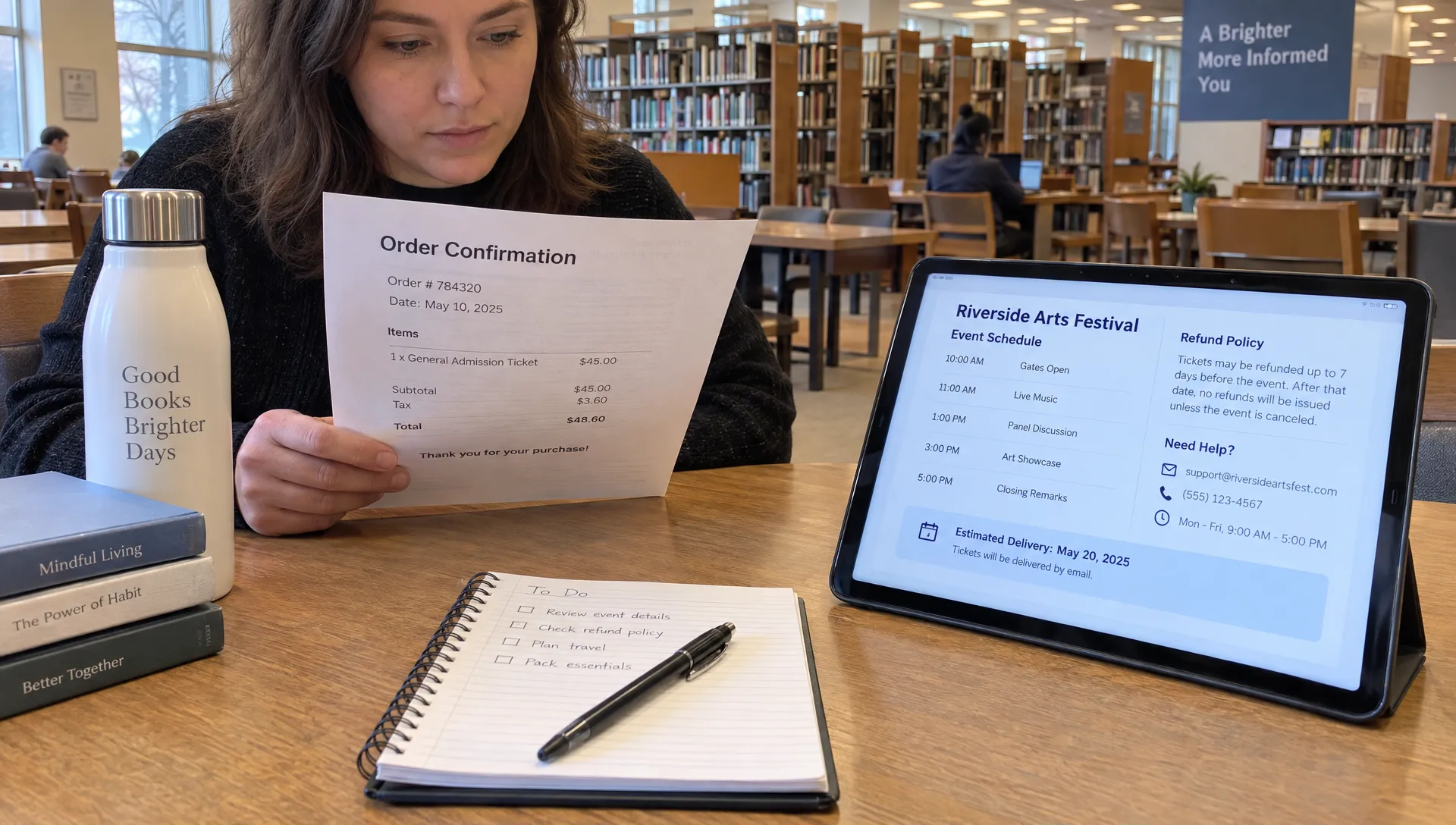
If the promised delivery deadline passes, contact the seller through its official support channel. Provide the order number, event time and missing-ticket details. Ask for a specific resolution before the event, not simply confirmation that someone received your message.
If a ticket fails at entry, ask venue staff whether they can explain the rejection. Possible causes include the wrong entrance, an incorrect event date, an invalid transfer or a ticket already recorded as used. Do not assume the first failed scan proves fraud.
Keep a compact evidence file:
- The listing, order confirmation and payment receipt.
- The delivery promise, accepted transfer and relevant purchase terms.
- Support messages with timestamps and case numbers.
- Any written venue explanation and receipts for additional purchases.
Do not publish a usable barcode or full account details when asking for help publicly.
Complaints about trustable ticket sites are most informative when they show whether support acted while entry was still possible. A reply after the performance may address a refund but cannot restore the missed experience.
Before purchasing replacements, ask how doing so affects any guarantee claim. If you suspect fraud or the seller does not resolve a charge problem, contact your payment provider promptly about available dispute options and deadlines. Recovery is not guaranteed. The FTC’s guidance on what to do after a scam explains whom to contact for different payment methods.
For organizers: turn recurring complaints into operating checks
Buyer complaints are also a practical platform-selection tool. Instead of asking only whether a service has positive reviews, ask how your team would prevent or resolve its most frequently reported problems.
Translate complaints into a pre-launch test
For a delivery complaint, test the purchase-to-entry journey using each ticket type you plan to sell. Check the confirmation message, delivery instructions and guest-list process. Confirm who handles exceptions on event day.
For fee complaints, inspect the full buyer-facing checkout. For tier confusion, make eligibility, inclusions and sales deadlines explicit. This guide to listing tickets without confusing buyers covers the information attendees need before purchasing.
Organizers comparing trustable ticket sites should also establish who owns each support task. The venue, promoter and platform should not send a buyer in circles while a delivery or entry deadline approaches.
Separate access to revenue from refund readiness
Payout timing affects production budgets, but funds arriving quickly does not eliminate future obligations. Plan for cancellations, refunds and disputes before committing all ticket revenue to suppliers. A buyer dispute can become an organizer cash-flow problem even after the original sale is complete.
TixFlow offers instant payouts, flat per-ticket fees, no buyer registration, digital guest lists and real-time sales control. These features address checkout and operating needs, but they do not replace clear event policies, a tested entry process or an adequately funded refund plan.
Frequently asked questions
Does a low review score mean a ticket site is a scam? No. It can reflect poor service, event disruption or genuine transaction failures. Look for specific recent patterns, independently verifiable details and documented outcomes. A low score warrants investigation, not an automatic fraud accusation.
Are primary ticket sellers always safer than resale marketplaces? An authorized primary seller usually involves fewer parties between the organizer and buyer. Resale introduces additional delivery and transfer dependencies, but safety still depends on the particular seller, event restrictions and applicable protections. Brand familiarity alone is not enough.
Can I trust a ticket once it appears in the official app? A completed transfer into your own issuer account is stronger evidence than a seller’s screenshot. It is not an absolute guarantee against cancellation, account problems or event-specific restrictions. Verify the event details and follow the issuer’s entry instructions.
What is the fastest way to shortlist trustable ticket sites? Start with the organizer’s authorized sales link, read recent detailed complaints and check delivery deadlines, total pricing and remedies. Eliminate options whose seller identity or payment instructions you cannot independently verify.
Build trust before the first complaint
Choose a ticketing setup your team can explain and support: a clear total price, an understandable delivery promise and a defined response when something fails.
If you are evaluating platforms for your next event, explore TixFlow’s ticketing features alongside those requirements. Test the buyer journey before launch, assign responsibility for urgent issues and keep refund obligations visible in your cash-flow plan.